New 3D model maps metal stress six times faster
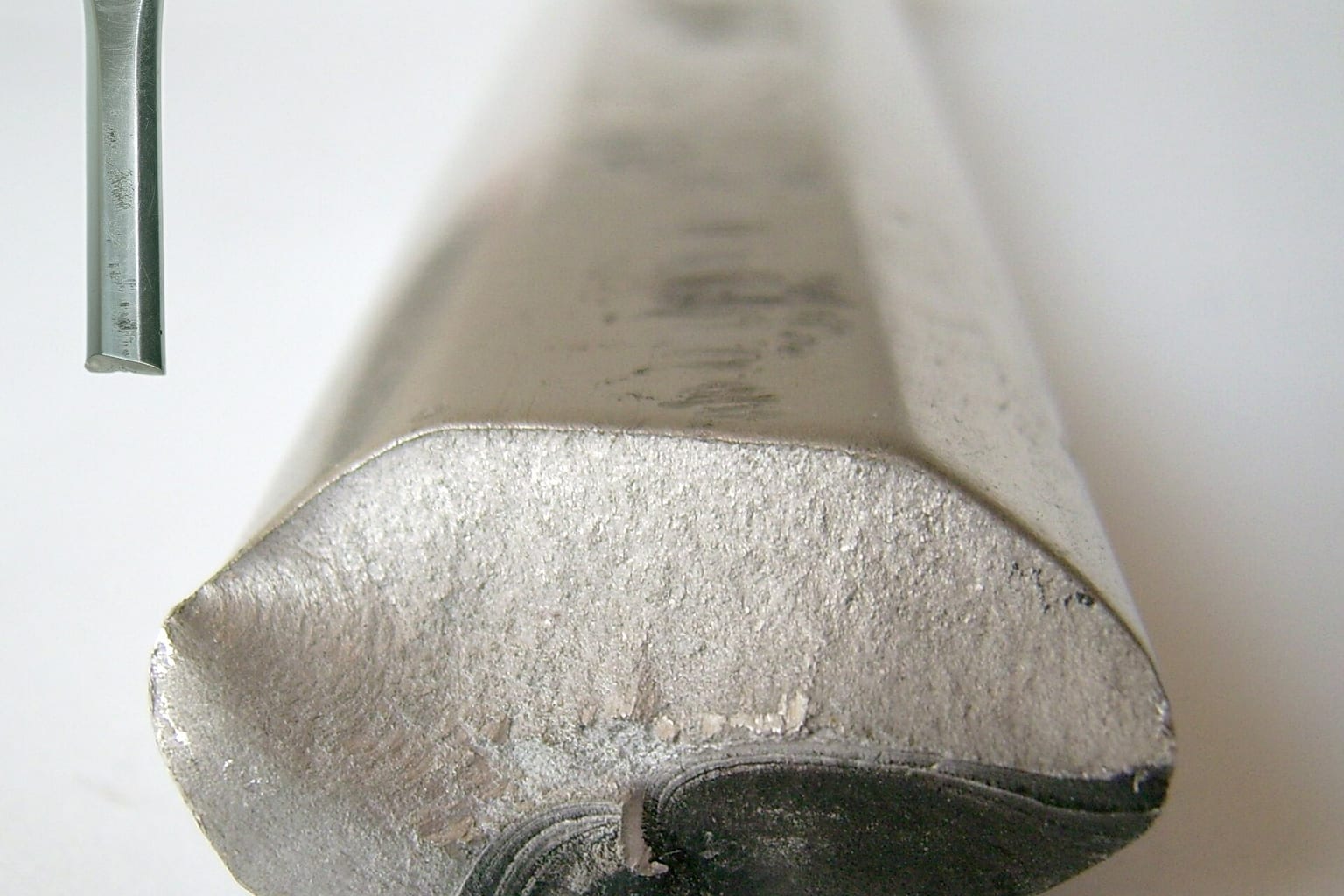
A hole in a vehicle axle, or a groove in an aircraft part, looks harmless. Under repeated forces, though, these small features become the points where damage builds up and cracks form. A Concordia researcher has now developed a faster way to predict what happens beneath the surface of those points. In a computer test on a notched steel bar, his method finished in 4.5 minutes, against 28 minutes for a detailed nonlinear simulation, which makes it about six times faster.
Until now, engineers had efficient tools for calculating how a material responds at a hole or a groove, but those tools could only predict what happens at the surface. Detailed nonlinear simulations reach into the material around the critical point, but they need considerable computing power, especially when many load histories, materials or designs must be compared. Ayhan Ince, a professor in the Department of Mechanical, Industrial and Aerospace Engineering at Concordia's Gina Cody School of Engineering and Computer Science, combined several mechanics models into a single three-dimensional framework. It calculates how forces are distributed and how the metal deforms throughout the region near the critical area, even when several types of loading act together and change over time.
The test covered one steel material and one notched bar under three loading patterns. Daniel Kujawski, a mechanical engineering researcher at Western Michigan University who did not take part in the study, calls the method a "potential bridge" between calculations focused on single points and assessments that consider damage across the surrounding material. Ince calls the work "a landmark advance in computational mechanics," and adds that "more work remains." The results come from computer comparisons, and they have not yet been checked against physical experiments.
Ince's interest began in the vehicle industry, including at General Dynamics Land Systems-Canada, where he assessed the durability of axles, suspension systems and structural supports. He pursued a Ph.D. at the University of Waterloo while working full time, under the supervision of co-author Grzegorz Glinka, and completed it in 2012. The framework builds on the methods he developed in the years since.
For engineers in automotive manufacturing and aerospace, the goal is faster durability assessments and better component designs, the researchers say, though no date has been given for industrial use. Ince expects the efficiency gain to grow for large engineering components, where full nonlinear simulations become more demanding. The next steps are to examine other materials and geometries, and then to validate the predictions through physical experiments that will show how widely the method applies to real parts.
Sources — read the originals(Paris time)
Read next
Comments
Loading the thread…
Sign in to leave a comment. Sign in