New Light Tool Inhibits Neurons and Heart Cells
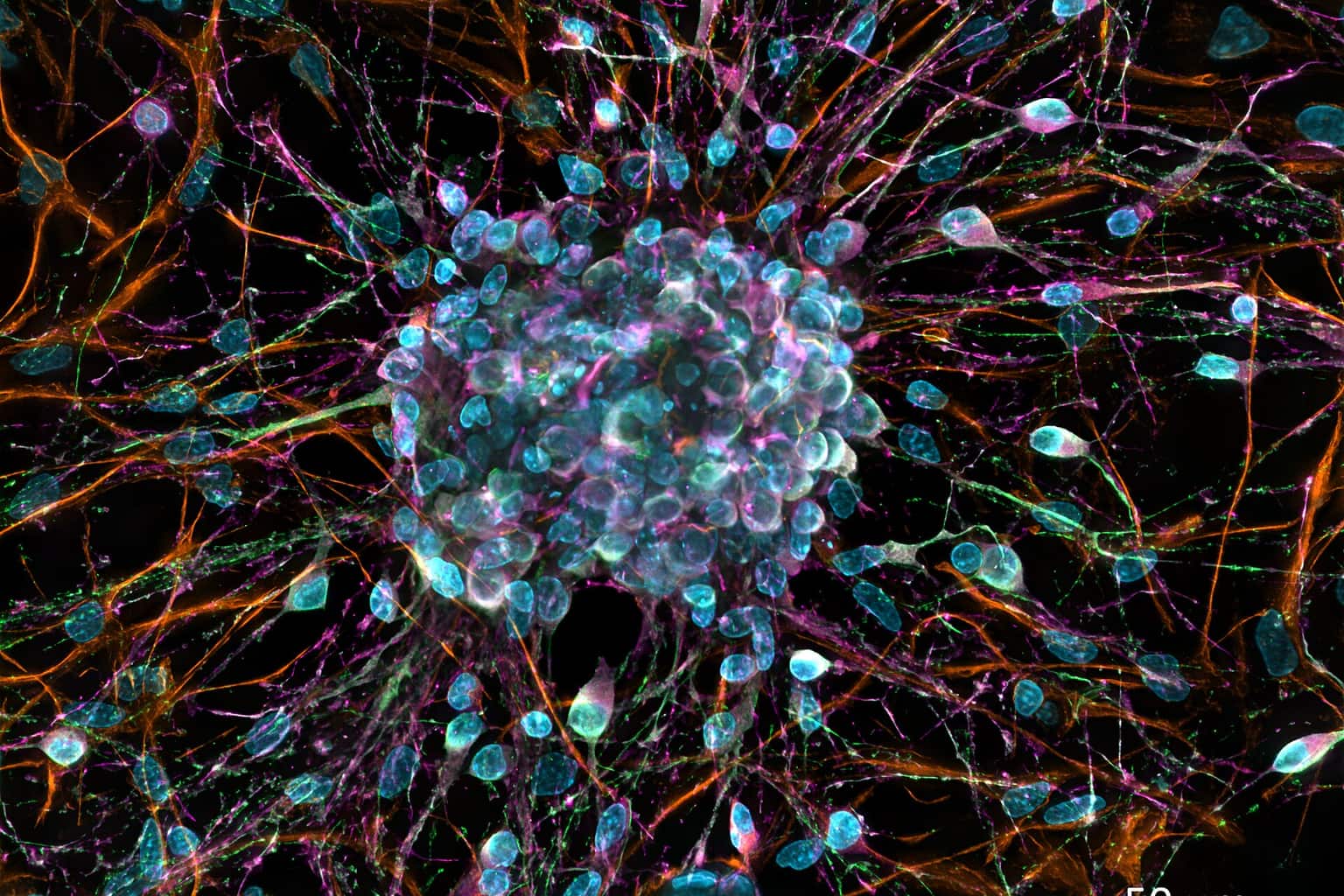
Blue light can now slow down a nerve cell. Researchers at Ruhr University Bochum, working with colleagues in Göttingen, Berlin, Paris and Essen, have built a light-operated switch that does exactly that, and it works on heart muscle cells too. The team reported the tool in Science Signaling on October 20, 2026.
Optogenetics, which controls cells with light, can already activate or deactivate nerve cells. The team coupled a light-sensitive receptor, named Opn4L, to a modified potassium channel, GIRK1. Receptors of this family, called G-protein-coupled receptors, pass signals from outside a cell to its interior. They respond to signaling molecules, medications and light, and their pathways play a key role in depression, schizophrenia and Parkinson's disease. When blue light reaches Opn4L, the linked channel opens and triggers a signaling chain that makes the cell less excitable.
In cell cultures, the tool worked in two very different kinds of cells. In cerebellar neurons, the cerebellum being the brain region that coordinates movement, the light reduced the cells' activity. In human heart muscle cells, the spontaneous beating rate decreased under the same light. These are cell experiments, not tests in living animals or patients, and the team does not claim more than that.
For researchers, the gain is control. Ida Siveke, from Ruhr University Bochum, says the tool "not only activates a receptor but also selectively reinforces its downstream signaling pathway", which lets scientists "very precisely influence the balance between stimulating and inhibiting signals in individual cells". That balance is what breaks in diseases such as cardiac arrhythmias, irregular heartbeats. Labs studying those conditions gain a way to test a cause by switching it on and off with light.
Stefan Herlitze, an optogenetics pioneer on the team, sees a wider field: the constructs could help examine signaling in heart and pacemaker cells as well as neurons, and he says they "open up entirely new areas of application for optogenetics". The team gives no date for clinical use, and the step from culture dish to living tissue is still ahead.
Sources — read the originals(Paris time)
Read next
Comments
Loading the thread…
Sign in to leave a comment. Sign in