Offshore China, a deep well yields 800,000 m³ of gas a day
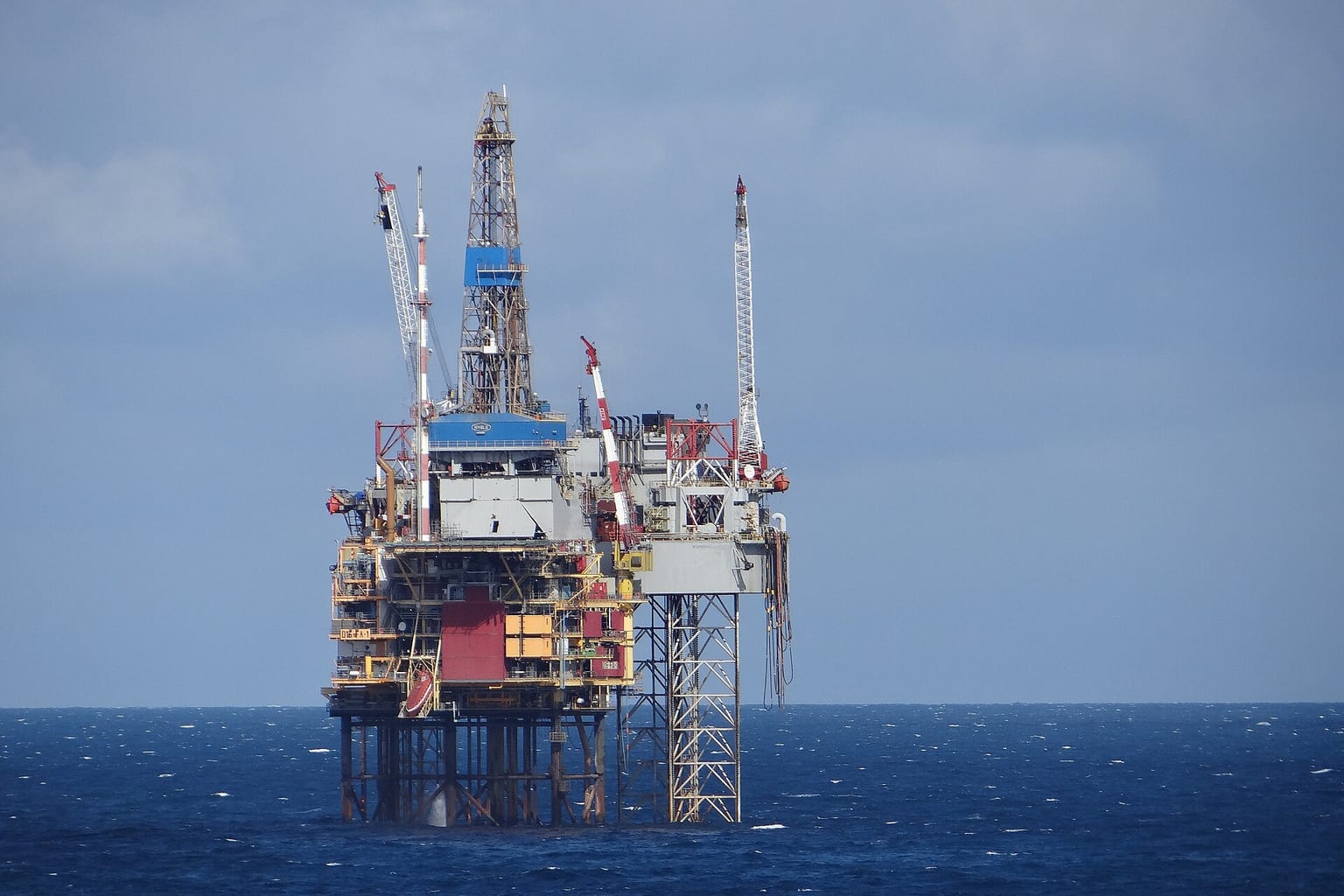
Nearly 5,770 meters below the seabed of the central Bohai Sea, a well has yielded gas in tests. During testing, it yielded about 800,000 cubic meters of natural gas per day from a gas-bearing zone more than 120 meters thick in volcanic rock. China National Offshore Oil Corporation (CNOOC) announced the discovery on 12 November 2026, calling it a "high-yield volcanic oil and gas well". The depth is measured below the seabed, not the water. One outlet gives 5,700 meters, while the reported figure is 5,770.
Gas in volcanic rock is held differently from gas in sedimentary sandstone reservoirs. In sandstone it rests between grains. In volcanic rock it is trapped inside tiny bubbles left by eruptions and in tectonic fractures, the cracks that form as the earth's crust moves. Over millions of years it migrates upward from deeper source rocks, and a dense layer above seals it in place. The difficulty lies in finding those pockets: extreme heat, intense tectonic activity and complex rock structures make underground reservoirs hard to predict at this depth. CNOOC says it overcame this with multi-source broadband three-dimensional seismic technologies it developed itself, plus new methods for identifying high-quality reservoirs in ultra-deep buried hills. The well sits beside the Bozhong Sag, the largest hydrocarbon-rich depression in the Bohai Sea. "The success of this well has opened up a new play for offshore ultra-deep natural gas exploration," said Xu Changgui, CNOOC's chief scientist and chief geologist.
The find lands in a broader push. A five-year plan from the National Development and Reform Commission and the National Energy Administration calls for more exploration to strengthen domestic supply, with a reported target of 440 million tons of domestic oil and gas equivalent by 2030. Offshore output is already rising: crude production climbed 3.5 percent year on year in the first nine months of 2026, according to the Ministry of Natural Resources. CNOOC is also a company under US pressure. Washington has placed it on the Commerce Department's Entity List and the Pentagon's Section 1260H list, which cut its access to advanced American oilfield services, specialized software and deepwater drilling hardware. Interesting Engineering contrasts this with US majors such as Chevron, Shell and ExxonMobil, which drill ultra-deep wells in the Gulf of Mexico, mainly in sandstone rather than volcanic rock in an active tectonic zone.
For households in the Beijing-Tianjin-Hebei region, the benefit would be indirect and not yet dated. Reports suggest the gas could help power millions of homes, and the Bohai area already supplies gas to the region. But CNOOC has not disclosed recoverable reserves, development costs or a timetable for commercial production. One test well cannot say how much gas the field holds or whether it can be developed; the company says that will require further appraisal drilling to estimate the resource and evaluate recoverable volumes.
The next step is that appraisal drilling. Until it reports, the test shows what one well can do in volcanic rock at nearly 5,770 meters, and the company says it has opened a new area of ultra-deep offshore gas exploration in Bohai.
Sources — read the originals(Paris time)
Pages consulted while writing
Read next
Comments
Loading the thread…
Sign in to leave a comment. Sign in