Explosive volcanic rock found in the ocean's deepest trench
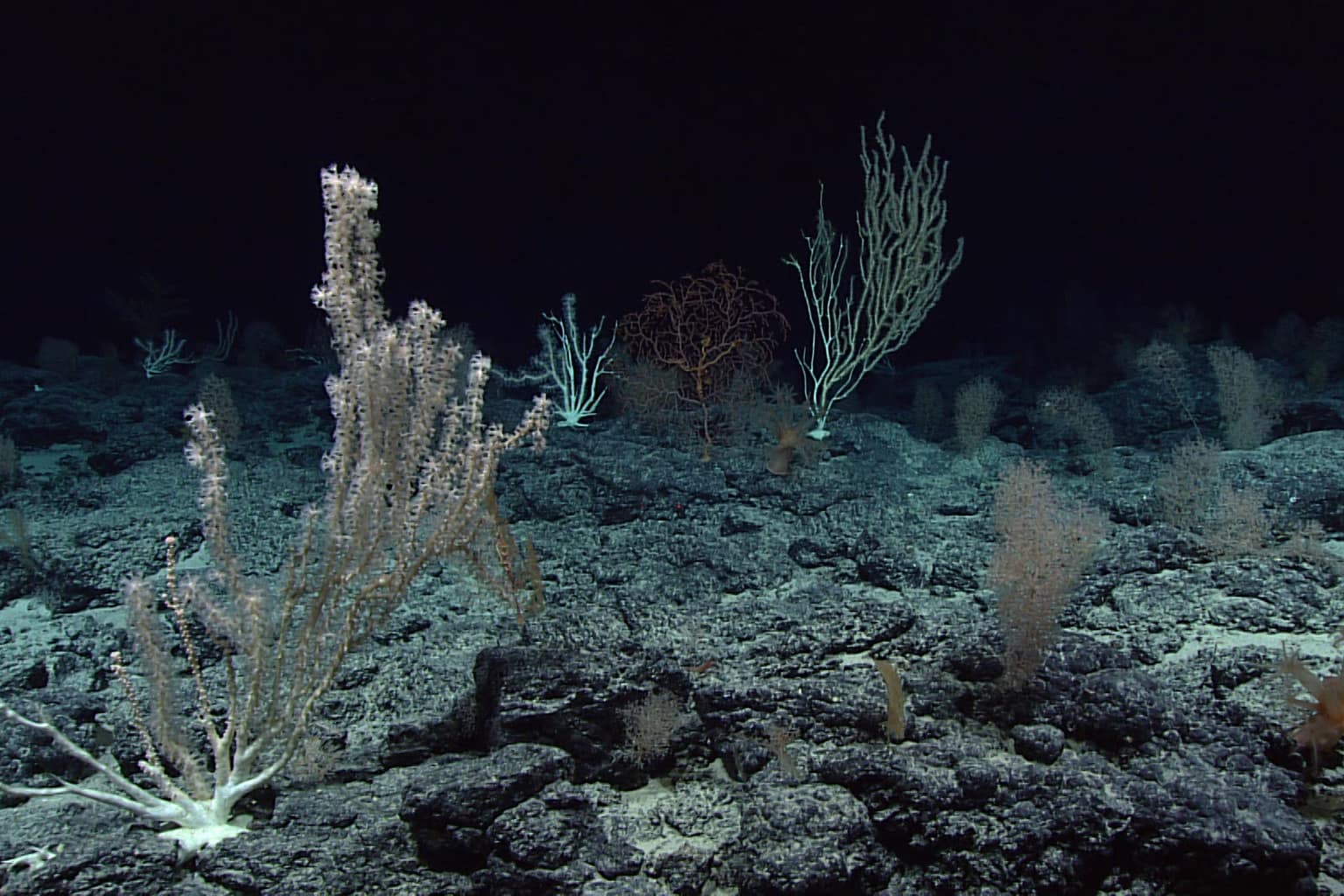
Nearly 11,000 meters under the Pacific, the Mariana Trench is dark, close to freezing and crushed by the weight of the water. Fire seems the last thing anyone would look for there. Yet a robot submarine has come back from its walls with evidence of explosive volcanic eruptions at 6,148 meters below sea level.
The rock it found is pyroclastic rock, the hardened debris left by an explosive eruption. A pyroclastic flow is a mixture of solid fragments and hot, expanding gases that rushes down the flank of a volcano. Once it cools and sets, it leaves a layer of stone that records the eruption.
The team, led by Dr. Robert J. Stern of the University of Texas at Dallas, sailed to the western Pacific in late 2024. It carried Jason/Medea, a remotely operated vehicle, a robot steered from the surface. The machine belongs to a US national deep-sea facility funded by the National Science Foundation, and its earliest version dates back to 1988. Over seven dives, it sampled the wall of the forearc, the sloping zone where one tectonic plate dives beneath another. Jason/Medea reached 6,500 meters, about 21,325 feet, still well above the trench floor.
In the western segment, the team found thin, flat layers of pyroclastic rock. "Explosive volcanism near trenches is unusual, so we were very surprised," Stern said. "These are the deepest pyroclastic rocks documented to date from anywhere in the ocean." Some of the deposits contain platelike blocks that may mark separate pulses of eruption, and lobe-shaped rocks where the flows stopped and cooled.
The finding matters because forearcs are cold. Normally the mantle beneath them is not hot enough to melt and produce fresh magma, so young volcanic deposits there go against long-standing assumptions about how these zones work. Water changes the physics too. At the depth of the deposits, the pressure is equivalent to about 592 atmospheres, and it stops gases from expanding as they do on land, which mutes the blast. The flows kept enough heat to re-weld into hard rock, which suggests they did not travel far. Volcanic glass in the samples erodes quickly in seawater, so its presence points to young rock. The rocks are still being dated.
The same observations help explain the depth itself. The eastern wall shows older rocks and mechanical pulling, while the western volcanic rocks suggest expansion driven by magma. The team describes the Pacific plate as narrow and weakly coupled to the plate above it, so it bends sharply and sinks steeply. That accounts for the extreme depth of the Challenger Deep, the deepest known valley on the ocean floor and may also shift western Pacific plate motion.
The vents that fed these flows have not been located. The team could not study the seafloor between 6,500 and 11,000 meters, and most scientists lack the gear to reach that depth.
For geologists who model trenches, the finding adds volcanism to a place they did not expect it. The next step is dating: the team plans to date the western volcanic rocks to see whether magma drove the spreading. Until deeper-diving vehicles are more widely available, the vents will stay out of reach.
Sources — read the originals(Paris time)
Pages consulted while writing
Read next
Comments
Loading the thread…
Sign in to leave a comment. Sign in