One molecule more or less toggles a superconductor link, in the lab
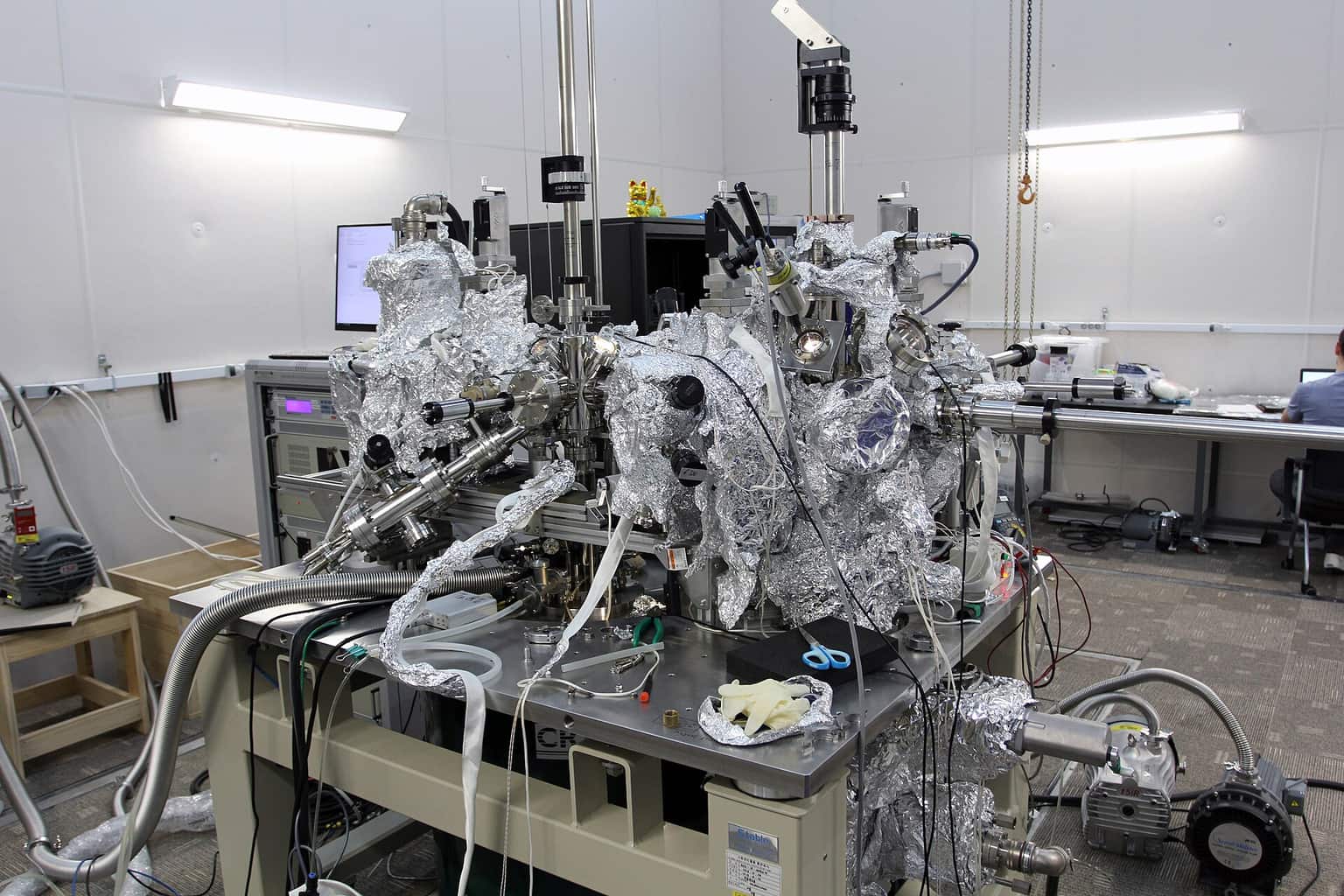
Count the links. In a molecular chain of a few units, one more or one less is enough to decide whether the chain interacts with a superconductor at all. Researchers at the CIC nanoGUNE research center, with chemists from the University of Santiago de Compostela, have shown it on a surface at the atomic scale, and they report the result in the journal Nature.
The chains are built from triangulenes, small triangular fragments of graphene that each host a spin, a tiny magnetic moment, equal to 1. When these units couple, their spins combine into a collective quantum state known as the Haldane phase, a theory put forward more than four decades ago. A chain made of integer-spin units has a notable property: it carries fractional spin states of 1/2 at both ends. The team wanted to see what happens when those ends meet a superconductor, a material that conducts electricity without resistance once it is cooled into its superconducting state.
The difficulty was the surface itself. Gold is the best platform for building these carbon structures through on-surface synthesis, but gold does not superconduct. Niobium does, but its chemical environment does not support that kind of synthesis. The team's answer was to grow a gold film 25 to 30 atomic layers thick on a niobium crystal. The gold takes on superconductivity through its proximity to the niobium, and keeps its own chemistry, so the molecules can be built on a surface that behaves as a superconductor.
With tunneling microscopy and spectroscopy, the researchers measured the chains one by one and found a clear parity effect. In chains of an odd number of triangulenes, they saw a characteristic sign of interaction between a magnetic moment and the superconducting state. In chains of an even number, that sign vanished. The number of units, not the material alone, decides the coupling. For anyone building molecular devices, that means the interaction can be set during synthesis, one unit at a time.
For the field, the gain is a way to switch the coupling on or off by design. The lead researcher, Nacho Pascual, of CIC nanoGUNE, notes that magnetic molecules are candidates for quantum bits, and that a superconductor could both read them and shield them from noise, provided their interaction can be controlled; the study shows one way to do that. The team presents the work as a platform for exploring how magnetic states and topological phases interact with a superconductor, molecule by molecule. It points toward future sensors and quantum technologies. It does not give a timeline, and these results remain laboratory measurements that have not been turned into devices.
Comments
Loading the thread…
Sign in to leave a comment. Sign in