Osmo says its AI nose smells about as well as an average person
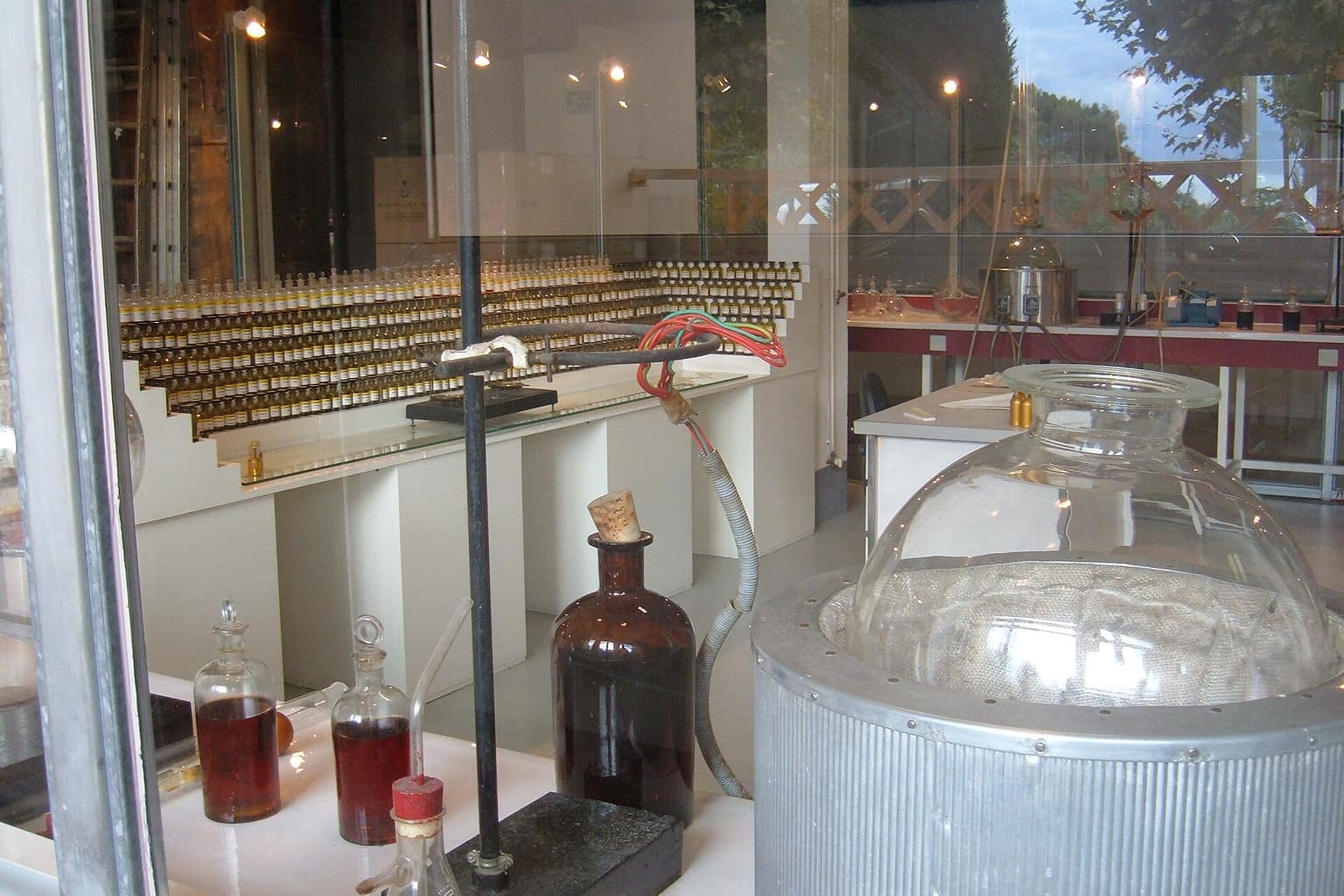
In a lab near Newark Airport, in New Jersey, about 30 experienced human sniffers work their way through odors, writing down what they smell like: “nutty,” “peachy,” “marine.” Their notes are matched against a chemical analysis of the same samples, and the result becomes training data for an AI model. The startup behind it, Osmo, calls the model the world's first foundation model for smell, meaning a large AI model built on broad data and meant to be reused for many tasks. Its founder, Alex Wiltschko, says the model has recently reached “human-level olfactory intelligence,” a phrase he uses to mean something specific: the model detects and tells apart smells about as well as the average person, and designs new ones about as well as a junior perfume designer.
The obstacle was data. Before Osmo, Wiltschko counted fewer than 200,000 human descriptions of smells in existing databases. The chemical sensors needed to fill that gap are expensive, and the fragrance industry keeps its work on the science of smell to itself. So the company built its own collection: more than 10 million human labels and 800 million “scent tokens”, each one listing the exact molecules and amounts that make up a given odor. Spectrometers and other chemical sensors run around the clock, breaking down everything from fruit and flowers to pantry staples. About 70 trained labelers in the United States and abroad sniff and describe samples using a standard fragrance vocabulary.
The comparison Wiltschko reaches for is language. Change the order of words and a sentence changes its meaning; change the proportions of scent molecules and the smell a person perceives changes too. “The scent tokens that define the smell of a newborn baby have massive overlap with the scent tokens in a fresh plate of cooked spaghetti,” he says, naming a specific brand of pasta. Osmo's own smell-printing robot, the size of a school bus, mixes ingredients to precise formulas, both for research samples and for paying customers. During a demonstration in Lisbon, during Web Summit, Wiltschko typed a request for a fragrance that smelled like a Portuguese custard tart, aimed at men aged 18 to 23. A few minutes later the system returned three profiles, creamy, coconutty and fruity, along with the molecules needed to make each one. Ordering the bottle would have taken about a week.
The technology is already in use. It has been used to create retail fragrances, including for large groups such as Procter & Gamble. Last month, the company says, its model outperformed in-house perfumers at one of the world's largest consumer goods companies; the client is not named. The Gates Foundation put $5 million into Osmo when it launched and later gave it a $3.5 million grant to assess molecules that repel disease-carrying insects. Osmo identified eight substances more repellent than DEET, a common insect repellent. The company has also worked with the online clothing marketplace StockX on spotting counterfeit sneakers from the chemical makeup of their materials.
Not everyone is persuaded. Avery Gilbert, a smell scientist and author of What the Nose Knows, has criticized Osmo on his Substack: some of its marketing claims are undocumented, and its patent filings still rely on human sensory panels and perfumers rather than on AI. “This heavy reliance on human sensory judgments seems odd for a company premised on super-cool AI,” he wrote in March. Osmo did not respond in time for publication. Michael Schmuker, a former professor of neural computation at the University of Hertfordshire who has consulted for Osmo, calls the technology an achievement. He and colleagues built an open-source, reverse-engineered version of Osmo's 2023 model, but it lacks the data collected since. He also doubts that the model captures context, which changes what a smell means. “[The smell of] a French cheese like Camembert is partly the same molecule as in used nappies,” he says.
For now, the first use is perfume: a new scent, requested in a sentence typed into a box. Wiltschko sees a wider future, with threat detection at airports or the diagnosis of diseases, which he believes could come eventually. He gives no date for either, and the company gives no price for its service.
Sources — read the originals(Paris time)
Read next
Comments
Loading the thread…
Sign in to leave a comment. Sign in