Plywood Hosts More Oil-Degrading Microbes in an Omani Wetland
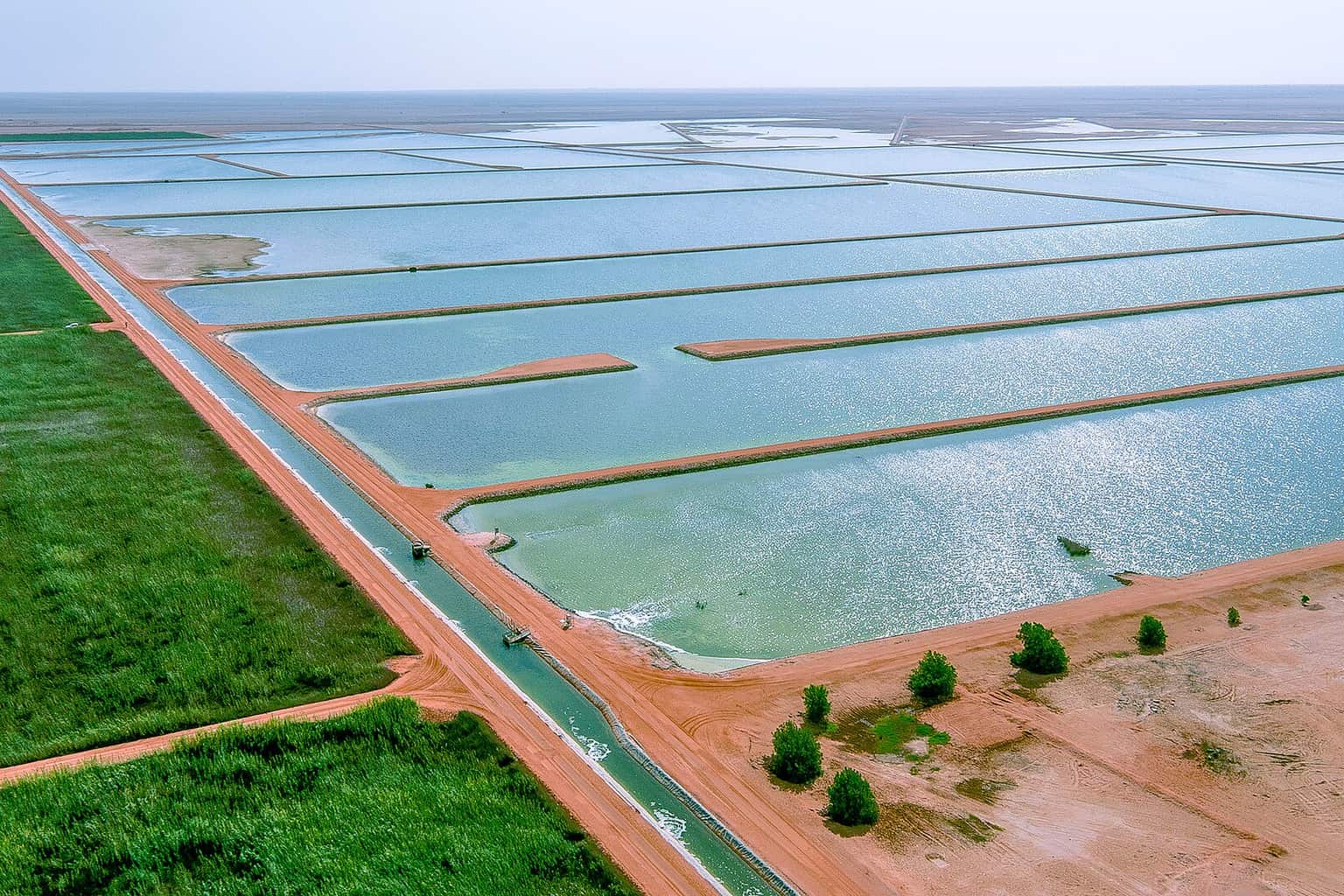
On a 14-hectare constructed wetland in Rima, Oman, managed by Veolia, a team from Sultan Qaboos University submerged three kinds of surface for one month. Plywood, polypropylene and natural marble were placed across three tracks of a wetland that treats produced water, the water brought to the surface during oil and gas extraction. The experiment was led by Ph.D. candidate Arwa Al-Hadhrami under the supervision of Dr. Daniel Blackburn. The team wanted to know whether the surface changes what grows on it.
Biofilms are communities of microorganisms that attach to a surface and grow inside protective layers they produce themselves. In a constructed wetland, they carry much of the biological work: the wetland can treat produced water partly through microbial communities that interact with pollutants and potentially break them down. The properties of the supporting surface, the researchers note, influence which microorganisms settle there and how the community develops.
The gap between surface and water is large. Biofilms attached to the materials contained approximately 240 to 3,100 times more bacteria than the surrounding produced water. Plywood stood out among the materials: depending on the track, its bacterial abundance was 2 to 9 times greater than on polypropylene and 3 to 11 times greater than on marble. Plywood also recorded the highest chlorophyll-a concentrations, reaching up to 6.9 micrograms per square centimeter, a marker of photosynthetic biomass within the films.
Bacteria made up more than 98% of the microorganisms detected, and archaea less than 2%. The communities on the surfaces differed from those in the water. The produced water was rich in Epsilonproteobacteria, while the biofilms were dominated by Gammaproteobacteria and Alphaproteobacteria and showed greater richness. Predictions based on the organisms identified pointed to bacterial groups linked to hydrocarbon degradation, which reached up to 55% on wood, against up to 40% on polypropylene and marble. Microscopy showed more rod-shaped, spherical and filamentous microorganisms on wood.
For operators of produced-water wetlands, the result turns the choice of support material into a design question that can be tested in the field. What it does not yet deliver is a treatment gain: the study measured which microbes settle on each surface, not how much oil they remove. The researchers did not measure removal of oil, hydrocarbons or other contaminants, and the degrading potential was inferred from the organisms present and their known functions. Contaminant-removal rates, treated-water quality and long-term performance need further experiments before wood can be recommended as a more effective material. Until those tests run, the benefit is a lead rather than a result.
Sources — read the originals(Paris time)
Read next
Comments
Loading the thread…
Sign in to leave a comment. Sign in