Prototype CO₂ sensor widens its range more than tenfold
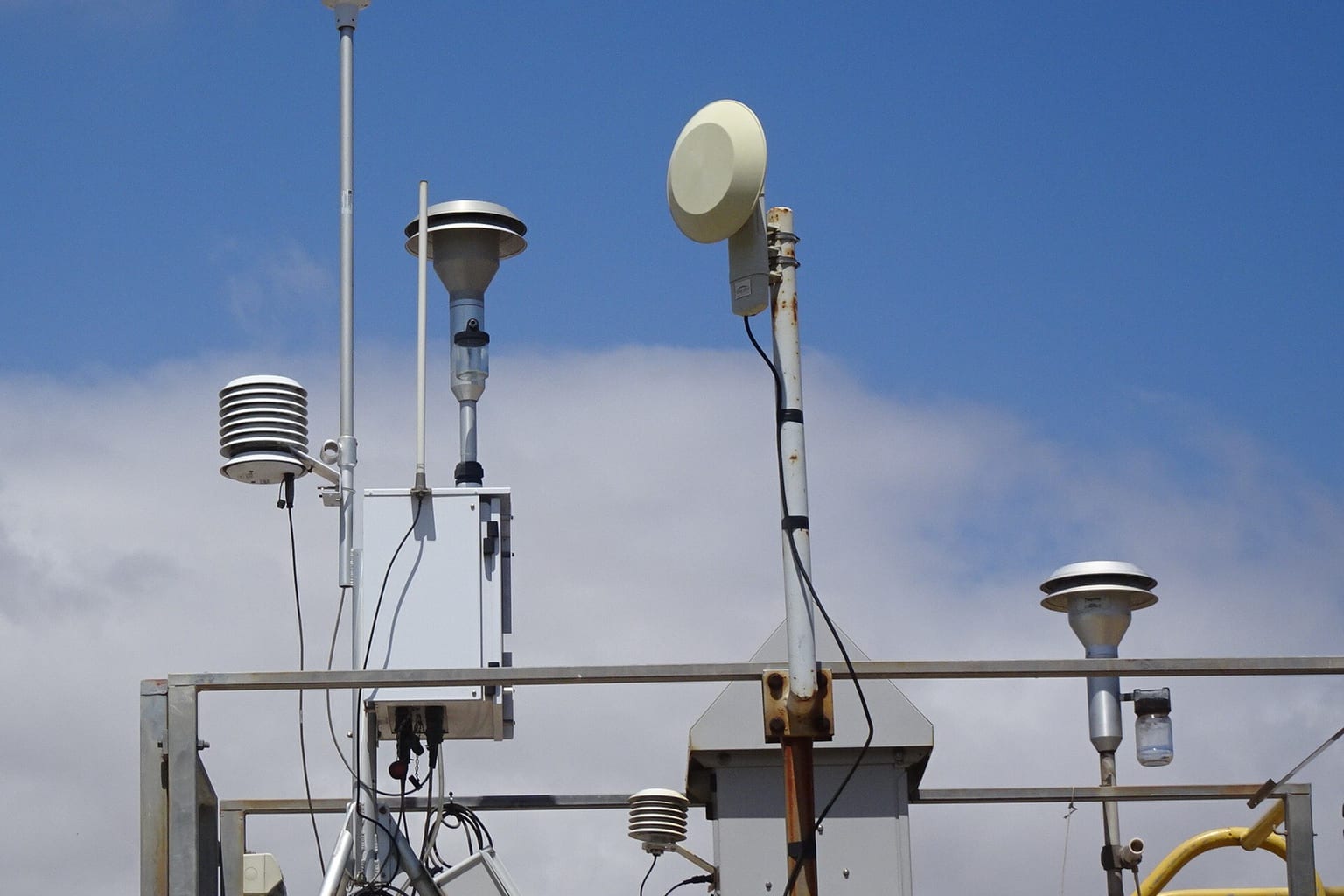
A room fills with people, the air thickens, and the CO₂ reading climbs. Open a window and it drops again. Tracking that cycle is simple in principle, but the instrument has to read a nearly empty room and a crowded one with the same accuracy. A team at the Hefei Institutes of Physical Science, part of the Chinese Academy of Sciences, has built a prototype that does both, measuring CO₂ from 50 to 10,000 parts per million (ppm), a range more than 10 times wider than the one its earlier configuration covered.
The trick lies in the light. The sensor uses cavity ring-down spectroscopy (CRDS), a technique widely used to detect gases at very low concentrations. Conventional CRDS systems often lose sensitivity when they must span a broad range of concentrations. The Hefei team, led by Zhang Zhirong, sends two types of polarized light, S and P, through the same optical cavity. S-polarized light responds more strongly to low CO₂ levels, while P-polarized light can measure higher ones. Read together, the two signals extend the sensor's reach without needing a second instrument.
The team took the device out of the laboratory. Indoors, it followed CO₂ changes as occupancy and ventilation varied. Outdoors, it recorded atmospheric CO₂ continuously and captured the daily fluctuations in concentration. These are the researchers' own tests, published in Sensors and Actuators B: Chemical, and they have not yet been reproduced by an independent group.
For indoor air-quality monitoring and atmospheric research, the gain is one instrument that covers the whole working range instead of two or more specialized ones. The researchers also say the same approach could be adapted to other gases by changing the measurement wavelength and the optical cavity, which would extend the use of CRDS sensors beyond CO₂. The article does not give a price, a manufacturer, or a timeline for commercial versions.
Sources — read the originals(Paris time)
Read next
Comments
Loading the thread…
Sign in to leave a comment. Sign in