Prototype solar panels measure light rain with 1.88 mm/h average error
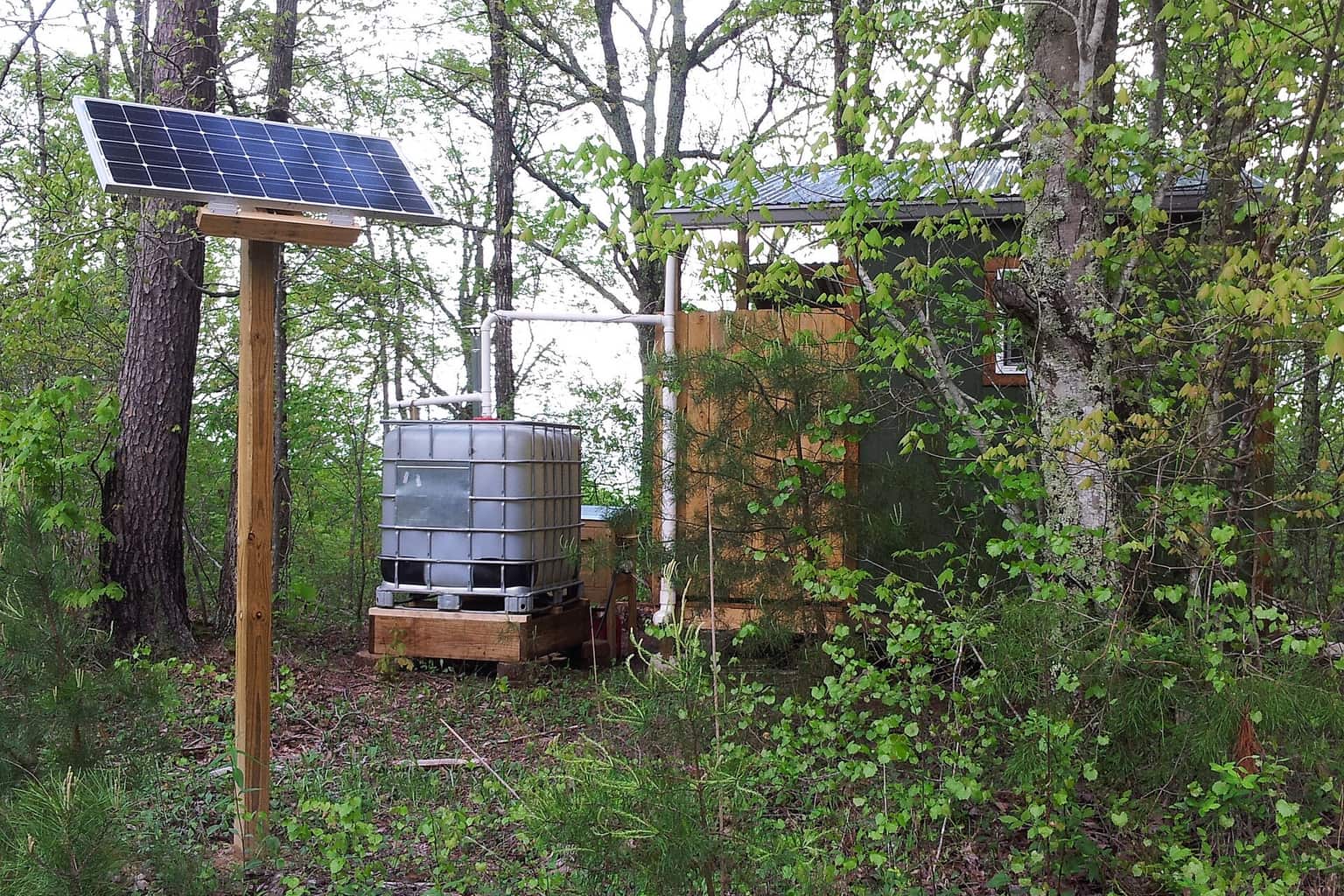
On a solar panel, every raindrop leaves a trace. Each impact sets off microscopic vibrations, and each rainfall intensity produces its own acoustic signature. Researchers at Germany's Fraunhofer Institute for Digital Media Technology (IDMT) and the company Pan Acoustics GmbH have learned to read that signature. Their system estimates light rainfall with an average error of 1.88 millimeters per hour, without a single moving part.
The problem is the rain gauge. Conventional precipitation monitoring relies on weather stations with dedicated gauges, which are costly to install and maintain. Many regions therefore have sparse networks that struggle to capture localized storms, where rainfall can vary dramatically over short distances. The new approach attaches structure-borne sound sensors to photovoltaic (PV) modules. An AI model running on an energy-efficient microcontroller processes the data at the measurement site, and only the calculated rainfall values are transmitted. Pan Acoustics built the hardware and software for the wireless network, which reached 4 kilometers in urban environments and 35 kilometers in rural areas with an unobstructed line of sight. Data from several nodes are then combined in a central data infrastructure to produce localized precipitation maps.
Validation came in steps. In a rain simulator, the team varied droplet sizes, rainfall intensities, PV modules and sensor placements. Then three outdoor systems were installed: at Fraunhofer IDMT in Ilmenau, at Pan Acoustics in Wolfenbüttel, and in the weather garden of the Technical University of Ilmenau. Their readings were compared with reference rain measurements to train and validate the models. For rates between 2 and 5 millimeters per hour, the average error of 1.88 millimeters per hour meets the World Meteorological Organization (WMO) Class C accuracy requirement for low-intensity precipitation. “We have proven the feasibility of our approach for light rain,” said Jakob Bergner, the project's scientific director at Fraunhofer IDMT.
For municipalities and infrastructure operators, the gain is density. A network of inexpensive points could spot localized downpours in real time and feed urban digital twins, so cities could respond more quickly to flood risks. Drainage planners, insurers and weather forecasting models could draw on the same data. Fraunhofer IDMT is also exploring agrivoltaic systems, where the sensor network would give farmers site-specific rainfall data for more targeted irrigation. No commercial date has been announced.
The researchers stress that the system is designed to supplement high-precision gauges, not replace them, and heavy rain is not yet covered. “Now we want to collect further data for the less frequent heavy rain events,” Bergner said. Before any commercial deployment, the team plans further pilot installations to gather data during heavy rainfall, and to refine the sensor housing, electronics and quality-assurance processes needed for production-ready systems. They are now seeking industry partners to run those pilots under a wider range of operating conditions.
Sources — read the originals(Paris time)
Read next
Comments
Loading the thread…
Sign in to leave a comment. Sign in