Seabed monitors installed at UK's first commercial-scale CO₂ store
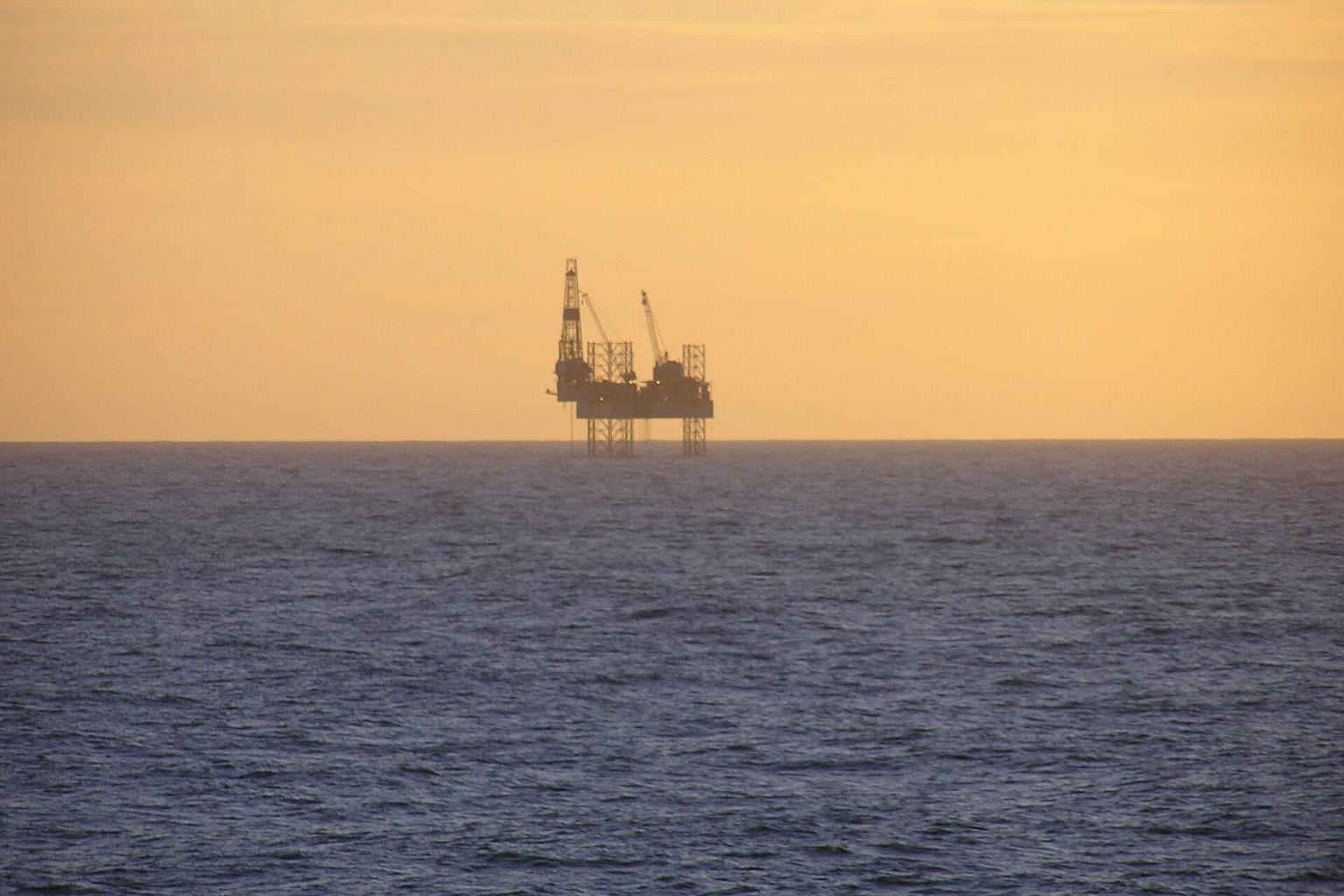
Six instruments now rest on the North Sea floor, about 150 kilometers off Teesside, watching a store that has not yet received any carbon dioxide. They are the first monitoring systems installed at the Endurance CO₂ store, the site of the UK's first commercial-scale offshore carbon capture and storage (CCS) project. Their job is to record the seabed and the water as they are before injection begins.
The principle of CCS is to capture carbon dioxide from industry and bury it in rock. At Endurance, that rock is a porous formation about 1,000 meters beneath the seabed, which is expected to hold emissions carried from Teesside and the Humber. The Northern Endurance Partnership (NEP), a joint venture of BP, Equinor and TotalEnergies, is building the transport and storage infrastructure for the East Coast Cluster, one of the country's flagship industrial decarbonization initiatives. Injection is scheduled to start in 2028, and the store is expected to take up to 100 million tons of CO₂ over its first 25 years.
The monitoring package has two halves. Three autonomous landers, built by Sonardyne (now part of Kraken Robotics), measure seawater chemistry, ocean currents and seabed conditions. Three TIAMAT passive seismic systems, developed by Germany's K.U.M., record natural seismic activity alongside them. Together they produce the baseline, the reference against which future readings will be compared under the project's measurement, monitoring and verification (MMV) program, to show that stored CO₂ stays trapped for decades. The landers send their data to the surface through wireless underwater acoustic links, so engineers can collect over long periods without repeatedly bringing the instruments up.
Sonardyne presents its landers as a way to keep watch without constant trips to the seabed, while NEP says that setting baselines before operations is a critical step in proving long-term safety. Other material complicates the picture. A paper presented at EAGE 2026 and co-authored with bp describes a two-year baseline period for the seismic units, with annual recovery for data download and battery replacement. The same paper places the storage site about 75 kilometers off the coast of Yorkshire, while the NEP announcement puts it 150 kilometers off Teesside, and the two accounts do not match. The paper also says the monitoring plan puts landers near two of the three legacy wells on the structure, which it describes as appropriately abandoned, and at the outcrop of the Bunter Sandstone Formation. It assesses the structure as a strong candidate for storage, with a low risk of leakage.
For the emitters on Teesside and the Humber, the next stretch is set out in dates. The passive seismic program was expected to begin in summer 2026, with first seismic data due to NEP in 2027, and injection in 2028. NEP says the data will help verify safe storage over time while supporting the infrastructure needed to decarbonize heavy industry across those regions. As Mike Stephen, NEP's head of technical, put it, the deployment is “a great example of the expertise and innovation that is helping to deliver CCS in the UK.” From 2028, the data will have to show that the CO₂ stays put.
Sources — read the originals(Paris time)
Pages consulted while writing
Read next
Comments
Loading the thread…
Sign in to leave a comment. Sign in