Self-assembling space modules lock together
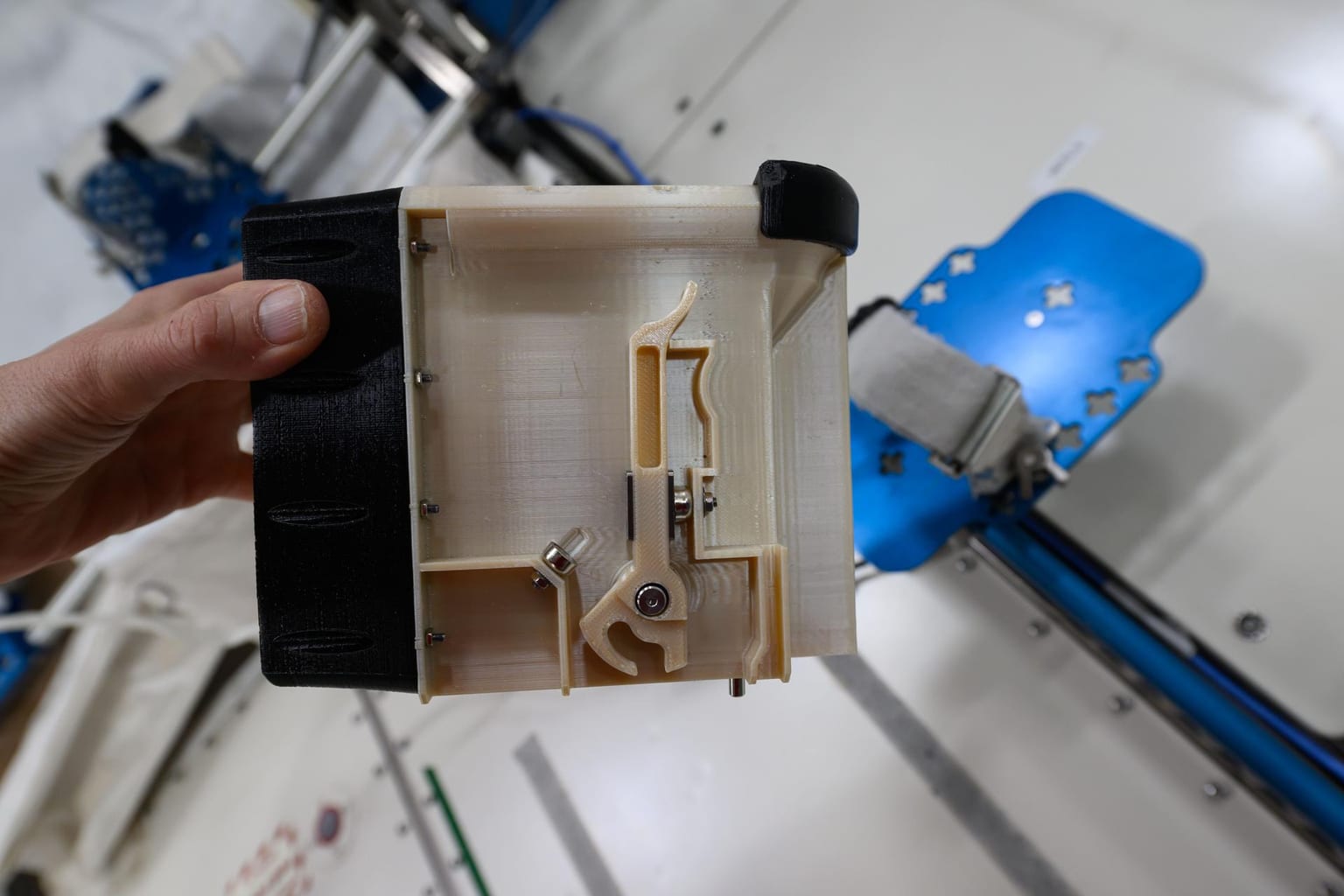
On a granite slab, two triangular pods drift across a table on a cushion of air, while cameras above them track their positions. The thrusters push one pod toward the other. The aim is to make them meet with a precision that a rocket launch alone cannot guarantee.
The problem starts with the rocket's fairing, the protective shell that holds a payload during launch. Engineers today usually pack long structures into rolled-up booms, thin strips of carbon fiber that unspool like a tape measure and stiffen once they reach microgravity. These booms rarely unfold perfectly, and when several modules must snap together, a few millimeters of error can make the whole mission fail. The correction has to happen after the unfolding, not before it.
The Nanjing and Beijing team's answer relies on three features on each corner pod. A spool, driven by a stepper motor (a motor that turns in precise, countable steps), shortens or lengthens the carbon-fiber rods on command, so each module can match the size of the structure it plans to join. Cold gas thrusters, small jets that push with compressed gas, move the module forward, backward, or spin it to match the rotation of its target. Once the pods are close, permanent magnets embedded in each one pull them together over the final few centimeters. A central control system runs the whole sequence, using the cameras' coordinates to correct the positioning in real time.
The mathematics was the hard part. The researchers had to describe rigid corners joined to bendable arms, while the mass of each module changed as it used up propellant, and then derive the control equations that keep it stable in flight. On the table, the results are clear: without active correction, the magnetic latches missed and the assembly failed. With what the paper calls "active morphing control" switched on, the controllers corrected boom lengths and positioning errors by over 98%, enough for the magnets to lock.
What this changes is a question of size. If modules of this kind can be launched in pieces and assembled in orbit, the largest objects in space would no longer be limited by the fairing: communications arrays, power platforms and deep-space observatories could, in principle, be built from parts that each fit in a rocket. The authors describe this as a first step toward autonomous assembly in orbit, and the test uses two pieces on one table. The study gives no flight date, and does not say when such modules could fly.
Sources — read the originals(Paris time)
Read next
Comments
Loading the thread…
Sign in to leave a comment. Sign in