Slug-inspired gel seals gut fistulas
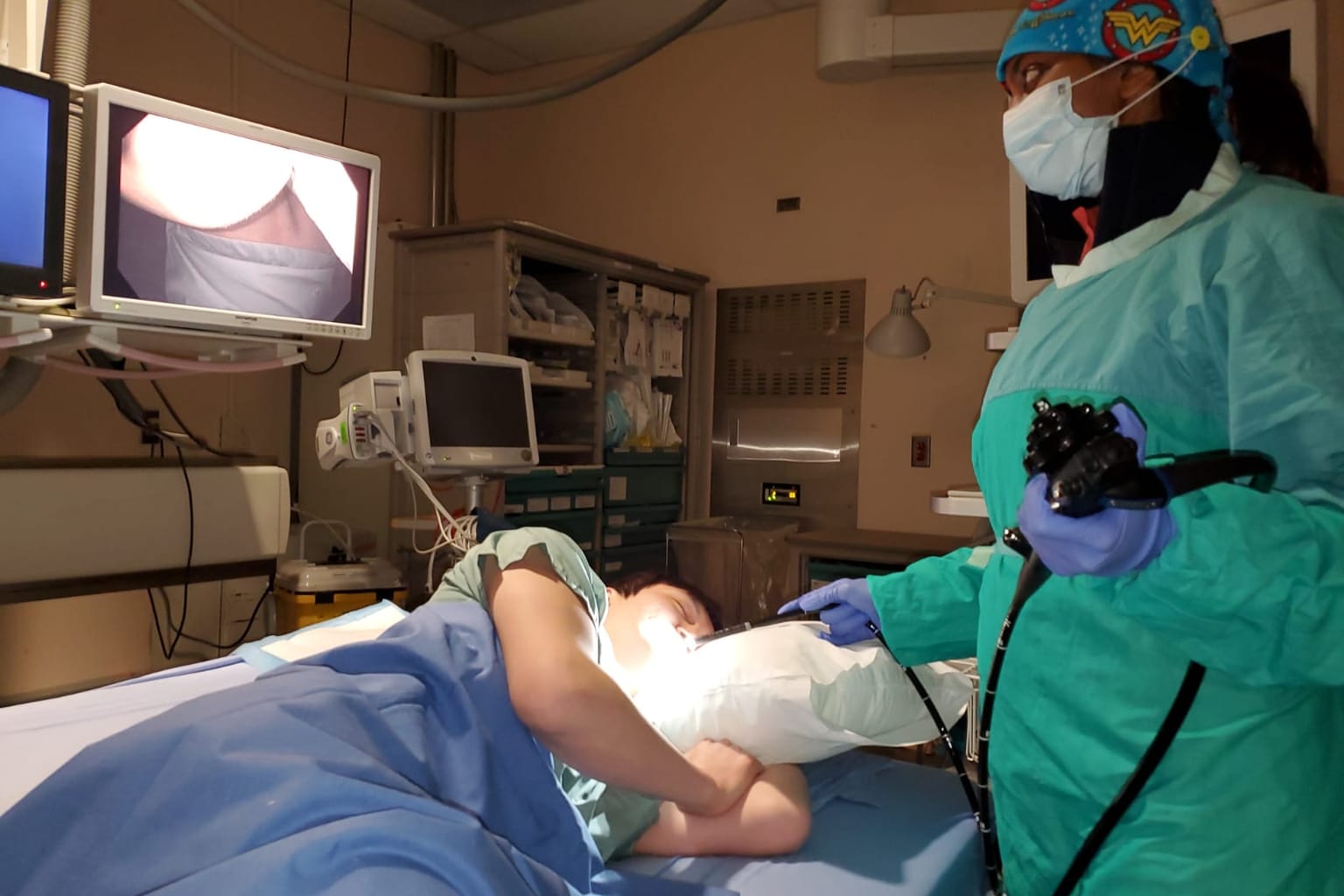
Inside the digestive tract, an unwanted passage can open between the gut and a neighbouring organ. A team led by Bai Shuo at the Institute of Process Engineering of the Chinese Academy of Sciences, working with Dr. Li Jingtao's group at the China-Japan Friendship Hospital, has built a sealant that closes these openings through a standard endoscope. Their results were published in Nature Biomedical Engineering on October 30.
The idea comes from slugs. In humid jungles, they secrete a defensive mucus that holds tree frogs firmly to branches, and it hardens into a gel with the help of metal ions. The researchers mixed a polymer with Ga³⁺ gallium ions to create a material they call PGa<sup>III</sup>. At 25 °C it is a transparent, flowing liquid that passes through a 27-gauge needle. At about 37 °C, inside the body, it forms a gel within roughly 30 seconds. The face that touches tissue sticks through electrostatic attraction and physical entanglement, while the face toward the gut stays nonadhesive. The researchers call this two-faced behaviour Janus adhesion, after the Roman god with two faces. Shear strength on the sticky side reached 10.46 kPa, against 0.11 kPa on the other, a gap of nearly 100-fold. The gel also shrinks, with its surface area falling by about 51.6%, which pulls the edges of the opening inward rather than widening it. Its adhesion and burst resistance rose after immersion in simulated gastric acid at pH 1.0, where commercial fibrin glue dropped markedly. The gallium also inhibited bacteria such as E. coli and S. aureus, with an efficiency of about 98.6%.
The animal results are the heart of the study. In rats with a gastric fistula, postoperative mortality was 3.3% in the gel group, against 6.7% with sutures and 56.7% with fibrin glue. By day 21, the gel group showed almost no adhesions and near-complete recovery of the stomach wall. In Bama pigs, the gel closed a 20-mm gastric fistula completely within 14 days, with a smoother mucosa than the titanium clip group, and no foreign-body residue was found.
For a patient who develops a fistula after surgery, trauma or cancer, the change would be a treatment delivered through a scope rather than through another operation, with a workflow the authors describe as simple. The team also suggests the approach could help repair fistulas in other organs. No date for human trials has been announced.
The work is still preclinical. Bai said the team will study how gallium is metabolised and cleared in large animals, and how fluctuations in gastrointestinal pH affect the material's breakdown. The researchers also plan to refine the catheter delivery system and the manufacturing process, which they see as steps toward clinical translation. The safety and effectiveness of the material in human patients remain to be established.
Sources — read the originals(Paris time)
Read next
Comments
Loading the thread…
Sign in to leave a comment. Sign in