Solar on China's highways could supply 1.85% of power, study says
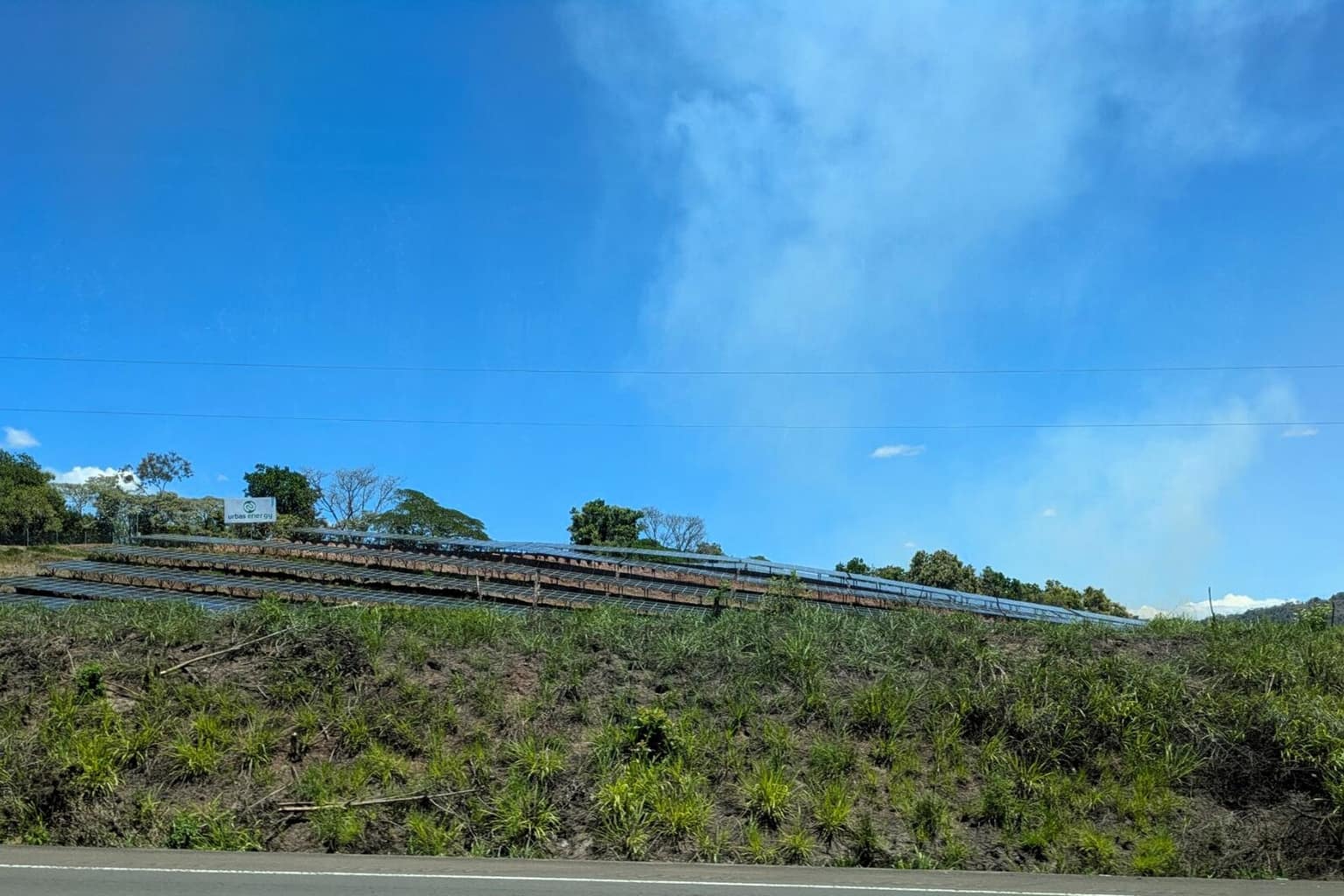
Along China's 185,000 km of highways, the land beside the lanes could carry a large solar fleet. A team at Tongji University has put a number on it: 182 TWh of electricity a year, or about 1.85% of the country's electricity consumption in 2025. The unit TWh, terawatt-hours, is the scale used for national power totals.
The method is simple to describe. The researchers took solar irradiance data from NASA POWER for 2025, at a resolution of 0.5 degrees, and split China into four solar zones. They then applied a correction for terrain: mountains shade panels, so the factor is 0.55 above 3,000 metres, 0.75 between 500 and 3,000 metres, and 0.95 below 500 metres. The usable space falls into three groups: strips along the road, including medians and slopes; structures at tunnel entrances and exits; and rooftops at service areas. Roadside strips hold the largest share, service-area roofs come next, and tunnel structures contribute less than 0.5%. The result surprised the authors. The dense network in central and eastern China holds substantial potential, even though those regions receive less sun than the west. Shen said terrain shading cuts output sharply on mountain highways, an effect that large-scale estimates often leave out.
The figures need to be read with care. They are model results, and the sizes of typical highway solar projects give a sense of scale: one review of highway PV puts individual projects between 1 and 14 MW. A separate national-level assessment also finds that North and Central China have the highest near-term potential, which is consistent with the Tongji result on the dense eastern network.
The authors name three obstacles to building this at scale. Installation costs are high and payback periods long, which limits the economics. Roadside panels can conflict with ecology and traffic safety. And most projects so far are fragmented, site-by-site demonstrations, without coordinated regional planning or systematic operation and maintenance.
For planners, the framework also sets out three operating modes matched to the local grid: self-consumption with surplus stored in batteries where the grid is absent, support during shortages where the grid is weak, and export of surplus power where the grid is strong. The next steps announced by Shen are a study of the techno-economic performance of solar-plus-storage at service areas, and traffic safety constraints for roadside panels, which the team says will feed into practical deployment guidance.
Sources — read the originals(Paris time)
Pages consulted while writing
Read next
Comments
Loading the thread…
Sign in to leave a comment. Sign in