Solar prototype reaches 14,500 m over Fuerteventura
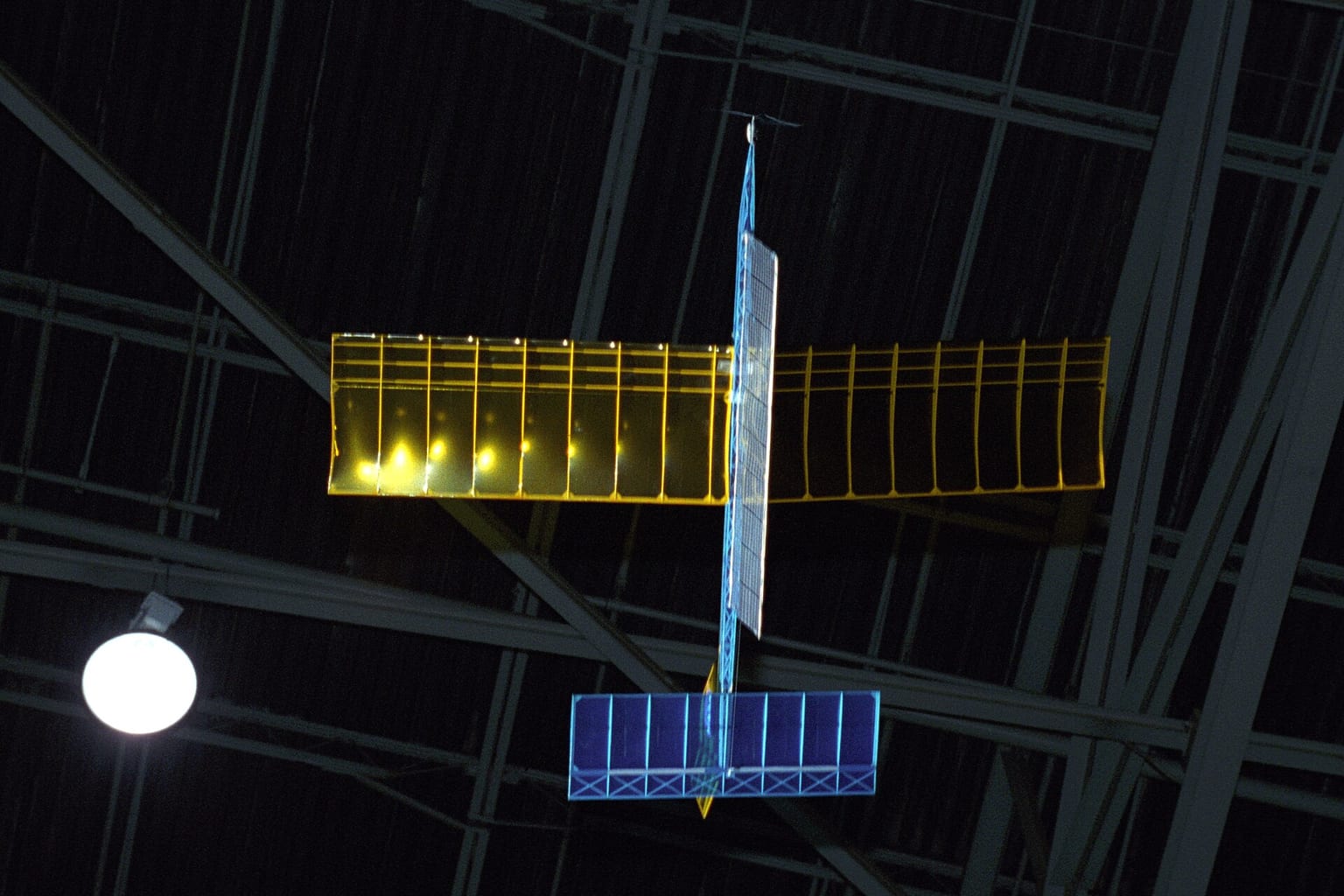
At 14,500 m above the island of Fuerteventura, a solar plane with an 18-meter wingspan has spent 29 hours in the air, and at night it flew on nothing but sunlight stored in its batteries. The aircraft is ApusNeo, built by UAVOS, and the company says it is the first solar plane to fly at 14,500 m in European airspace. It took off on 16 October from the Canarias Stratoport for HAPS & UAS, at the Fuerteventura Technology Park in Spain.
ApusNeo is not new. UAVOS first presented it in 2018 as a prototype called ApusDuo, which had two wings in tandem and a 14-meter span. For ApusNeo, the company removed the rear wing and stretched the remaining one to 18 meters. The aircraft now weighs up to 47 kg at takeoff, and a reinforced version can carry up to 3.4 kg of payload. The mechanism is simple: solar panels on the wing power the motors and charge the batteries during the day, and after sunset the plane flies on those batteries until the sun comes back, closing a full day-night cycle. In theory, that cycle could repeat for weeks, as long as the days are long enough.
Why does this matter? For wildfire detection, the answer lies in the gap between satellites and drones. A satellite in low orbit passes over a given spot for a few minutes, and a crewed aircraft or a regular drone must land to refuel. A solar platform at high altitude can hover over the same patch of forest for days, spotting a fire early and following it as it spreads. On this flight, the payload was an Earth observation pod with a high-resolution camera and infrared sensors, and the infrared is the part that counts for fires, since it detects heat rather than smoke. Wildfires are one of the biggest summer headaches in the Canary archipelago, and that is the job UAVOS wants ApusNeo to do. Spain's ISSEC research project, which looks at how such platforms can send live data to emergency services, had already flown the same model from the same stratoport last December.
The limits are real. The International Telecommunication Union, the UN agency that manages radio spectrum, places HAPS platforms between 20 and 50 km up, so ApusNeo has not yet reached that range. Its predecessor ApusDuo climbed to 16,686 m in a 10.5-hour test in Rwanda in 2023, and the current benchmark is held by Airbus's Zephyr, now run by AALTO, which reached 23,195 m and stayed aloft for 67 days, 6 hours and 52 minutes in 2025. Endurance is the other gap: short winter days make year-round flights difficult, as SoftBank, which is developing its own solar stratospheric aircraft, has pointed out. In September, two flights from the same stratoport lasted 29 and 52 hours nonstop, according to CATEC, the Andalusian aerospace center that operates the aircraft.
What comes next is already in the air. ApusNeo took off again and has logged more than 80 hours on this flight, with 100 hours as the goal. According to the local news site Noticias Fuerteventura, it is cruising at around 9,100 m and should land at the technology park on Saturday. UAVOS, a technology partner of Mira Aerospace, the HAPS subsidiary of Abu Dhabi's Space42, says it is ready to prepare the aircraft for future missions and fit it with more advanced payloads. When the plane will take its first real shift as a fire lookout remains unclear, and UAVOS has not announced a date.
Sources — read the originals(Paris time)
Read next
Comments
Loading the thread…
Sign in to leave a comment. Sign in