South Korean chiller reaches -120°C in 30 minutes with nitrogen
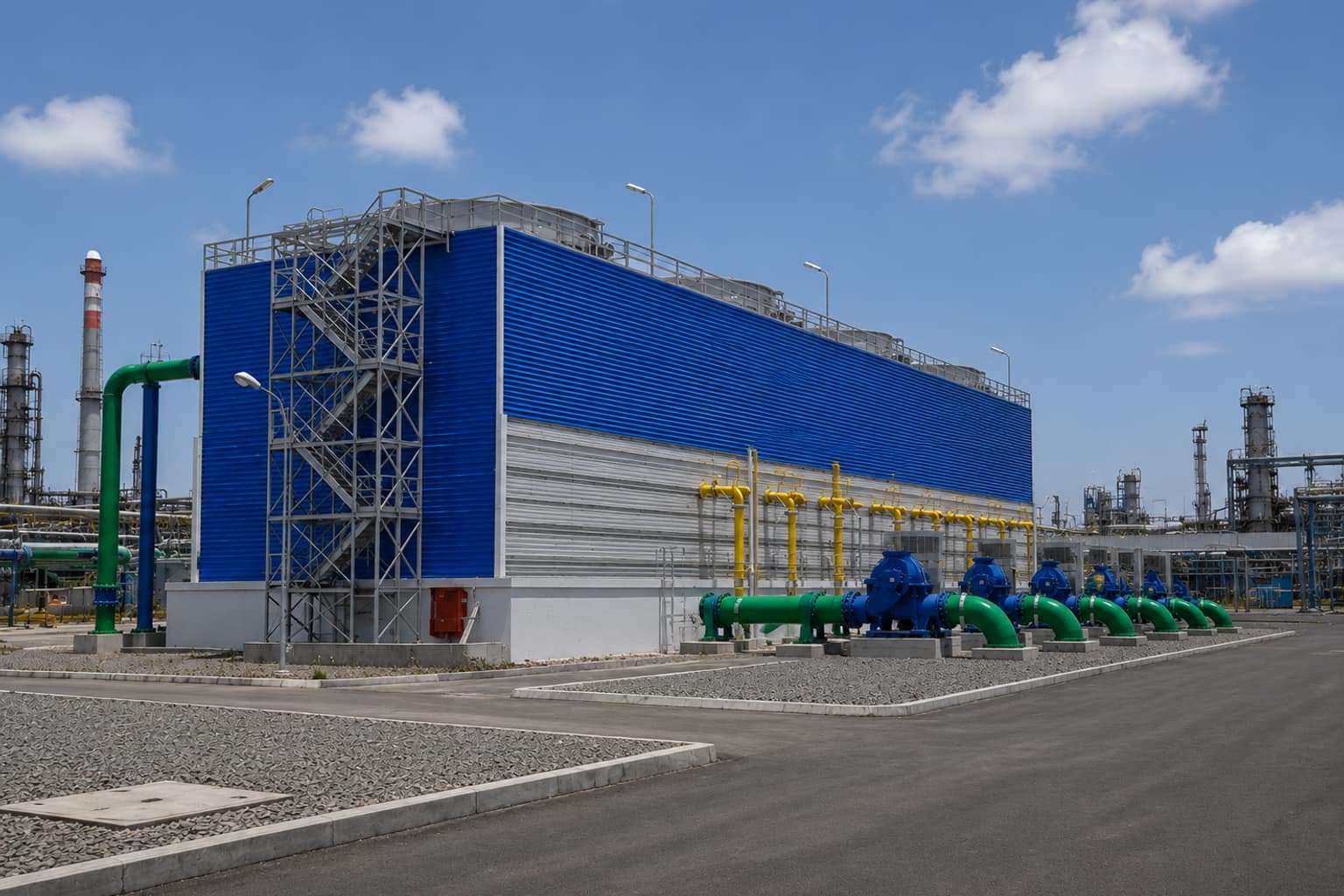
Etching tiny patterns onto a chip demands temperatures held precisely, because any deviation can cause errors. A team at the Korea Institute of Machinery and Materials (KIMM), led by Junseok Ko, head of its Department of Energy Storage Systems, has built a semiconductor chiller that reaches -120°C in about half an hour.
The machine runs a Turbo-Brayton refrigeration cycle: a gas is compressed, then expanded, and the expansion produces the extreme cold. The work is done by a turbine spinning at 60,000 rpm. Magnetic bearings hold its rotating parts without physical contact, so the system needs no lubricating oil, which could otherwise freeze or wear the mechanism. The unit delivers 15 kW of cooling capacity and reaches its full output within an hour.
The usual alternative relies on refrigerants with high global warming potential, whose leaks add to the climate impact of chip production. KIMM's chiller uses nitrogen, which has a global warming potential of zero. The team says the system was designed with a compact structure to minimize installation space in industrial facilities. The cooling unit measures 5.2 feet wide, 5.2 feet deep and 6.9 feet tall, and it operates at pressures of no more than 10 atmospheres (bar).
For chipmakers, the gain is a cooler that takes less room and drops the high-warming refrigerant. KIMM has transferred the technology to Chago Engineering, a South Korean firm specializing in eco-friendly cooling systems and semiconductor chillers, and the chiller could enter the market in 2027. Ko said the goal of an industrial chiller was set in 2024.
The institute is pursuing colder machines. It has already demonstrated -200°C with other systems and is working toward -250°C and -269°C, temperatures that could serve quantum computing, hydrogen research, nuclear fusion and space exploration. "Building on this achievement, we will continue developing industrial cryogenic cooling technologies," Ko said.
Sources — read the originals(Paris time)
Read next
Comments
Loading the thread…
Sign in to leave a comment. Sign in