Squeezed to 35 million PSI, water changes structure in the lab
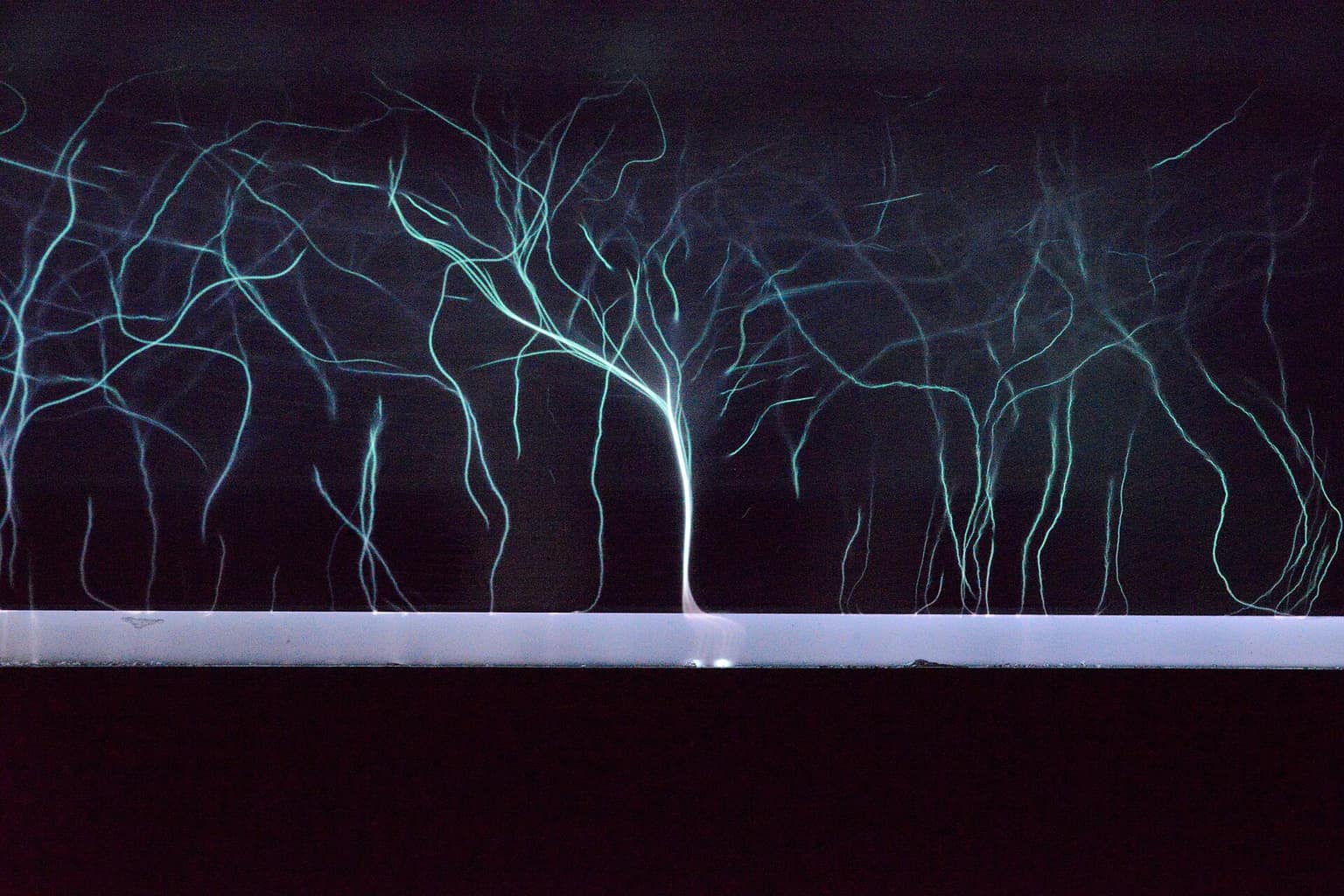
In a laboratory in Las Vegas, a sample of water sits between two diamonds, the hardest material known, and is squeezed until it reaches 35 million pounds per square inch (PSI). A car tire holds about 30 PSI. At that pressure, the water stops behaving the way it does in a glass on a kitchen table.
The usual rule of physics is simple. Compress a material and its atoms are forced closer together, which normally produces more ordered, more symmetrical arrangements. Water breaks that rule. The team at the University of Nevada, Las Vegas (UNLV) found that as pressure rises, water becomes a lower-symmetry version of its former self, and its chemistry changes along with its structure. The work, led by physicist Ashkan Salamat, director of the Nevada Extreme Conditions Lab, is published in Communications Chemistry.
The pressure is not chosen at random. Salamat's team says it reproduced conditions closer to those found on Neptune or Uranus, the so-called ice giants, whose interiors are made of hot, metallic-like water, ammonia and methane. Spacecraft data from the Voyager program give scientists an idea of these planets' composition and of their inner pressure and temperature, but no probe can descend into their atmospheres or crust. A laboratory is the only place where the chemistry can be observed directly.
The method is precise but narrow. The samples were studied with spectroscopy, which reads how matter interacts with light, while X-rays revealed the arrangement of the atoms. The results are laboratory measurements, obtained on a few samples under extreme compression. Salamat's team describes what water could look like deep inside a planet, and notes that if the pressure were released, the water would likely rearrange into a structure more commonly found on Earth.
For now, the first beneficiaries are the researchers who model the interiors of ice giants: they gain measured behaviour of water in conditions where no instrument can go. The study sets no date for any application, and it claims no practical use beyond that scientific picture. Salamat puts the ambition in terms of the long run: "When we eventually get to these worlds, what are we going to see?" Until then, the answer is being built one squeezed sample at a time.
Comments
Loading the thread…
Sign in to leave a comment. Sign in