Swelling seaweed yarns shape fabrics that morph
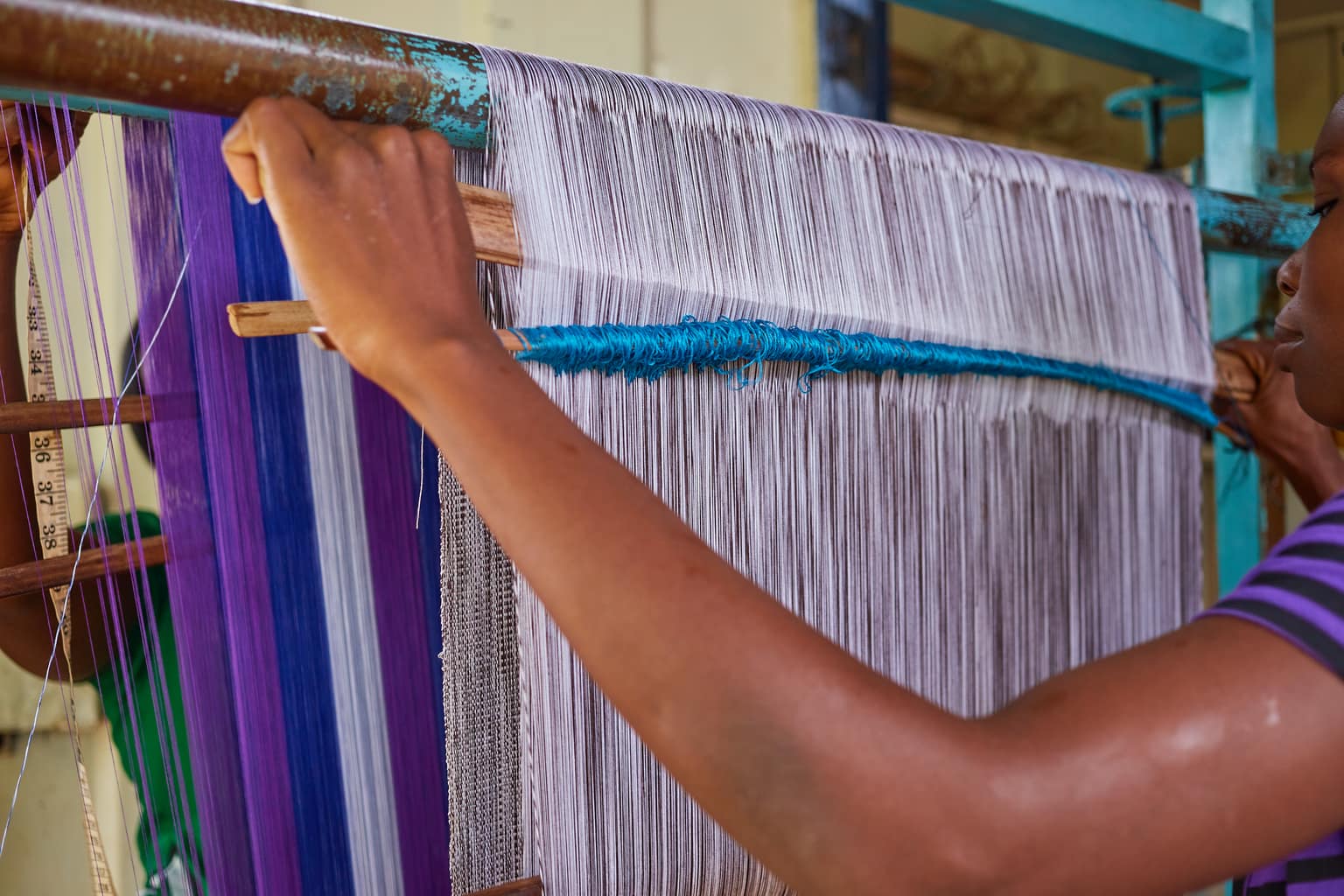
The yarns looked like failures. Spun from seaweed, shrimp shells and gelatin in a Cornell lab, they swelled in water, stretched in acid and, in the case of the gelatin, dissolved altogether. Cindy (Hsin-Liu) Kao, associate professor of human-centered design and director of the Hybrid Body Lab, and her students chose to see an effect rather than a flaw. The result, called AquaWeave, is a library of woven fabrics that morph into tubes, flaps, domes and extensions when they meet liquid, some with openings created by the dissolving yarn.
The method is a map rather than a single recipe. The team first characterized each yarn: how it morphs and under which conditions. Weavers then used those behaviors as building blocks. One wove a ribbed texture from the seaweed yarn's tendency to swell; another used her textile's tendency to curl to make a pattern. Lead author Jingwen Zhu, who earned a PhD in Kao's lab in 2026 and is now an assistant professor of design at the University of California, Davis, says the framework moves the focus "from individual material demonstrations to a broader design space." The paper, published in the proceedings of the 39th ACM symposium on user interface software and technology (UIST), was presented on Nov. 4 at ACM UIST 2026 in Detroit.
Wearable tech has mostly been designed for the wrist, and Kao wants devices on the less-explored parts of the body. Her lab's SkinLink toolkit, developed with doctoral student Pin-Sung Ku, lets builders create circuitry directly on the skin, conforming even to elbows and knees. Kao says the time has collapsed: a device that wraps around a finger and tracks hand movement takes a few minutes to build, where experienced researchers once needed hours for a similar device. A related prototype, WovenProbe, uses a centuries-old technique called Spanish lace, which leaves openings at the finger joints so the wearer can move freely, and weaves in seven very small printed circuit boards and more than three dozen wires.
For now, the change is for researchers and designers. The sources give no timeline and no product, and the AquaWeave work is a design framework, not a device for sale. Kao's example is hypothetical: a smartphone that could change shape to become a neck massage pad when needed. The lab also targets medical uses: EdemaFlex, a device with more than three dozen actuators across the fingers and palm, aims to reduce swelling for people with edema.
What changes is the starting point. A material that fails in water becomes a choice a designer can make, and a SkinLink wearable can be built in a few minutes where experienced researchers once needed hours. Zhu says the framework opens the design space to other researchers and practitioners, who can develop their own patterns.
Sources — read the originals(Paris time)
Pages consulted while writing
Read next
Comments
Loading the thread…
Sign in to leave a comment. Sign in