The ESPA ring turns 25 as satellites keep sharing rides to orbit
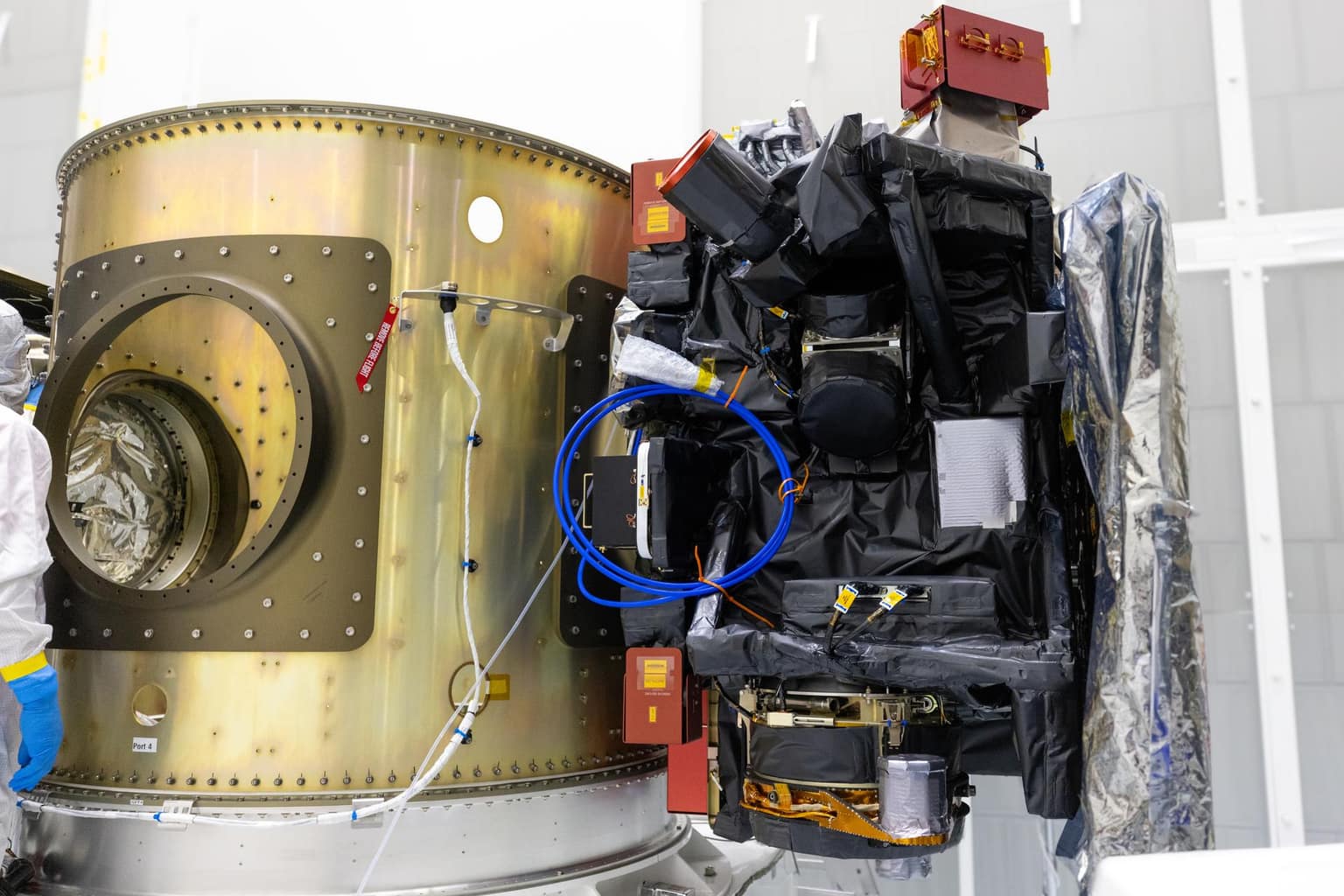
Under the main satellite on a rocket, there is space that went unused. The Evolved Secondary Payload Adapter, or ESPA, is a ring built to use it. On January 18, 2001, its design passed the Critical Design Review, the checkpoint where a design is judged ready to be built. Moog Inc., which makes the ring, marks that date 25 years later.
The concept originated in 1995 at the Space Test Program of the US Department of Defense, and development began in 1999 as a joint effort between government and industry, including the Air Force Research Laboratory. The trick is weight. A solid aluminum ring added only about 45 kilograms to the stack, according to The Space Review's history of the program. The first design could carry a primary payload of 6,800 kilograms and up to six secondary payloads of 180 kilograms each.
The ring first flew in 2007, on STP-1, a Space Test Program mission for the US Air Force that carried one large spacecraft alongside smaller ones. By December 2015, a reference entry records ESPA rings on all three Evolved Expendable Launch Vehicle (EELV) rockets: Atlas V, Delta IV and Falcon 9. In 2018, the ESPA Augmented Geostationary Laboratory Experiment (EAGLE) used ESPA as the primary structure of a free-flying satellite, a role well beyond carrying passengers. Room was not always filled, though: SpaceNews reported that even on those flights, the rings were rarely full.
For smaller missions, the gain is access. Moog says the ring lowered costs and added flexibility for commercial constellations, technology demonstrations and defense operations. The family has grown into Standard ESPA, ESPA Heavy and ESPA Grande, which cover varied payload sizes, and Moog has widened the definition to include larger- and smaller-diameter rings, because some EELVs are no longer expendable.
From November 7, 2026, a flight-qualified ring is on display at the National Museum of Nuclear Science & History in Albuquerque, N.M., until January 10, 2027. Moog says ESPA is entering its next chapter, with work on payload integration and adaptable solutions for future exploration and defense missions. The company gives no date and no detail for that chapter.
Sources — read the originals(Paris time)
Pages consulted while writing
Read next
Comments
Loading the thread…
Sign in to leave a comment. Sign in