The Euclid space telescope finds the most distant quasar so far
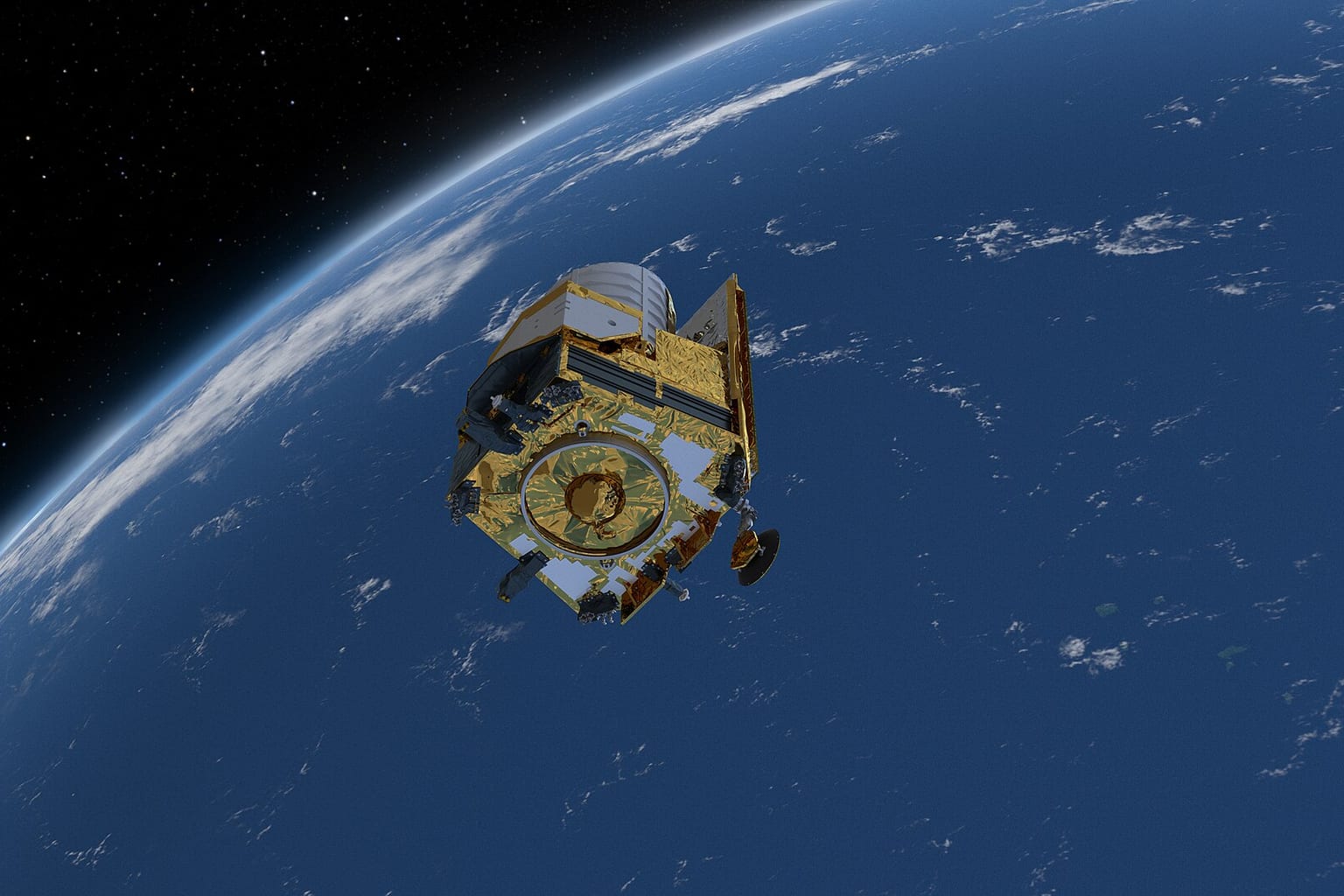
The light that a European space telescope has just captured has been travelling since the universe was just 630 million years old. The Euclid telescope, launched into space by the European Space Agency (ESA) in 2023, has discovered in it the most distant known quasar, according to MPIA. The object is designated J1504+6252; the team led by astronomer Julien Wolf calls it “Dún Aonghasa.” Wolf worked on the discovery at the Max Planck Institute for Astronomy (MPIA) in Heidelberg and is now based at the European Southern Observatory (ESO) in Garching.
A quasar is an extremely bright galactic nucleus. At its centre sits a supermassive black hole, around which matter orbits at enormous speed. In the process the matter heats up so intensely that it glows very brightly, bright enough to be seen even from vast distances. Quasars are therefore among the brightest persistent objects that can be detected from far away.
How far away such an object is can be determined from its redshift. When a light source moves away from the observer, its light shifts towards the red end of the spectrum; the greater the shift, the farther away the source is and the older the light reaching us. For J1504+6252 the redshift is 8.13. The previous record holder, a quasar with a redshift of 7.77, had itself been found with Euclid only a few months earlier. The new quasar existed about 40 million years earlier, according to ESA.
To find it, Euclid combed through roughly 18 months of observational data and filtered a single celestial object out of millions. In its one and a half years of operation, the telescope has found 31 ancient quasars in total, 12 of them with a redshift above 7. At a redshift of 8, quasars are so rare that only a few dozen had been expected across the entire Euclid survey.
The real puzzle lies in the mass. According to measurements, the black hole at the centre has about 360 million solar masses; the James Webb Space Telescope has shown, according to the University of Hamburg, that it powers the quasar. Yet it accretes matter comparatively slowly. From this ESA concludes that it must have reached its present mass very early on, through extremely rapid growth phases. This calls existing models of how early black holes formed into question.
For astronomers, this above all means that the theory now faces a new test. Euclid was built to track down dark matter and dark energy and to look into the early universe. With quasars from its first years of observation, it shows that it is indeed reaching that early epoch. Which growth paths the early black holes actually took must now be explained by every model.
Sources — read the originals(Paris time)
Pages consulted while writing
Read next
Comments
Loading the thread…
Sign in to leave a comment. Sign in