Three new-type solar panels launch into orbit for China's first test
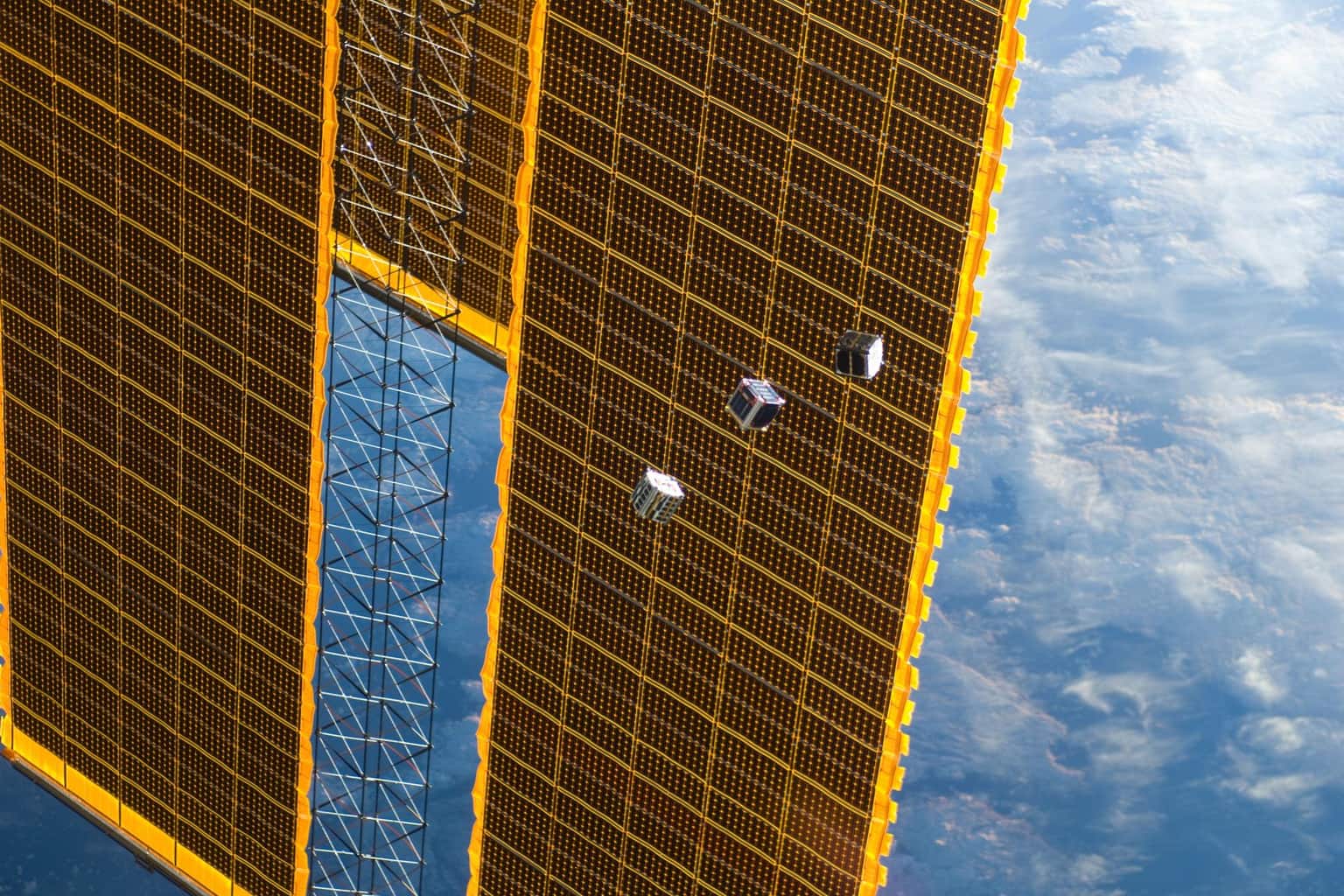
At 7:37 a.m. Beijing time on Saturday, Nov. 7, a Ceres-2 Y3 rocket lifted off from the Jiuquan Satellite Launch Center in northwest China, carrying four satellites. Two of them carried something new: solar panels from Yanhe Technology, built on perovskite, a family of materials with potential to turn sunlight into power at a high output for their weight.
Satellites have long run on gallium arsenide cells, a III-V semiconductor against which perovskite is seen as having lower material costs. Yanhe's three designs test that alternative at once. Two tandem modules stack two light-absorbing layers: one pairs perovskite with crystalline silicon, the other pairs it with CIGS, a thin film made of copper, indium, gallium and selenium. Both ride on the North University of China-1 satellite, in a dawn-dusk orbit where sunlight is nearly continuous. The third is a flexible single-junction perovskite module, one light-absorbing layer, mounted on the Yunyao-1 28 satellite. It will be imaged through repeated hot and cold cycles and monitored for damage from particle radiation and atomic oxygen.
The launch builds on a September test, when a flexible perovskite module flew on the Tianyi-52 satellite; Yanhe calls it China's first component-level in-orbit test of that technology. In October the company opened a joint laboratory with the Hong Kong University of Science and Technology. Its chief technology officer, Peng Zongyang, said the two tandem designs target different segments of the space market, and that the mission aims to measure their efficiency and stability under real orbital conditions. Yanhe has also said its tandem modules passed simulated extreme space tests before launch, according to perovskite-info. Chinese state broadcaster CGTN reports that the Tiangong space station is due to run its own perovskite cell test in orbit.
The limits are clear. Yanhe has not disclosed conversion efficiencies, rated power, active areas or weights, and it had not answered a request for those specifications when pv magazine reported the launch. It has not said how long monitoring will last or how much telemetry the satellites will send. Pv magazine also notes that holding performance under prolonged radiation and repeated thermal cycling remains a key technical challenge for perovskite modules.
For satellite makers, the gain is weight. Lighter modules could help cut launch costs for the low Earth orbit constellations that are driving demand. Yanhe says it has also set up a 100 MW fully automated mass-production line for consumer-grade perovskite panels, a claim made on its own website. The next step is the data itself: comparative in-orbit performance for the three architectures, which the company has not yet put on a timetable.
Sources — read the originals(Paris time)
Pages consulted while writing
Read next
Comments
Loading the thread…
Sign in to leave a comment. Sign in