Tobacco plants can now make Taxol, a costly cancer drug
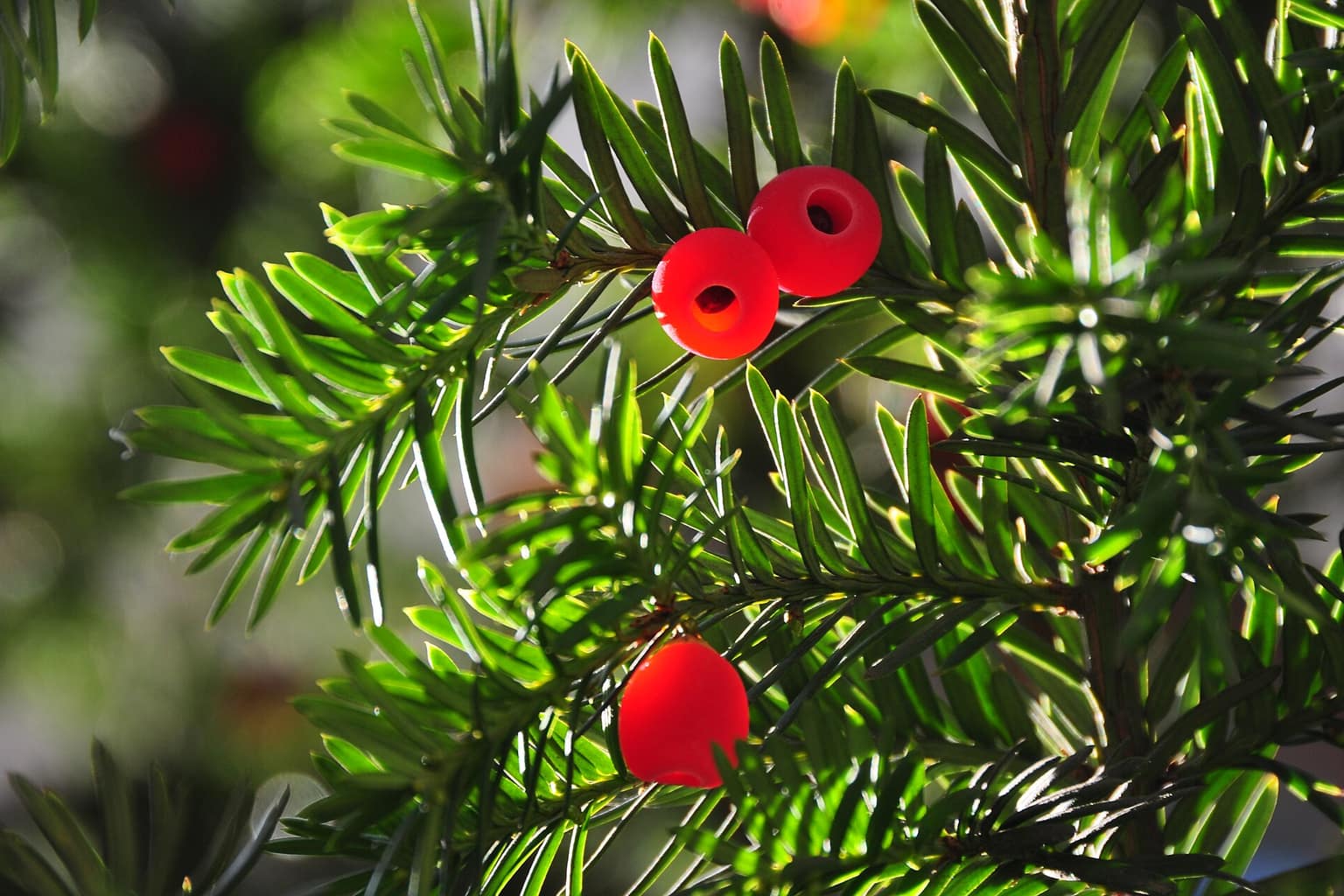
For a long time, the cancer drug Taxol has been produced from the bark of the yew tree. Now a team at the University of Copenhagen has shown that tobacco plants can make it too. After being given the yew's own genetic instructions, the plants produced Taxol at levels comparable to those found in yew bark, according to a study published in Nature Chemical Biology.
Taxol, known to chemists as paclitaxel, belongs to a family of chemotherapies called taxanes. It is used against breast, ovarian and lung cancers. It works on the cell's internal scaffolding: microtubules, tiny tubes that help pull chromosomes apart when a cell divides. The drug interferes with them, and the division stops. Taxol is also one of the most expensive medicines available, and the reason lies in how it is made. Today it is produced by extracting related compounds from plants, then converting them into the drug through a long series of complex chemical reactions.
Its story is older than many patients might expect. Development began in 1962, with a collection made in Washington State. In 1992, Bristol-Myers Squibb received approval from the US Food and Drug Administration for paclitaxel in ovarian cancer. Since that first approval, more than 1 million patients have received Taxol, according to a National Cancer Institute page on the drug.
Supply was the bottleneck. Paclitaxel occurs at 0.002 to 0.04% of the dry weight of yew bark, mostly in the inner bark, and a young yew takes more than a hundred years to mature. Chemists tried to bypass the tree. A complete chemical synthesis was achieved in 1994, but its production costs made it commercially unviable. In 1990, a semi-synthetic method established by Horton used the needles of a more widely available yew instead of bark.
What was missing was the map. Taxol is built through a chain of at least 19 steps, and there had never been a complete manual describing how the plant runs that chain. A preprint on the yew reports that earlier attempts to rebuild the chain in other organisms had been held back by inefficiency. Earlier work had reproduced only part of it in tobacco. The chemistry news site C&EN says that, as of last year, only a few gaps remained in understanding the pathway.
The team's approach was closer to a copying job than to chemistry. The researchers took candidate genes from the yew, meaning the likely suspects, and introduced them into Nicotiana benthamiana, a tobacco species that grows quickly and is widely used in research. Each gene holds instructions for one part of the chain, and putting them together in a host cell lets that host run the whole sequence. "The tobacco plant is an effective platform for growing Taxol because it provides the same cellular environment as the yew tree but is a lot faster to grow and easier to engineer," says Kampranis. Zhen Fan, a postdoctoral researcher and co-first author, describes the scale of the work: "We introduced more than 20 of the yew tree genes into tobacco plants to demonstrate the entire biological process of Taxol production step by step."
Sotirios Kampranis, a plant biochemist at the University of Copenhagen and the study's senior author, presents the result as a blueprint. "We have tested numerous hypotheses to uncover the complete biological pathway for producing Taxol from start to finish. We now have a blueprint, essentially a recipe, that can be used to produce Taxol in plants, yeast or other systems." The blueprint is not tied to one host. Kampranis sees fermented yeast cells as a promising route, and says other researchers can now build on the work whatever method they choose.
For patients, the point is price. The team says the blueprint could make manufacturing easier and the final product more affordable. Kampranis draws a clear line between places: "In Denmark, hospitals and patients are not as dependent on low-cost Taxol. But in many other parts of the world, affordable Taxol treatment is crucial. Our discovery could ultimately contribute to cheaper Taxol, making treatment more accessible in low-income countries." The researchers give no timeline for such a product and no price.
The tobacco result is still a laboratory result, and one problem is unsolved. The yew genes are not yet a stable part of the plant's own genetic makeup, so they must be introduced again every time. Large-scale production, in greenhouses for instance, requires plants that carry them permanently.
Kampranis calls that the next major challenge.
Sources — read the originals(Paris time)
Pages consulted while writing
Read next
Comments
Loading the thread…
Sign in to leave a comment. Sign in