Tufts' NanoMAP software sorts alpaca nanobodies
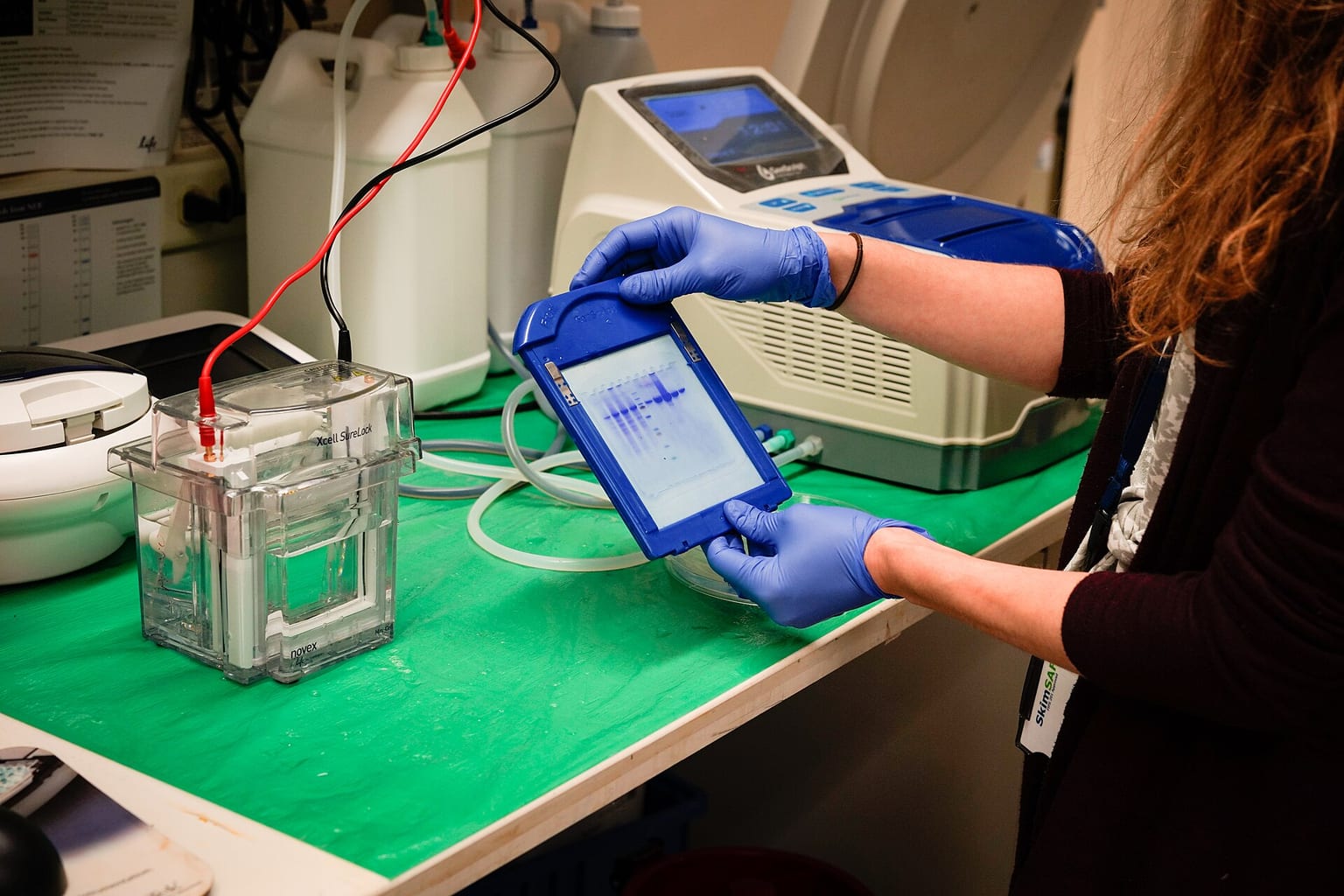
For two years, Will White, a postdoctoral scholar in the Department of Computer Science at Tufts, has worked with alpacas. The animals are known for their fleece, but the team's interest is in the antibodies they produce. The work has now been published in Communications Biology under the title “Functional mapping of immune nanobody repertoires with NanoMAP.”
Nanobodies are the mini version of antibodies. They are about 10x smaller than standard antibodies, which lets them slip into tight spaces and reach invaders. They are also simpler to handle: a standard antibody is made of four protein chains that must be matched, while a nanobody is made only of heavy chain proteins, so no pairing is needed. Until now, the discovery method was slow. Researchers picked random samples from a large group, tested their properties in the lab, and hoped to find good candidates. White says this approach is time-consuming, may miss stronger candidates, and often has to be repeated.
The process starts on a farm. The alpacas, rented from a local farm, are injected with small amounts of protein antigens from a pathogen: in this study, from COVID-19, botulinum neurotoxin, or a parasitic blood fluke. Following National Institutes of Health guidelines, the animals are immunized over several weeks. Their immune systems then produce nanobodies. Researchers collect blood, separate the B cells that make them, extract the nanobody DNA and reformat it, then test how well each one binds to its target and to all known variants of that target. After the non-binders are removed, NanoMAP groups the remaining sequences into “clonal families” according to the similarity of their amino acid sequences, and helps researchers decide which ones to develop.
The logic is that molecules with similar sequences should behave similarly. “If we group nanobodies with similar sequence, we can aggregate the information and get a more accurate picture of the behavior of that group,” White says. He also argues that the breadth of the data is what sets the Tufts effort apart: “There are other people trying to do somewhat similar things,” he says, “but what we have that I haven't seen anywhere else is the size of our data set in terms of the diversity of the different target proteins.” The project also brings together biology and computer science, two fields that White says often talk past each other. “Both sides are getting a lot out of it,” he says.
For Shoemaker's lab, the immediate gain is a more complete tool for analyzing its own data. For the computer science side, it is access to a dataset that the team plans to use in projects now underway. For patients, the path is longer. The paper describes a method for choosing candidates, not a diagnostic or a treatment, and the sources give no timeline for products built on these nanobodies. What the paper does establish is that a computational filter can be placed between the alpaca's immune response and the lab bench, so that fewer candidates have to be tested blindly.
Sources — read the originals(Paris time)
Read next
Comments
Loading the thread…
Sign in to leave a comment. Sign in