Voice recordings flag type 2 diabetes in new study
Ask someone to read a short English sentence into a phone, and the recording holds more than words. At Klick Labs, the team behind a new study in the IEEE Journal of Biomedical and Health Informatics turned such recordings into visual maps of sound frequencies, called spectrograms, and let a model search them for patterns nobody had named. The model worked from 14,759 voice recordings from 461 adults, and it was able to flag type 2 diabetes from the voice alone.
The 2023 version of this work relied on a list chosen in advance. Klick's earlier study, published in Mayo Clinic Proceedings: Digital Health, used fixed one-sentence recordings and combined them with age and body mass index, and it identified 14 predefined acoustic features, including pitch, intensity, shimmer and jitter. This time the spectrograms went to an Audio Spectrogram Transformer, a model that learns combinations of acoustic patterns straight from the recordings. 'Now, we can literally see many more clues related to diabetes within vocal biomarkers,' said Yan Fossat, senior vice president of digital health R&D at Klick Applied Sciences and principal investigator of the study. 'We expanded our analysis beyond shimmer, jitter and other predefined voice features.'
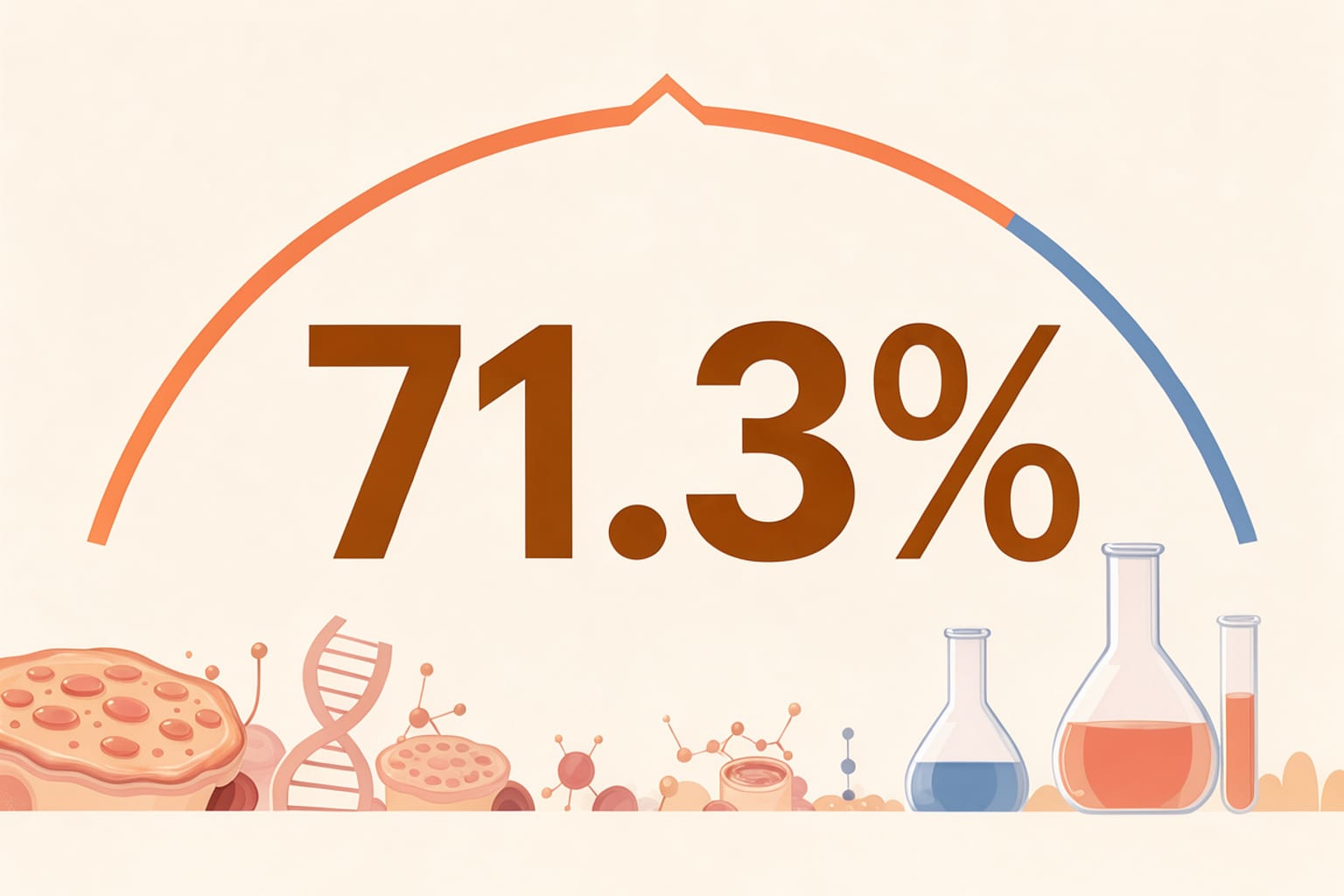
The results are reported separately for women and men: 71.3% balanced accuracy for women and 72.4% for men, with AUC values of 0.788 and 0.779. Balanced accuracy averages sensitivity and specificity, so people with and without the disease carry equal weight. The 2023 study reported something else: conventional accuracy, the share of all predictions that were correct, of 89% for women and 86% for men. The authors state that the difference reflects different inputs, methods, validation approaches and data sets, and that it is not a claim that the new models are more accurate. The two sets of figures should not be compared directly.
These are research findings from the team that built the model. The study reports no clinical tool in use with patients, and the figures still have to be confirmed on new groups of people and new recordings before anyone can rely on them. The reporting does not say when, or whether, the approach will reach a clinic.
If it holds up, the appeal is practical: a screen that runs on a phone, with a few seconds of speech and no blood sample. For now the beneficiaries are researchers, who get a richer way to study the voice. The next test is already scheduled: in June 2026, Klick Labs announced a series of studies with Mayo Clinic in Florida on novel vocal biomarkers linked to a number of chronic diseases and serious health conditions.
Comments
Loading the thread…
Sign in to leave a comment. Sign in