Water-soluble printed mandrel builds liner-free gas tanks
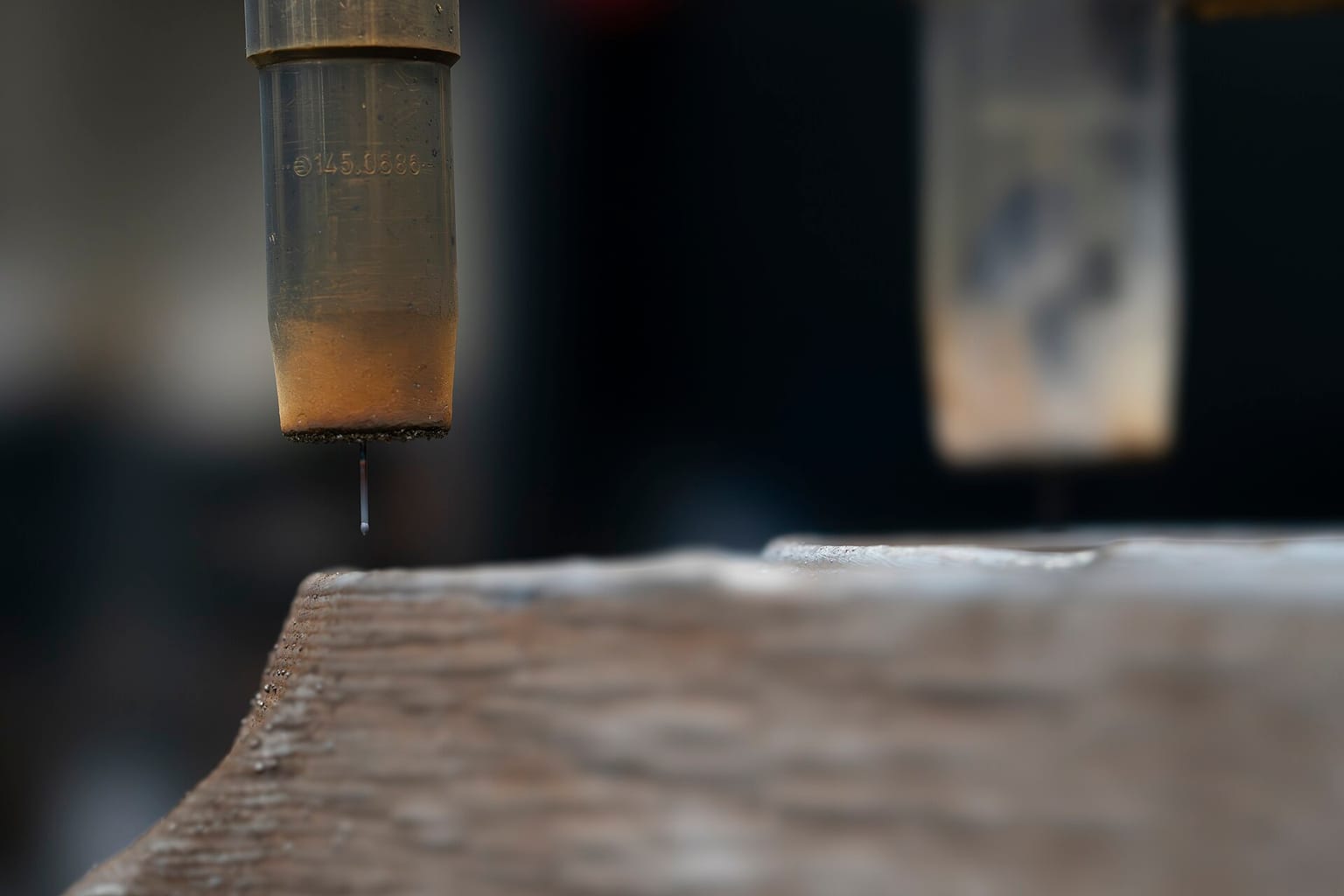
The hardest step in making some composite pressure vessels is getting the tool out. At Oak Ridge National Laboratory (ORNL), researchers print a large temporary mandrel, an internal form, on a large-format polymer printer. Carbon fibre is wound around it and cured, then water dissolves the mandrel and leaves the composite shell behind. The work, developed with Infinite Composites, JuggerBot 3D and Oklahoma State University, earned a 2026 Award for Composites Excellence.
Internal tooling has usually been metallic or mechanically collapsible, and removing it from enclosed geometries is the difficulty the method addresses. According to the laboratory, a soluble mandrel is simpler to remove and allows greater geometric flexibility. The finished vessel is a composite structure without a retained liner, and a gas-barrier coating is applied afterwards. Additive manufacturing produces the tool, not the vessel itself.
ORNL names hydrogen and other high-pressure gas storage as potential applications. Its announcement, dated 13 October, gives no production volumes and no quantified comparison of manufacturing costs. The advantages are therefore the laboratory's own description, not measured figures.
For makers of high-pressure tanks, the change lies in how the interior of a complex shape gets formed: a tool that dissolves with water replaces one that has to be pulled out. Who will adopt it, and at what cost, is not yet known. No commercial timeline has been announced, and the award recognises research rather than a production line.
Sources — read the originals(Paris time)
Read next
Comments
Loading the thread…
Sign in to leave a comment. Sign in