A hummingbird flew 6,526 km from Alabama to Alaska in 38 days
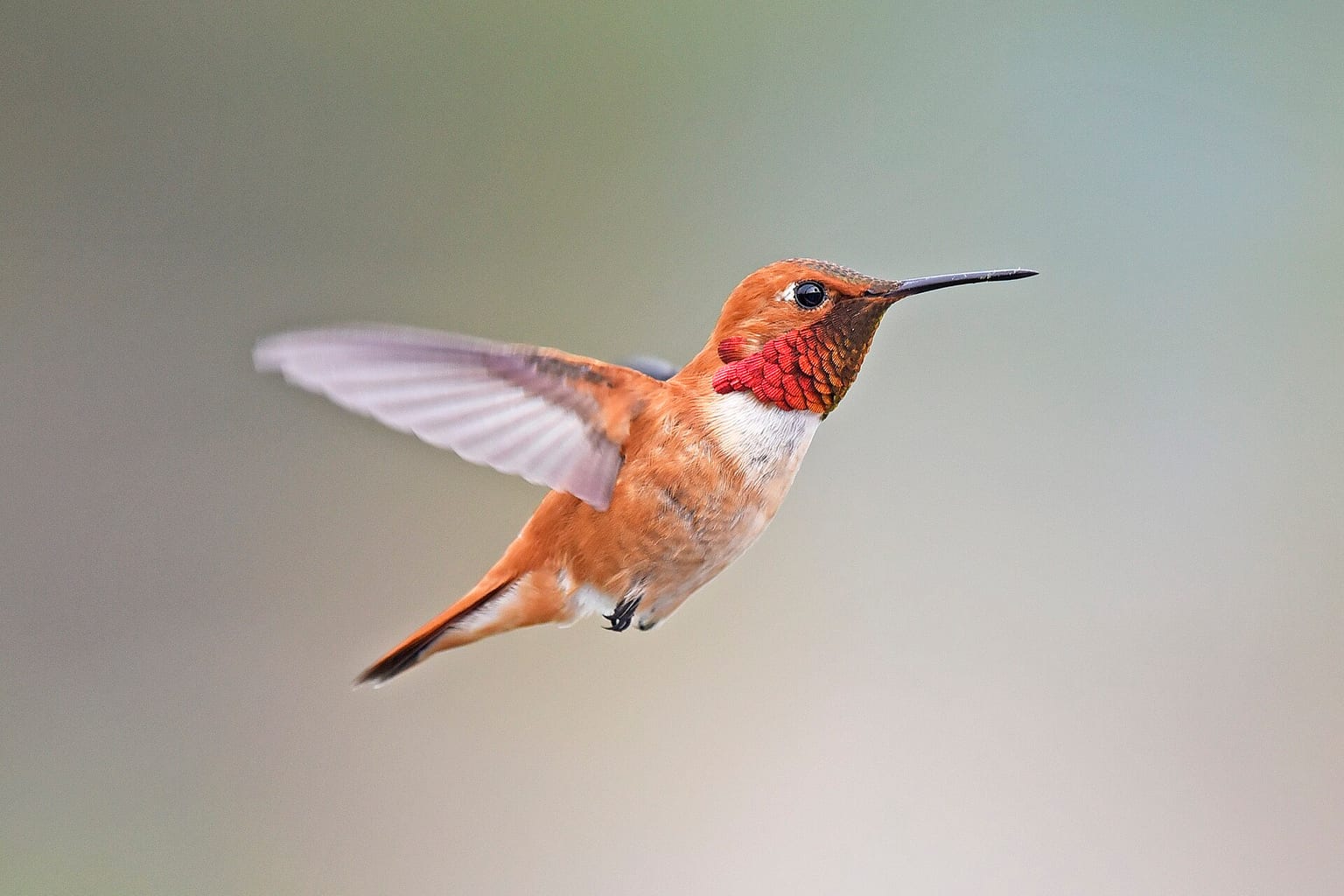
On 27 March 2025, a male rufous hummingbird was released in Lillian, Alabama, carrying a transmitter glued between its shoulder blades. The device is not much heavier than a grain of rice. In the 38 days that followed, the bird travelled 6,526 km to what was presumed to be its breeding grounds in Juneau, Alaska, a journey the study describes as the longest hummingbird migration ever recorded.
Hummingbirds have always been hard to follow. Most tracking devices are too heavy for birds under 5 grams. For a century, scientists have ringed these birds across North America, yet their migration routes remain poorly understood. Researchers mostly had to tag birds and hope to spot them again somewhere else. “Up until about two years ago, we didn’t have technology that was small enough to be used regularly,” said Kyle Shepard of the Banding Coalition of the Americas, a group based in Baldwin County, Alabama.
The team, led by Emma M. Rhodes of the University of Memphis, built a transmitter called the BlūMorpho. It runs on sunlight, weighs 0.06 grams, and sends its signal by Bluetooth, the short-range wireless standard found in headphones and phones. The researchers glued it to a small patch of trimmed feathers between the shoulder blades. The total weight, tag included, stayed at or below 3% of each bird’s body weight.
The clever part is what the tag does not do. It stores no location data. Every three seconds it emits a unique signal, and any compatible smartphone, tablet or computer passing within about 200 m can pick it up. That device then relays the position to an online database, anonymously, and only if its owner has Bluetooth and location services switched on. The tracking network is the crowd of ordinary devices already in people’s pockets, which is why the team could follow the birds in near real time.
The team tagged 11 birds in coastal Alabama and Florida during spring 2025: four rufous hummingbirds and seven ruby-throated hummingbirds. The tags produced 23,784 location points across 23 U.S. states, Mexico and Canada. On average they delivered data for about 47 days, and the longest track lasted 128 days.
Some of the routes surprised the team. One rufous hummingbird headed north, doubled back south in a 345 km loop, and only then turned east. A ruby-throated hummingbird flew southeast from Alabama into Florida, instead of taking the northward or northeastern route that researchers expected.
The record-setting bird was a male rufous, and the study says its trip surpasses the longest migration previously recorded for a rufous female, one banded in Tallahassee, Florida, on 13 January 2010. The context explains why distance matters. Rufous hummingbirds make one of the longest migrations of any bird relative to body size, and each year they make a clockwise circuit of western North America. Their range runs from breeding grounds in Alaska and northwest Canada to wintering sites in Mexico, a distance of nearly 4,000 miles. An Alaska Department of Fish and Game account describes what seems to be the same trip as “a 3,500 mile-plus” journey and refers to the bird as a female, so the figures and the sex given differ from the study’s own.
The main limit is keeping the tags on. “Currently, it is not longevity of the unit itself that is a limitation but retention time on the individual,” the study’s authors wrote. The battery is not what limits the tags: there is no battery to run out. What remains unknown is the effect on the birds. The study “was not designed to quantify potential behavioral, physiological, or survival effects of transmitters and attachment,” and the authors say further research is needed.
For researchers, the change is that a bird’s stops, detours and long legs can now be measured instead of inferred from a rare sighting. The project behind the study describes North American hummingbird migration as poorly understood, a gap that limits efforts to develop effective conservation. A page from the Alaska Wildlife Conservation Center says the U.S. Fish and Wildlife Service and the Banding Coalition of the Americas plan to fit the transmitters to rufous hummingbirds that visit the centre.
The next question is how long a tag can stay on a bird that weighs less than 5 grams.
Sources — read the originals(Paris time)
Pages consulted while writing
Read next
Comments
Loading the thread…
Sign in to leave a comment. Sign in