A molecule that frees cell enzymes protects neurons
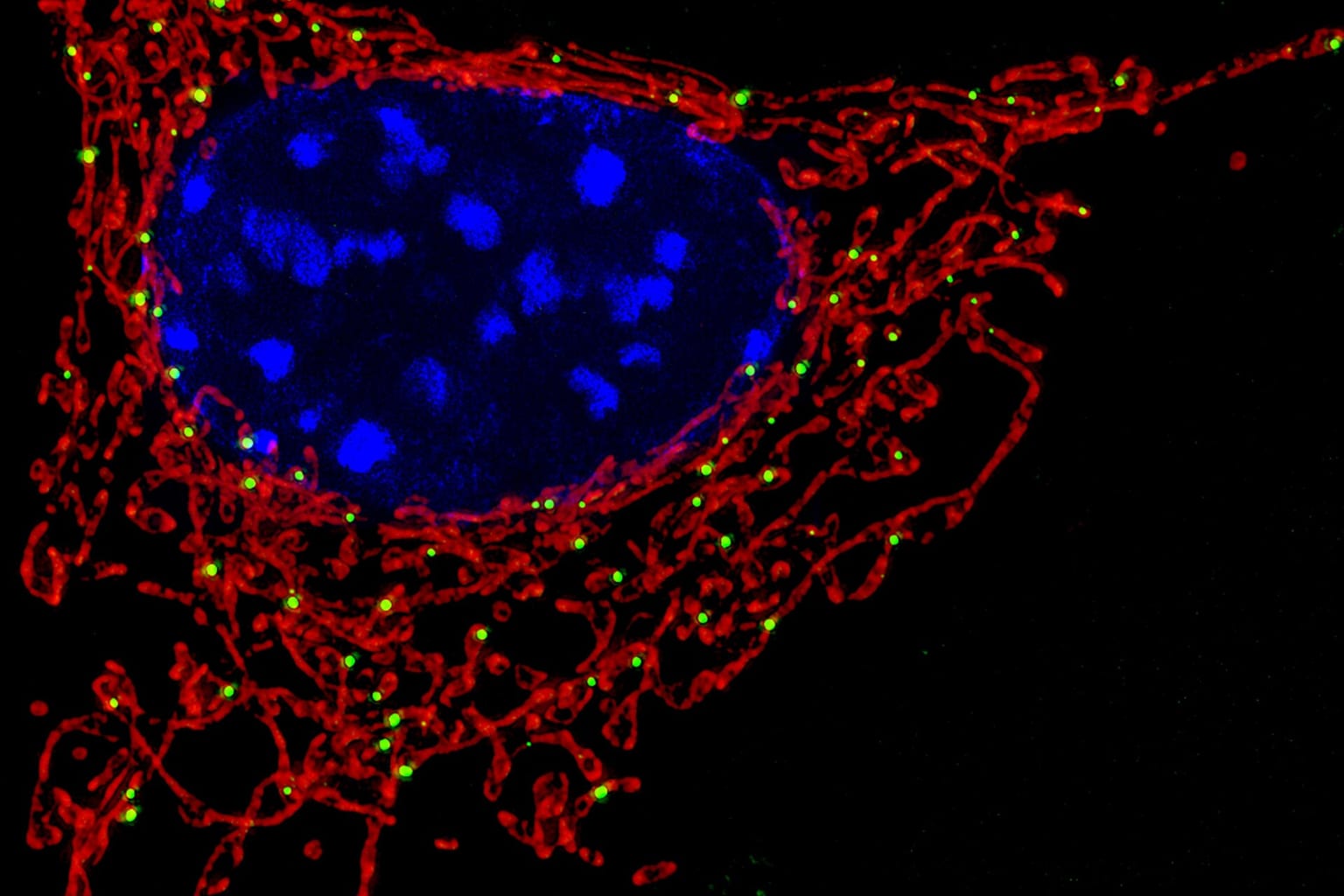
Inside almost every cell, mitochondria turn food into energy. In some diseases, misfolded proteins jam the channels that feed them, and the cell's power supply begins to fail. A team at the University of California, Berkeley has now shown, in cells grown in the lab, that a small molecule can unjam those channels and keep neurons alive.
The usual drug strategy for such problems is targeted protein degradation, which destroys a harmful protein rather than merely blocking it. It works, but it generally hits one protein at a time, while diseases of the mitochondria involve many. Earlier studies had identified an enzyme, the E3 ligase CUL2FEM1B, that clears several of these blocking proteins, but it is held in check by proteins called BEX, which act as brakes.
The researchers screened roughly 120,000 compounds for molecules able to push the BEX brakes off while leaving the enzyme free to recognise its natural targets. Two candidates emerged, BD1 and BD2. BD2 displaced all BEX proteins and increased the breakdown of several natural enzyme targets, which improved the delivery of healthy proteins into mitochondria and raised mitochondrial respiration. The authors call the approach stimulated protein degradation, because it speeds up the cell's own clearance rather than creating new targets.
In cell models, the effect reached two rare diseases. In a model of COX deficiency syndrome, a genetic metabolic disorder, BD2 restored respiratory function and protected lab-grown neurons from premature death. It also protected neurons modelling Friedreich's ataxia, an inherited disease that progressively damages the nervous system and impairs coordination. The survival benefit was similar to that of omaveloxolone, an approved treatment, but only in these laboratory tests. The method caused no detectable oxidative stress or mitochondrial damage under the conditions tested.
For patients, nothing changes yet. The researchers have not tested BD2 in humans or animals, and they say it is still unknown whether it can safely reach affected tissues, including the brain. The next steps they outline are to check that delivery, and to see whether similar brake-releasing strategies can activate other protective E3 ligases. The authors suggest BD2 could be a starting point for treatments of several diseases linked to damaged mitochondria.
Sources — read the originals(Paris time)
Read next
Comments
Loading the thread…
Sign in to leave a comment. Sign in