A robot learns to move with the crowd instead of stopping
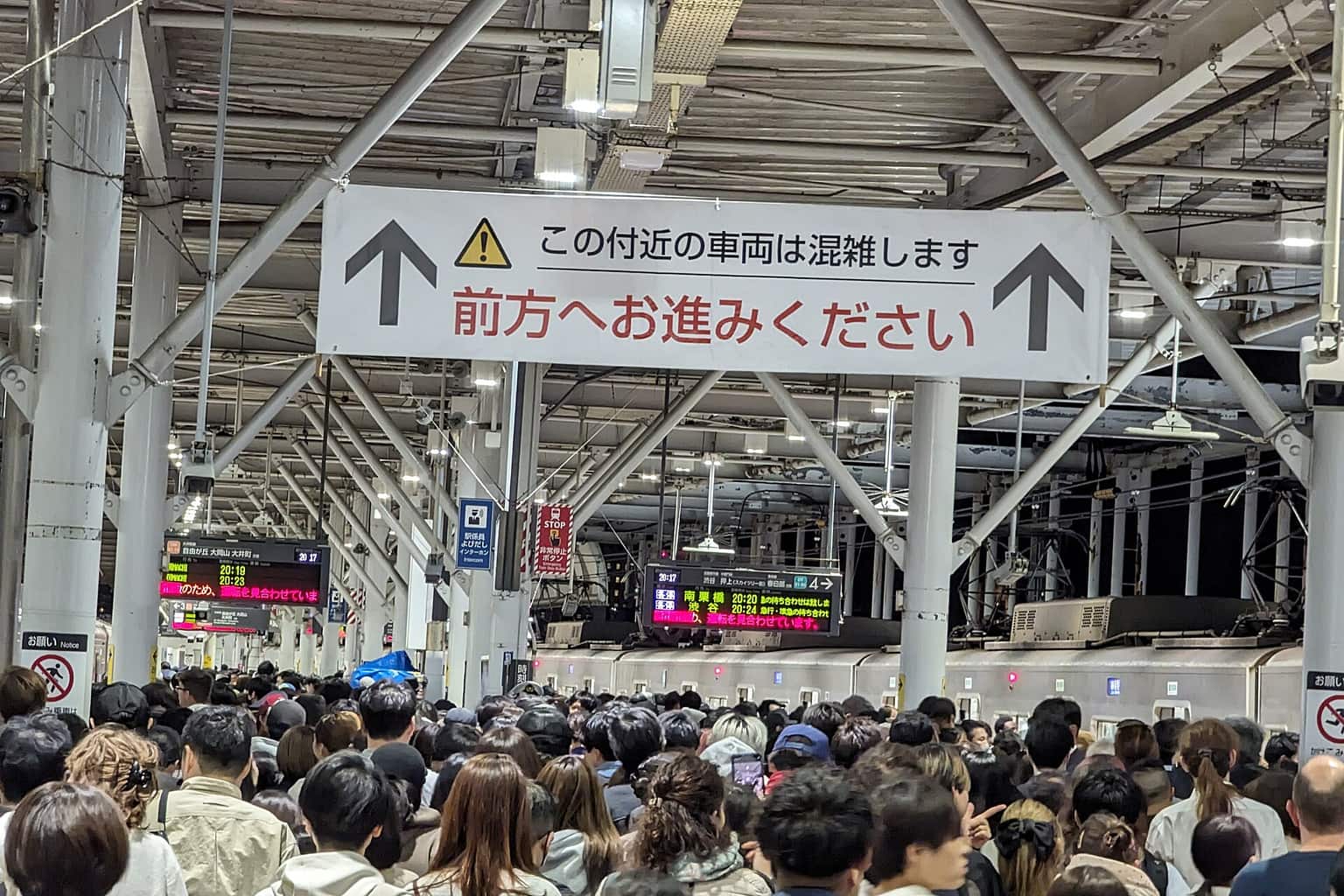
Picture a train station at rush hour, or an airport terminal on a busy weekend: hundreds of people streaming in every direction, almost none of them stopping. For a navigation robot, that scene is a trap. Researchers at Örebro University in Sweden have built a system that lets a robot cross such a crowd by doing what the pedestrians do: moving with the flow.
Most navigation robots still treat every person as an obstacle to be avoided. In a dense crowd, there is often no clear path, and the robot can fall into what researchers call the “freezing robot problem”: it comes to a complete standstill because every direction seems blocked. Yufei Zhu, who recently defended his doctoral thesis in computer science, states the requirement plainly. A robot guiding a visually impaired person through a crowded terminal “cannot come to a complete stop every time someone walks past.” It has to keep moving, and it has to follow the flow.
The method, called HiCrowd, rests on what Zhu calls “Maps of Dynamics.” A conventional map records fixed features such as walls and doorways. These maps record how people typically move through a particular place at different times of day. Zhu compares it to a newcomer arriving in a town, watching how the locals behave and copying them. Once the robot has learned those habits, it can predict where people are heading, and it reads the crowd as guidance rather than as a threat. The work was carried out under the supervision of Professor Martin Magnusson, in close collaboration with the Miraikan Accessibility Lab in Tokyo and with Bosch in Germany.
The system was tested in real public settings, at the Science Museum Miraikan in Tokyo and at Expo 2025 in Osaka. There, a robot about the size of a small suitcase had to thread its way through dense streams of visitors. Zhu recalls one moment. The robot crossed a crowded hall behind a group, and when the group turned right, it turned with them, even though it could not yet see why. A few seconds later, a large crowd came straight toward them. The robot passed that oncoming flow without stopping even once. Nearby people did not seem alarmed by it, and they did not keep their distance: they treated it like any other pedestrian.
In the paper, published in the proceedings of the 2026 IEEE International Conference on Robotics and Automation (ICRA), the team compares HiCrowd with reactive and learning-based methods. Both replays of recorded human trajectories and live runs were used. The authors report that their method outperforms the alternatives in navigation efficiency and safety, on a real-world dataset and on a synthetic crowd dataset. Rival learning-based methods, according to the paper, collide more often when pedestrians do not react to the robot. The limits are named too. The robot’s camera cannot see pedestrians at its sides or behind it, which can delay its reactions when crowd conditions change. And the demonstrations so far took place in a museum and at an expo, not at a station or an airport.
What changes is the long-term target. For a traveler with a visual impairment, a guide robot would have to move smoothly with the crowd rather than stop at every passerby. “At a train station, there are clear habits and movement patterns,” Zhu says. “Using our methods, a guide robot could lead a person with a visual impairment so that they move naturally with the flow rather than struggling against it.” In the long run, the team sees the technology as a digital complement to guide dogs. No date has been announced. The same mapping approach has already been applied in settings as different as warehouse robots in industrial environments and service robots moving among large groups of museum visitors.
What opens next is the guide itself: a robot that walks beside a person with a visual impairment through a busy station, reading the crowd as it goes.
Sources — read the originals(Paris time)
Pages consulted while writing
Read next
Comments
Loading the thread…
Sign in to leave a comment. Sign in