AI turns scrap metal impurities into an advantage
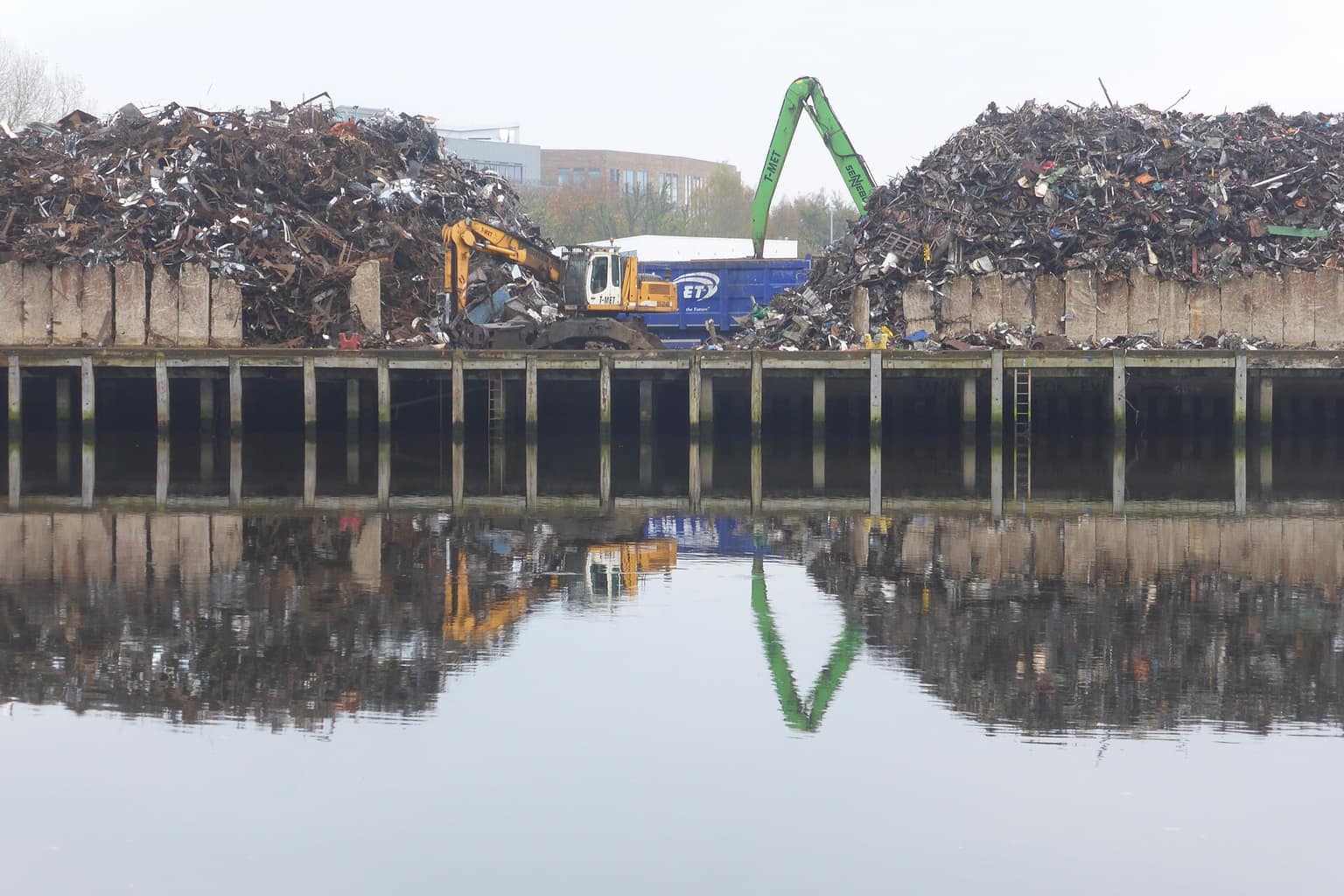
A chunk of cast iron from the scrap heap, and with it the problem that has always made scrap metal difficult: every batch has a different composition. Impurities degrade the result. A German-Chinese research team led by Chao Yang of Shanghai Jiao Tong University is turning that logic on its head. It deliberately uses the impurities as alloying elements and employs artificial intelligence (AI) to do so. In the lab, this has produced materials that surpass earlier recycled alloys in strength and ductility.
The process starts with an algorithm that generates new candidates based on existing alloys. Within predefined limits, it varies the composition as well as the temperature and duration of the heat treatment. Artificial neural networks predict for each candidate the tensile strength, meaning the resistance to tearing, and the elongation at break, meaning how far a material can be stretched before it breaks. A second model, trained on a larger dataset, checks the selection. The team produces and tests the best materials. The measurement results feed back into the database and improve the predictive model for the next round.
The starting material was spheroidal graphite cast iron, a widely used cast iron with nodular graphite that tolerates impurities well. The researchers produced and analysed 17 AI-designed variants, 14 of which had a particularly good combination of strength and ductility. Compared with earlier recycled materials, tensile strength rose by up to 15.2% and elongation at break by up to 73.2%. Production costs were about 8% lower than with the process in which scrap is mixed with primary iron. According to the team, this dilution undermines the environmental benefits of recycling, because producing primary metal requires a great deal of energy and causes considerable CO2 emissions.
The potential is large. Around two billion tonnes of metal are produced worldwide each year, much of it from ores. Conventional metal production accounts for 10% of global energy consumption and roughly 8% of all greenhouse gas emissions; within industrial emissions, the share is around 40%. For companies that process scrap, this could mean that scrap of variable composition no longer has to be diluted but can be turned directly into usable alloys. So far, the results come from the lab, and the researchers have not given a timeline for industrial applications.
Next, the team wants to apply the AI-based process to recycled steels as well as aluminium and copper alloys. The results are described in the journal Science Advances.
Sources — read the originals(Paris time)
Read next
Comments
Loading the thread…
Sign in to leave a comment. Sign in