Antarctic ice cliffs collapse fast, then stabilize, satellites show
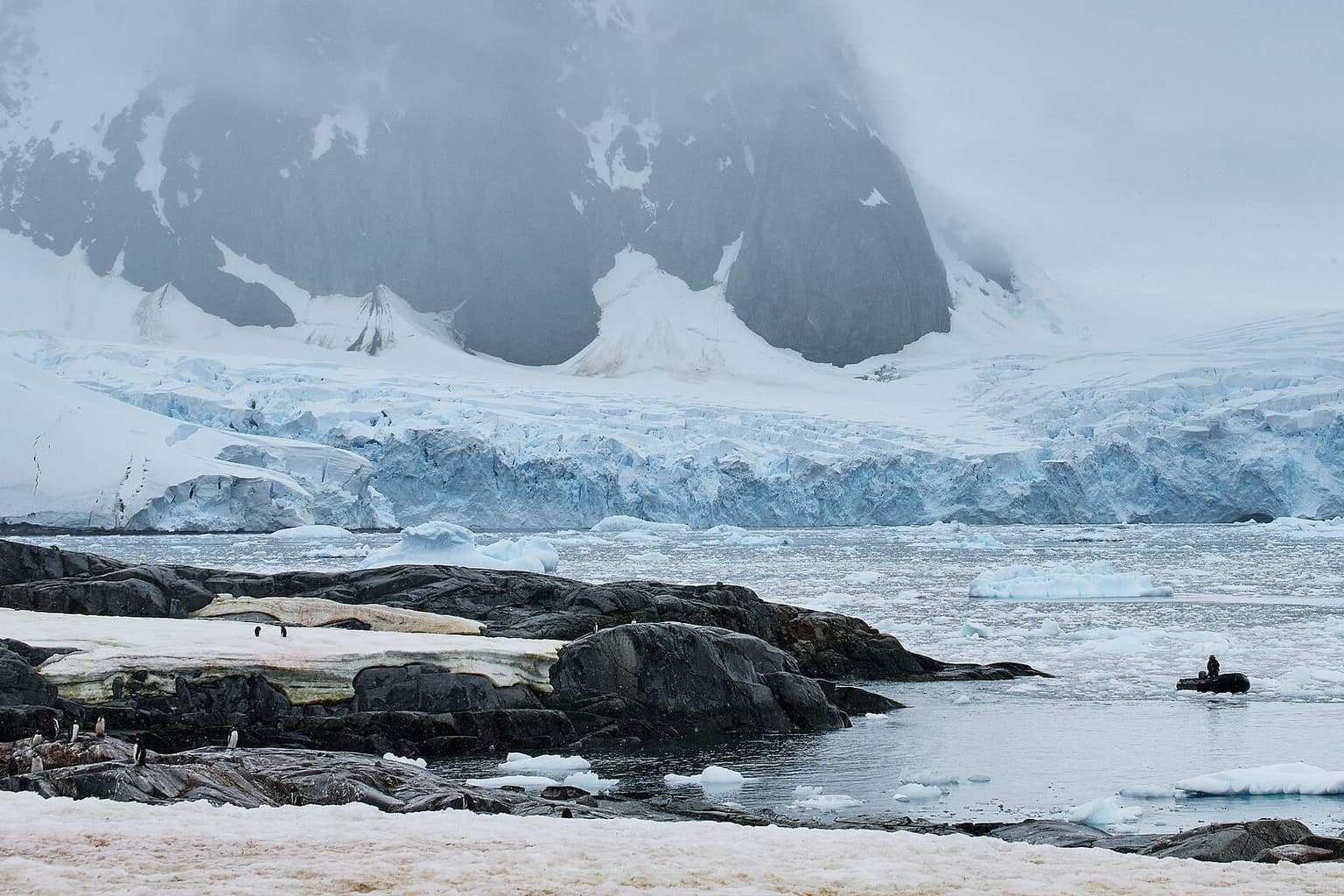
Along Antarctica's coast, the ice shelves that buttress the ice sheet are melting and breaking off at record rates, and they leave behind sheer cliffs of solid ice. For years, the working assumption in glacial science has been simple: a cliff taller than about 100 meters, roughly the height of the Statue of Liberty, should collapse under its own weight, exposing a taller cliff inland that does the same, and so on. A study published in the journal Science by researchers at MIT and the Woods Hole Oceanographic Institution tests that chain of logic against real measurements, and finds it incomplete.
The team used NASA's ICESat-2 satellite, which carries a laser altimeter to measure the height of ice sheets, glaciers and sea ice around Antarctica. Between 2019 and 2023, it recorded every three months more than 15,000 ice cliffs. The typical cliff stood about 30 meters tall, far below the proposed threshold, and only a few rare cliffs passed 100 meters. Study author Caroline Needell, a graduate student in the MIT-WHOI Joint Program, worked on the analysis with Catherine Walker of WHOI and Jeremy Bassis of the University of Michigan.
The surprise came from speed, and from what happened next. Cliffs that collapsed retreated faster than models had predicted, which would mean more ice lost to the sea. But the retreat was short-lived. In the four regions where the tallest cliffs stood, around 100 meters and one at 127 meters, the ice soon stabilized and spread back toward the ocean. 'We don't see this runaway effect,' Needell says.
So what keeps a cliff in place? The data point to three factors. Cliffs that stayed put had thicker mélange, the slushy mix of broken icebergs and sea ice that gathers at a cliff's face, which Needell calls 'a built-in stabilizing effect'. Deeper water pushes back against the cliff and keeps it from collapsing. And the land beneath matters: where the bedrock rises in a bump, the ice above it is thinner than its surface suggests, which acts as a speed bump against collapse.
For the people who model sea-level rise, the message is that cliff height alone is not enough. The ice-sheet models used so far treat height as the only variable that matters, and the study's data suggest that mélange, water depth and bedrock shape have to enter the calculation. In the short term, the cliffs still retreat faster than those models predict, so the ice loss is larger than expected. The study covers only four years, and it gives no new sea-level estimate. Modelers can now use these variables, but the researchers do not say when they expect them to appear in projections.
Sources — read the originals(Paris time)
Read next
Comments
Loading the thread…
Sign in to leave a comment. Sign in