Artemis 2 rocket maneuvers disrupt GPS signals over North America
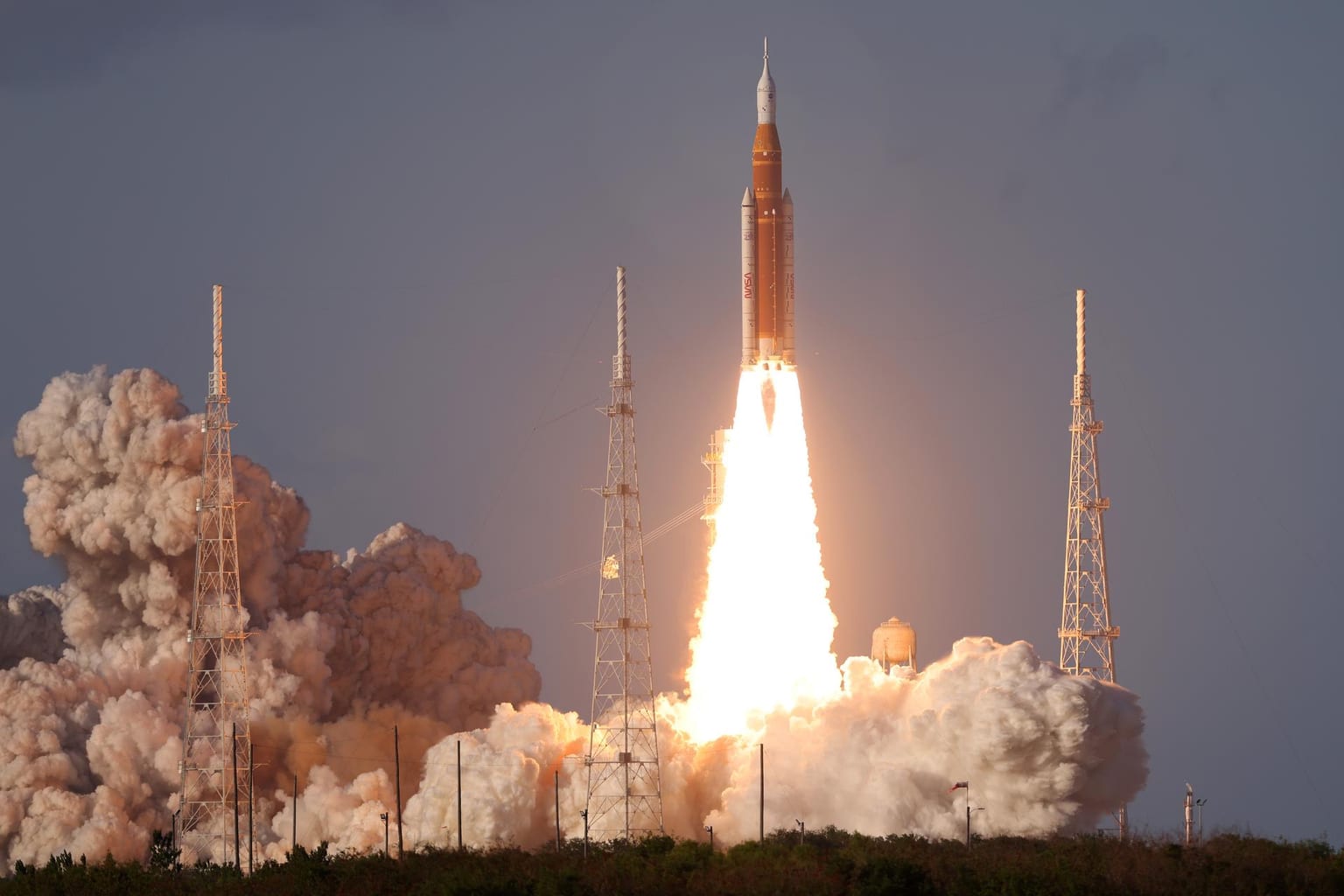
During liftoff, the rocket literally punched a hole in the ionosphere above the Earth. Artemis 2, the first crewed mission to the Moon since 1972, launched on April 1, 2026, with four astronauts aboard the Orion spacecraft. A study by a team from National Cheng Kung University in Taiwan and NASA's Goddard Space Flight Center, published in the journal Geophysical Research Letters, now shows that the Space Launch System (SLS) rocket altered the ionosphere during launch and disrupted GPS signals.
The ionosphere is the electrically charged region of the upper atmosphere, extending between 60 and 1,000 kilometers above the Earth's surface. There, the density of free electrons determines how GPS signals travel. Ground receivers determine their position by constantly measuring their distance to GPS satellites. When the electron density changes, the signals arrive earlier or more slowly than usual. This can also happen during solar storms.
The first hole formed at liftoff, caused by shock waves and gravity waves, and lasted only briefly. Just over two hours after launch came the maneuver to raise the apogee, meaning the point of the orbit farthest from Earth. In this maneuver, the engine fires at the point closest to Earth, and the thrust increases the spacecraft's speed. This burn opened a hole over North America about 5,000 kilometers long. Just over a day after launch, the rocket initiated the maneuver onto a translunar trajectory, meaning the course to the Moon. This maneuver also caused a disturbance over North America, though a weaker one.
According to the study, Artemis 2 thus caused disturbances over the same region during three maneuvers, for the first time, something a single mission had never done before. The measurements come from ground-based GPS systems. “A position error of just a few meters is enough to make a self-driving car change lanes,” study author Charles Lin told the website Space.com. Lin said the GPS disruptions could also affect the tracking of drones. It is not known whether Artemis 2 actually caused any accidents.
For anyone who relies on GPS for positioning, the study shows that a rocket launch can temporarily disrupt GPS reception. Autonomous vehicles and drones could be affected, as could other applications that depend on precise position data. According to the study, the research could yield important insights for future missions.
Sources — read the originals(Paris time)
Read next
Comments
Loading the thread…
Sign in to leave a comment. Sign in