Solar-panel power drops during eclipses could locate a lunar spacecraft
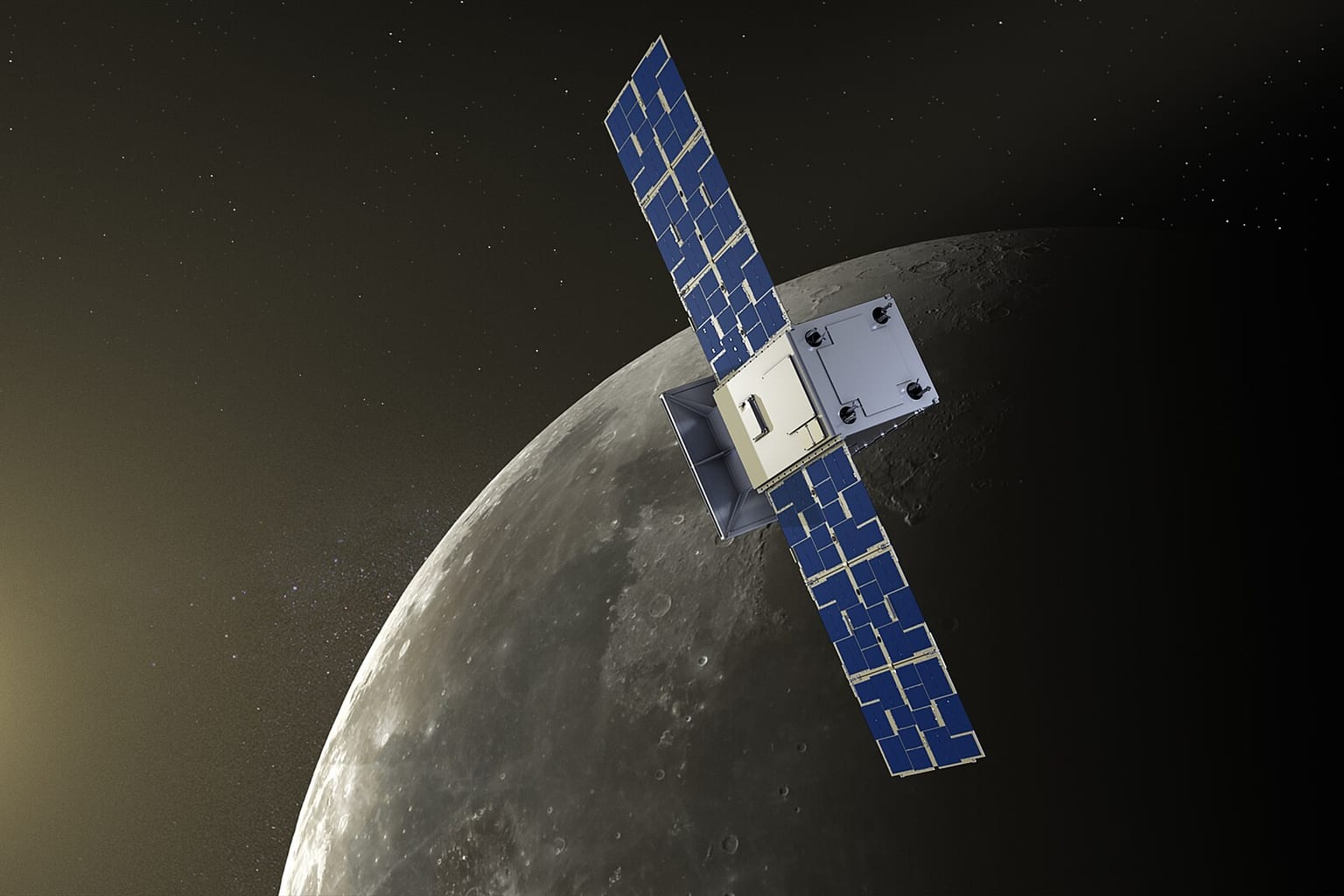
On January 11, 2026, the CAPSTONE spacecraft slipped into the Moon's shadow, and its solar-panel voltage fell from 23 volts to almost nothing before climbing back to 31 volts once the panels caught sunlight again. Those two moments were enough for the researchers to estimate when the spacecraft entered and left the shadow, to within 15 seconds of the real passage.
Tracking deep-space probes is getting harder. NASA's Deep Space Network (DSN), the ground antennas that have followed such missions for decades, is swamped by requests, and some recently launched missions are now harder to follow. A paper by Ian Down, James McElreath and Manoranjan Majji, from Advanced Space, Space Exploration Engineering and Texas A&M University, proposes a route that needs no new equipment: the eclipse itself. Each shadow has two nested cones, the penumbra, where sunlight is partly blocked, and the umbra, where it is fully cut off. A spacecraft running on its battery during the eclipse keeps its electronics alive, and the timestamps of the voltage drop and recovery are enough for an algorithm to work out its three-dimensional position.
The difficulty lies at the edge of the shadow. The Moon has no atmosphere, so its shadow follows mountains and craters, each of which can shift the timing by a few seconds. Earth is harder still: it is slightly flattened at the poles, and its atmosphere blurs the Sun and enlarges its shadow, which makes it difficult to know which part of the planet lies beneath the spacecraft. To solve this, the team used more than 22,000 historical observations, collected by astronomers between 1842 and 2011, of lunar craters being covered by Earth's shadow. Matching those events allowed the algorithm to link parts of Earth's shadow to specific ground features.
The method was tested in two ways. The first used real flight telemetry from CAPSTONE, a small satellite operated by Advanced Space, where lead author Ian Down works. The mission was meant to test an orbit for NASA's Lunar Gateway, now discontinued, and it completed its mission in July 2026. The second was a simulation in which a spacecraft missed a check-in with ground stations and its position uncertainty grew by several kilometres. Eclipse data alone cut that uncertainty by more than 60%. The approach was also demonstrated in simulation for an L1 halo orbit.
For a mission operator, the attraction is a backup that costs nothing: the authors describe it as having zero size, weight and power, or zero-SWaP. It does not replace radio tracking, but it offers a safety net as more spacecraft venture beyond low Earth orbit and load the tracking network. The paper was submitted to the AIAA Journal of Spacecraft and Rockets on October 16, 2026, and is available as a preprint on arXiv. So far, the method has been tested on past telemetry and in simulation, and the next step is to see it used on a live mission.
Sources — read the originals(Paris time)
Pages consulted while writing
Read next
Comments
Loading the thread…
Sign in to leave a comment. Sign in