Bennu's amino acids: carbon and nitrogen may have different origins
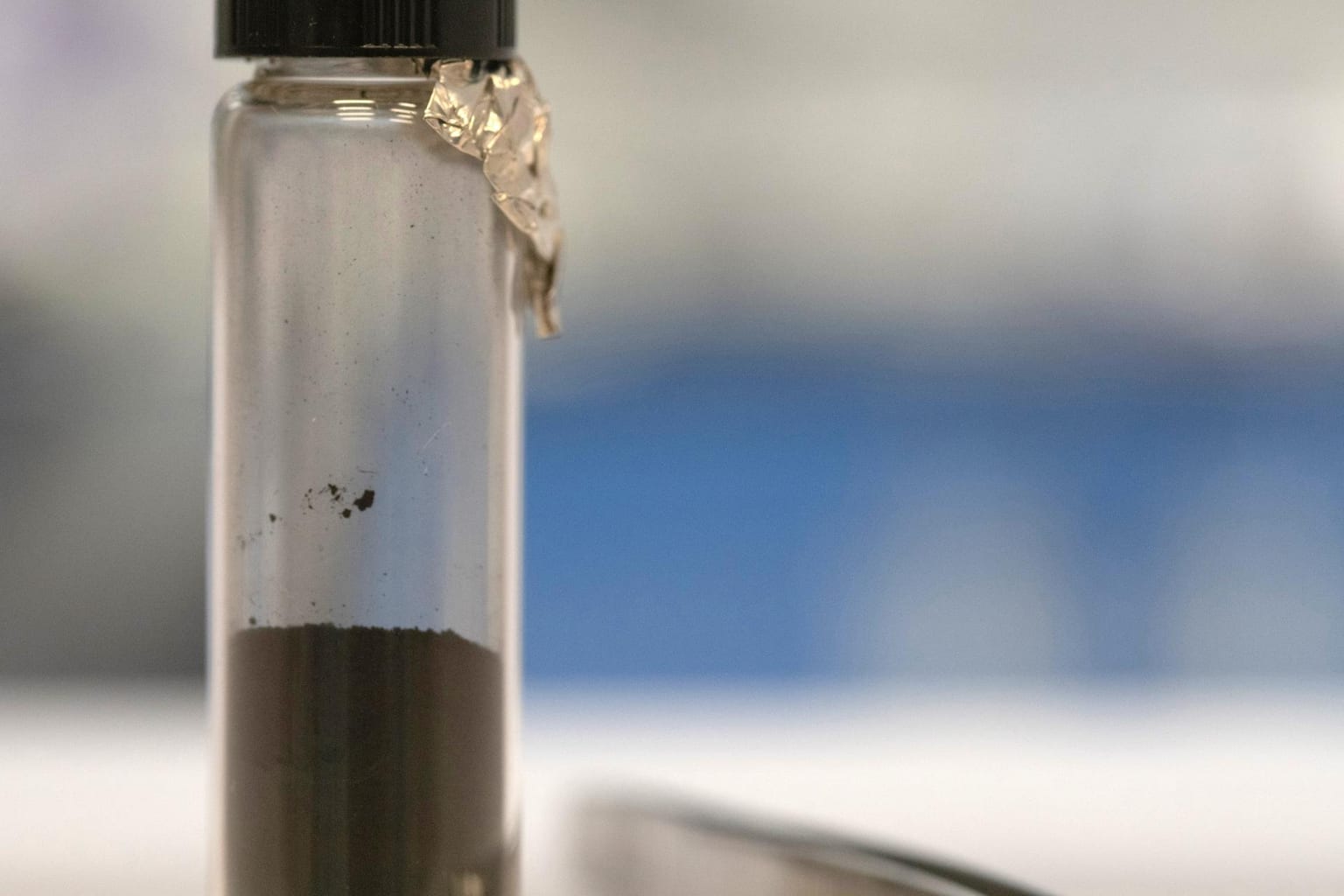
Bennu, now more than 322 million km from Earth, gave up its secrets to NASA's OSIRIS-REx mission, which delivered a sample in 2023. Inside it, a team including researchers at Penn State found a surprise: the carbon and nitrogen of one amino acid appear to come from different parts of the solar system. The results were published in Communications Earth & Environment.
Most isotope analyses average the isotopes across a whole molecule, which hides how they are arranged. The team, led by former Penn State postdoctoral researcher Ophélie Mcintosh and Katherine Freeman, measured each carbon atom in beta-alanine, an amino acid that is not one of the 20 used to build proteins but that is naturally produced in the human body. The method relies on two instruments: the pico-CSIA, which works on very small amounts of material and is only at Penn State, and a modified GC-Orbitrap, which measures isotope values at different positions in the molecule. As Mcintosh put it, the question shifts from whether a molecule is enriched in an isotope to how that isotope is distributed within it.
The contrast with Murchison, a meteorite that fell to Earth in 1969, is the core of the result. Averaged over the whole molecule, the carbon isotope values of Bennu and Murchison are so close that, within the margin of error, they are basically the same. Inside the molecule, however, they are completely different. Of the three carbons in beta-alanine, one is much richer in neutrons in both samples, while the other two are strongly depleted, but the values differ between the two rocks. Other studies of the same Bennu material point the same way: a separate PNAS paper reports nitrogen values of +170 to 277‰ in Bennu's amino acids, and it identified 19 amino acids in a Bennu aggregate sample. The earlier glycine work suggested cold, harsh conditions, while the Murchison glycine results fit a model of chemistry in liquid water.
The authors do not claim that Bennu's amino acids formed only in ice. The PNAS paper does not rule out Strecker synthesis, a water-based process, for Bennu, and it warns that both rocks may hold mixtures of amino acids made at different times and in different conditions. The new measurements narrow the question rather than close it. What they change now is the toolkit: the measurement reads each carbon atom, not only an average. For researchers, that is a new way to trace which chemistry produced the molecules that could have shaped life's chemistry.
Sources — read the originals(Paris time)
Pages consulted while writing
Read next
Comments
Loading the thread…
Sign in to leave a comment. Sign in