Meteorite dated to 4.1 billion years hints at a wetter early Mars
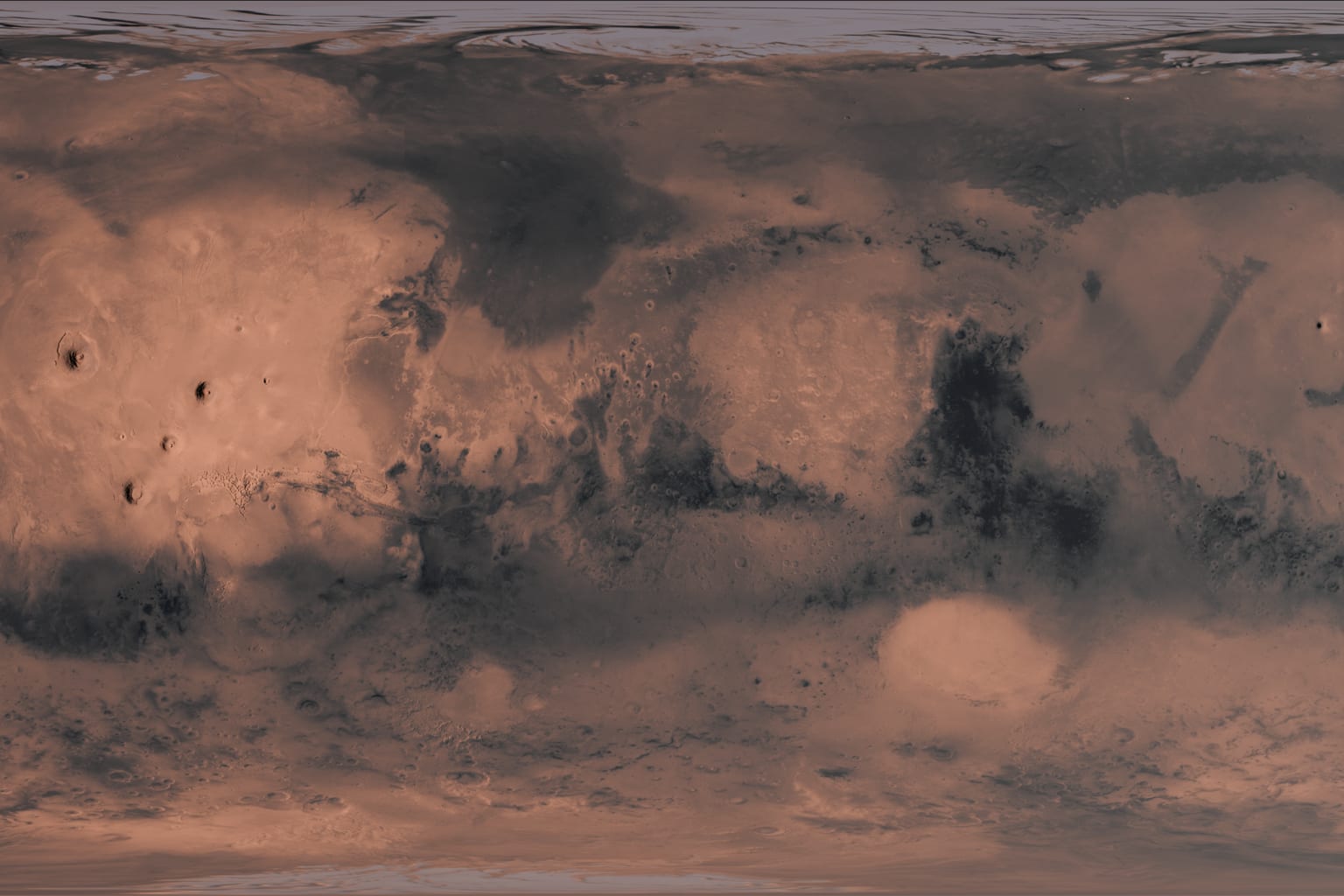
Carl Agee had spent years studying how planetary interiors evolve when he turned to one of the meteorite samples recovered from the Sahara Desert. The rock, now known as Teghaza 001, was unlike most Martian meteorites. Its texture, minerals and composition were unusual, and in part they resembled Black Beauty, a water-rich Martian meteorite linked to the planet's crust. "It resembled it in the oxygen isotope values," Agee said. That resemblance sent him back to the sample with the University of New Mexico's electron microprobe and oxygen isotope analysis, which turned up domains rich in manganese oxide, a compound rovers on Mars look for as a sign of environments conducive to life.
The age came next. Yang Liu of NASA's Jet Propulsion Laboratory, working with scientists at Caltech, used uranium-lead analysis of tiny zircon crystals, a method that allows the age of igneous rocks to be determined. The result is 4.1 billion years. According to Agee, that makes Teghaza 001 the oldest known Martian lava rock identified to date. Most Martian meteorites formed hundreds of millions of years ago, when Mars was already a dry desert. This one dates to the earliest stages of the planet's formation, and it is made of a single rock type, unlike Black Beauty, which is a mix of many.
The rock's composition carries the second clue. Its unusual oxygen isotopes and altered minerals suggest it interacted with fluids on the planet's surface early in its life. That fits theories built over decades that Mars was once warmer, wetter and more geologically dynamic. The team places the rock in the Pre-Noachian period, the oldest geological epoch, which lasted roughly 4.5 to 4.1 billion years ago. Agee noted that if abundant life ever existed on the surface, that is the era it would have been in. The interpretation rests on this single meteorite, and the team's measurements carry it.
For planetary scientists, the find gives a window onto Mars's earliest crust, a part of the planet's history that surface missions rarely reach directly. The sample's mineralogy adds detail to the picture. NASA's own imagery of a slice of Teghaza 001 shows iron-titanium oxides and pyroxene, which record how Mars's crust and mantle formed, along with shocked plagioclase created by the impact that launched the rock toward Earth. Researchers and the rover teams who look for ancient water on Mars now have a dated sample that shows what that early environment may have contained. No follow-up mission date has been announced, but the discovery could help guide future exploration of the planet.
Sources — read the originals(Paris time)
Read next
Comments
Loading the thread…
Sign in to leave a comment. Sign in