Mars orbiter gas data points to possible recent volcanism
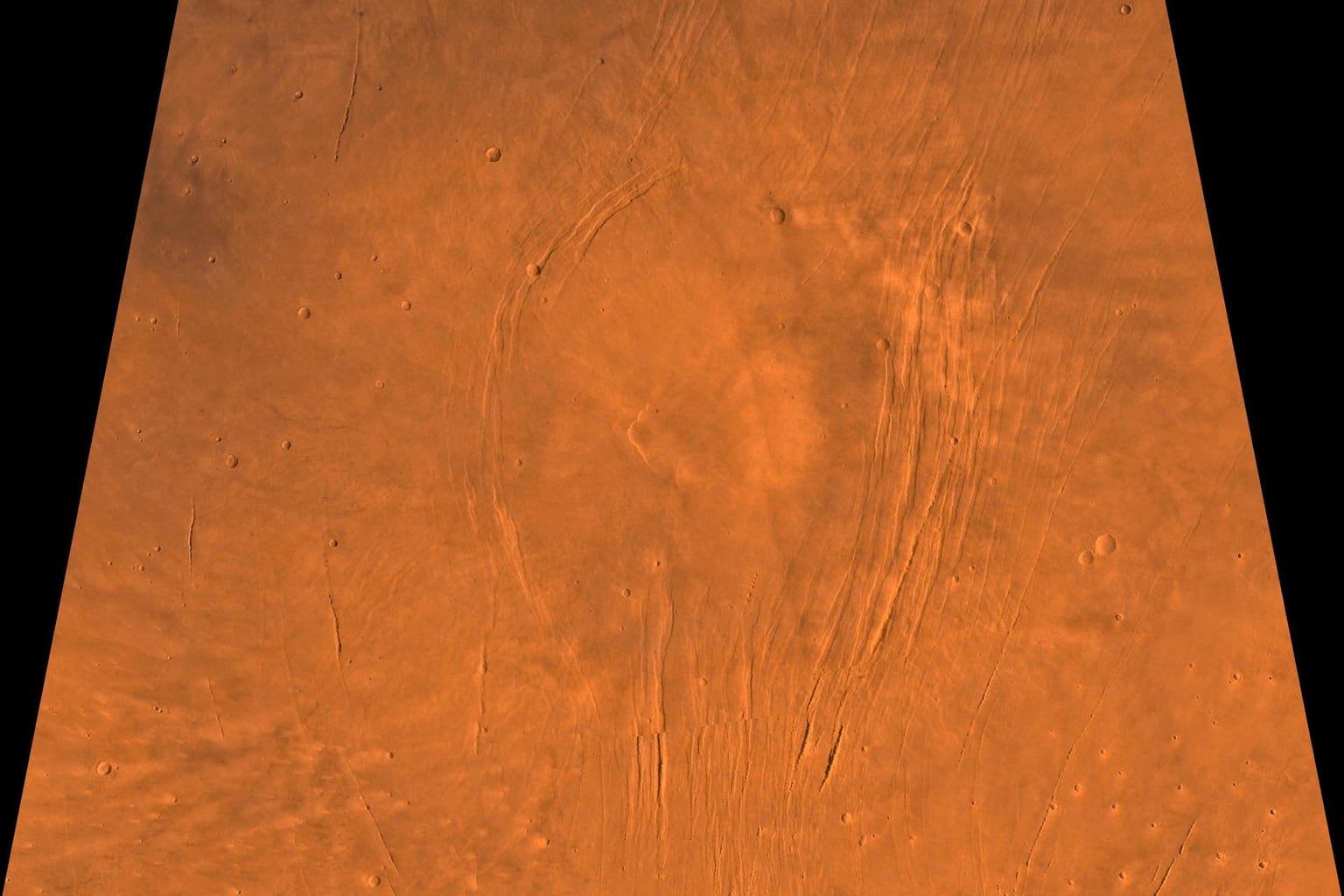
The spikes sat in the data, sharp and out of place. Hydrogen chloride was rising over the northern part of Mars in early summer, in a region where it was not typically found. Mège and his colleagues were reviewing readings from the Trace Gas Orbiter (TGO), the joint European and Russian ExoMars spacecraft, when they noticed them.
Hydrogen chloride normally peaks in the Martian northern winter, rising and falling with the planet’s dust and water cycles. The team went back through historical data and found the gas consistently peaked in early summer, always around Alba Mons, the largest volcano on Mars by surface area. Pinpointing the source took two instruments. TGO’s Atmospheric Chemistry Suite (ACS), which carries three infrared spectrometers, located the emission. Then the Colour and Stereo Surface Imaging System (CaSSIS) photographed the ground at 4.5 metres per pixel and revealed young, narrow fissures spanning tens to hundreds of metres.
The mechanism is simple to state. Through the Martian winter, temperatures fall as low as -120 degrees Celsius and freeze over the openings of the fissures, so the gas stays trapped. When early summer melts the ice, the gas escapes, as it does at magmatic vents on Earth. Colour changes on the surface around the fissures match the deposits such gases leave behind. The team’s testing links these emissions to a dormant magma chamber beneath Alba Mons, which the researchers describe as a kind of “volcanic plumbing system”.
“The Trace Gas Orbiter was able to find the smoking gun,” Mège said. The evidence remains indirect, however. The conclusion rests on gas chemistry and surface geology, and no volcanic eruption has ever been observed on Mars.
If the vents hold up, the stakes go beyond geology. Hydrogen chloride and other magmatic gases helped build a thick atmosphere and a warmer climate on Mars millions of years ago, the conditions that once let liquid water flow across the planet. Fissures that let magma reach the surface and meet groundwater could create small regions with habitable conditions. What TGO has already shown is where to look: a set of fissures around Alba Mons, releasing their gas each early summer.
Sources — read the originals(Paris time)
Read next
Comments
Loading the thread…
Sign in to leave a comment. Sign in