Catheter reads artery plaque chemistry in first human trial
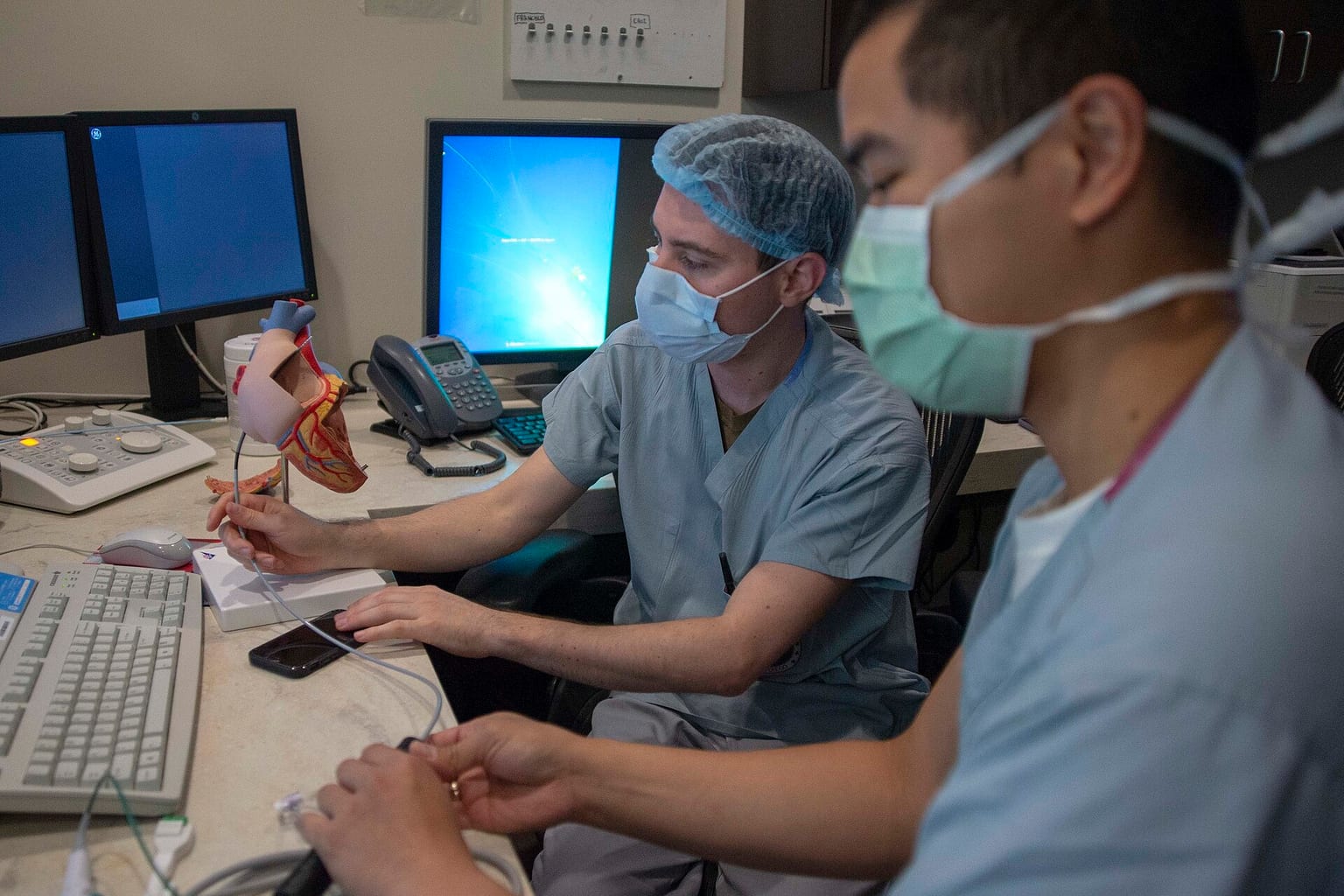
On an August morning in the cath lab at UC Davis, the imaging team finished the last of ten scans in the first test of a new device in people. The team at the National Center for Interventional Biophotonic Technologies (NCIBT) had been working toward this point, and the device is the work of the lab's engineers and clinicians, not a company's product line.
The catheter is a thin, flexible tube that travels through the coronary arteries into the beating heart. It combines two imaging methods. Fluorescence lifetime imaging (FLIm) measures the faint natural glow of the artery wall, which reflects its biochemical composition. Polarization-sensitive optical coherence tomography (PS-OCT) measures light scattered back from the same tissue to map its microstructure. As the catheter is pulled back while taking live images, it records both at once, covering an 80-millimeter length of coronary artery in two seconds. Julien Bec, who designed and built the catheter and imaging console, put the achievement this way: "This is typically done by big companies."
The reason the chemistry matters is clinical. Cardiovascular disease is the leading cause of death in the United States, and plaque buildup can lead to heart attack and stroke. Today's catheter tools, such as optical coherence tomography and intravascular ultrasound, show the structure of a vessel but not its biochemistry, which plays an important role in whether plaque becomes unstable and ruptures. The device was first tested in animal models and in samples of human coronary arteries. Its first-in-human study is the step that tests it in living patients, under an FDA approval for an investigational device covering 10 patients.
For cardiologists, the gain would be a second kind of information during the same procedure: the composition of plaque, not only its shape. According to Jeffrey Southard, the interventional cardiologist who led the testing, the catheter can show buildup before it becomes stenosis, the abnormal narrowing of a vessel, and its chemistry may point to inflammation and a risk of rupture. Those signals could help decide how and where to place stents and which drugs to use, choices that Marcu says will affect long-term results. The team's next step is to enlarge the study, and Marcu hopes the device will one day be used in cath labs to inform treatment. The announcement gives no date for that expansion or for any wider use, so for patients the change remains a research prospect for now.
Comments
Loading the thread…
Sign in to leave a comment. Sign in