Charged nanotube 'trions' keep their handedness
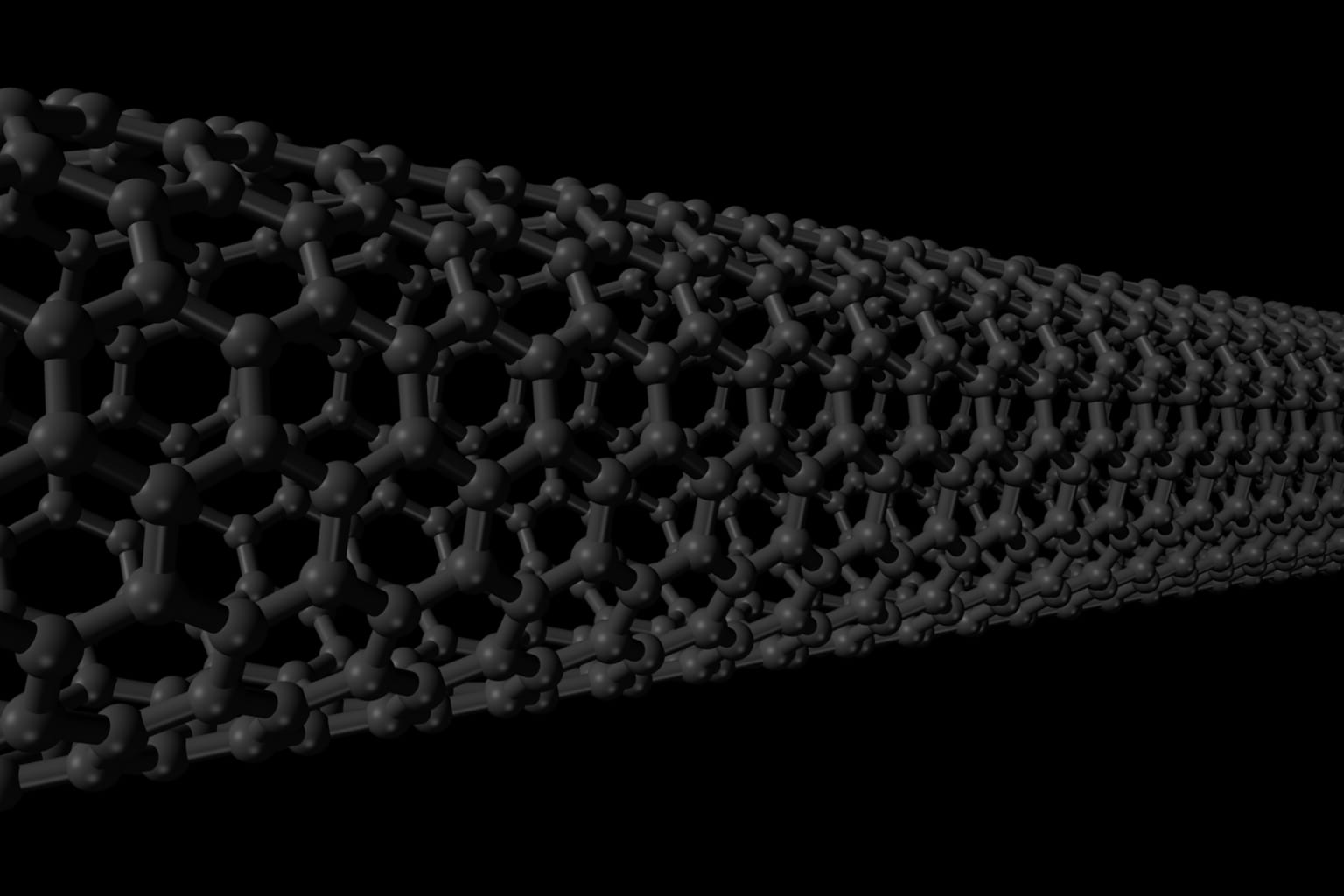
Roll a sheet of carbon atoms into a tube, and the tube can end up with a handedness, like a twisted newspaper or a wrung towel. A team at Tokyo Metropolitan University has now shown that charged states built on these tubes keep that handedness when they interact with light.
Single-walled carbon nanotubes, or SWCNTs, are among the front-runners for putting chirality into future devices. Their handedness shapes how they absorb light, a property known as circular dichroism. The tubes can host excitons, pairs of an electron and a positively charged hole, and these excitons already show that effect depending on the tube's structure. Adding one extra electron or hole creates a charged state called a trion. Trions are potentially useful, but nobody had settled whether the extra charge would wipe out the chiral signature of the exciton it comes from.
Professor Kazuhiro Yanagi's team answered that question with samples of left- and right-handed nanotubes separated with particular care. They generated trions by electrochemistry and quantified their circular dichroism with what the researchers describe as unprecedented precision. The chirality of the trions matched that of the excitons they were made from, and its degree was roughly the same.
That matters because trions can be created simply by injecting electrons or holes into the nanotubes. The team says this opens a path to controlling electrically how strongly trions interact with circularly polarized light, which the researchers link to possible applications in light amplification, detection and modulation. The sources give no timetable for such devices, and the measurements so far are laboratory results.
The finding is published in Nature Communications under the title "Chiral trions in enantiopure single-wall carbon nanotubes". For device designers, the message is simple: the handedness built into the tube travels with the charge, so an electrical signal could in principle tune it.
Sources — read the originals(Paris time)
Read next
Comments
Loading the thread…
Sign in to leave a comment. Sign in