Chipmaking plasma frees oxygen from moon-like soil
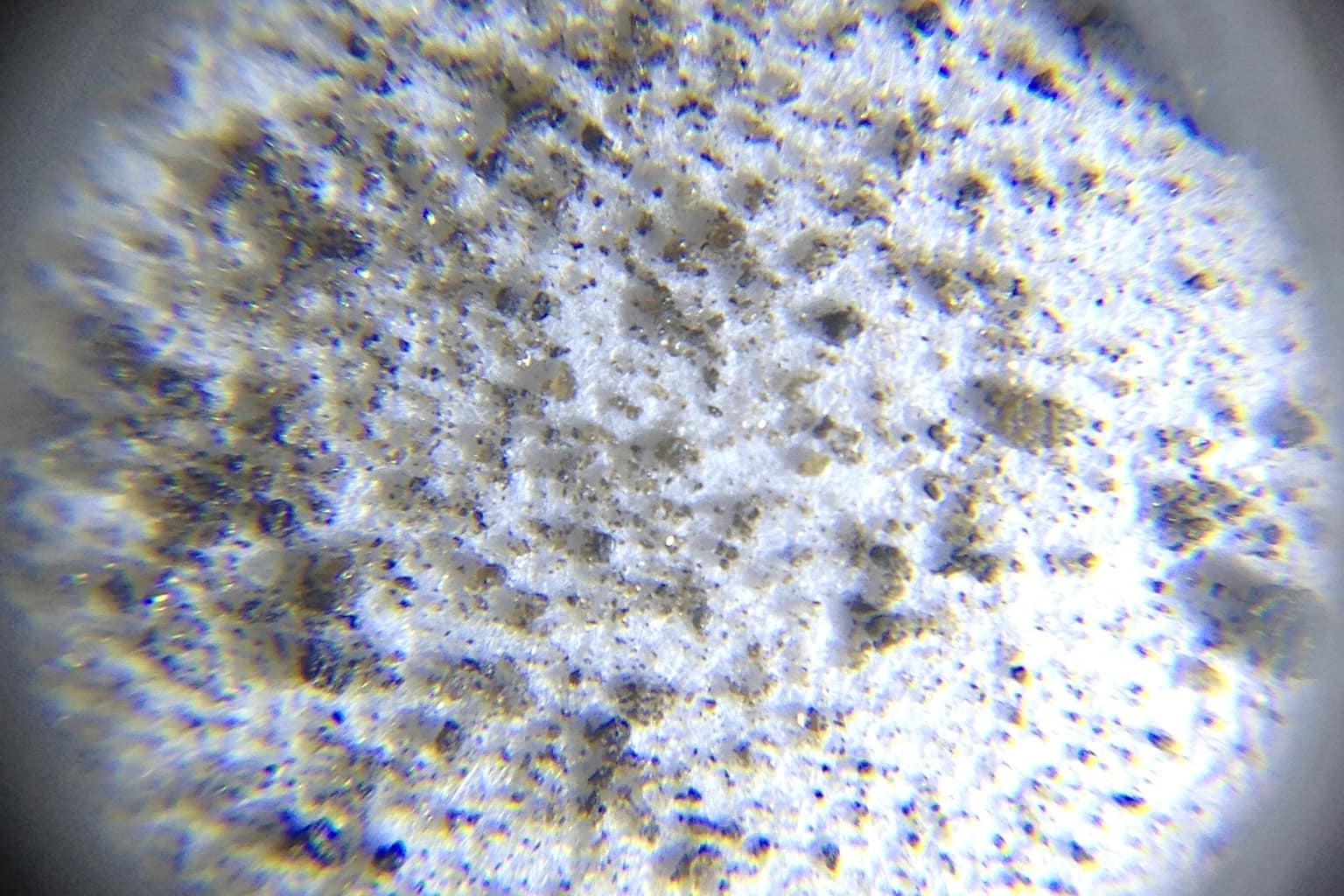
Oxygen for a future Moon base would, for now, have to be shipped from Earth at an enormous cost. The Moon already holds the oxygen, though, locked in its ground. A team has shown that a process borrowed from chip factories can pull some of it out of material designed to mimic lunar soil. The study, led by Aneeta Jaggernauth and colleagues, is published in the journal Scientific Reports.
The obstacle is chemistry. Lunar oxygen does not wait in the ground as a gas that can be collected. It is bound inside the minerals of the surface layer, the loose dust and rock known as regolith. According to a review of oxygen production on the Moon, regolith holds 40 to 50 percent oxygen by weight, but breaking those chemical bonds usually takes a great deal of energy. NASA's lunar sample curators note that heating the material above 900 °C is one established route, and more than twenty methods have been proposed.
The team went looking for a gentler tool. Plasma is what a gas becomes when enough energy is supplied to it: a mixture of charged particles, electrons and highly reactive chemical species, sometimes called the fourth state of matter. Chipmakers use it to act on silicon dioxide, in a process that underpins the production of billions of electronic devices every year. The researchers asked a simple question. If plasma reacts so strongly with oxygen-bearing compounds in chips, could it do the same with the oxygen in moon dust? They exposed simulants, artificial lunar soil, to plasmas made from gases common in chip fabrication.
The answer was yes, at least in part. While the plasma worked, oxygen, carbon monoxide and carbon dioxide were released from the simulant. The plasma chemically modified the oxygen-bearing minerals in the material, and some lunar minerals reacted more readily than others. The Scientific Reports paper describes the work as a proof of concept, not a working system.
The approach has practical appeal beyond the chemistry. Plasma processing is a dry process, which avoids the difficulty of transporting and handling liquid reagents in space, and its operating temperatures can be significantly lower than those of some conventional extraction methods. The team also points to decades of semiconductor research on how fluorine plasmas interact with oxygen-containing materials, knowledge future researchers can build on rather than starting from scratch.
The gap that remains is large. Oxygen yields would need to rise substantially before any practical lunar system becomes possible, and the rate of oxygen production dropped after the plasma had been running for a while. The work used simulants rather than real lunar samples, and the researchers have not yet determined whether the process can be scaled economically.
For a Moon base, the prize is oxygen made on site instead of shipped: for astronauts to breathe, and as a major component of rocket propellant. The team also notes that lunar soil contains silicon, aluminum and iron, and that future studies may explore whether plasma-based processes could also help with those. No timetable is given. The researchers say their next steps are to understand the chemistry better, raise the yields, and find out whether the process can be scaled economically.
Sources — read the originals(Paris time)
Pages consulted while writing
Read next
Comments
Loading the thread…
Sign in to leave a comment. Sign in