Moon-dust simulant and paper waste make lab-tested insulation for habitats
An aerogel is mostly nothing: up to 99% of its volume is empty space. That emptiness is what makes it an excellent insulator, and it is what Purdue University researchers want to build from on the moon, where daytime heat reaches 127 °C and nights drop to -173 °C.
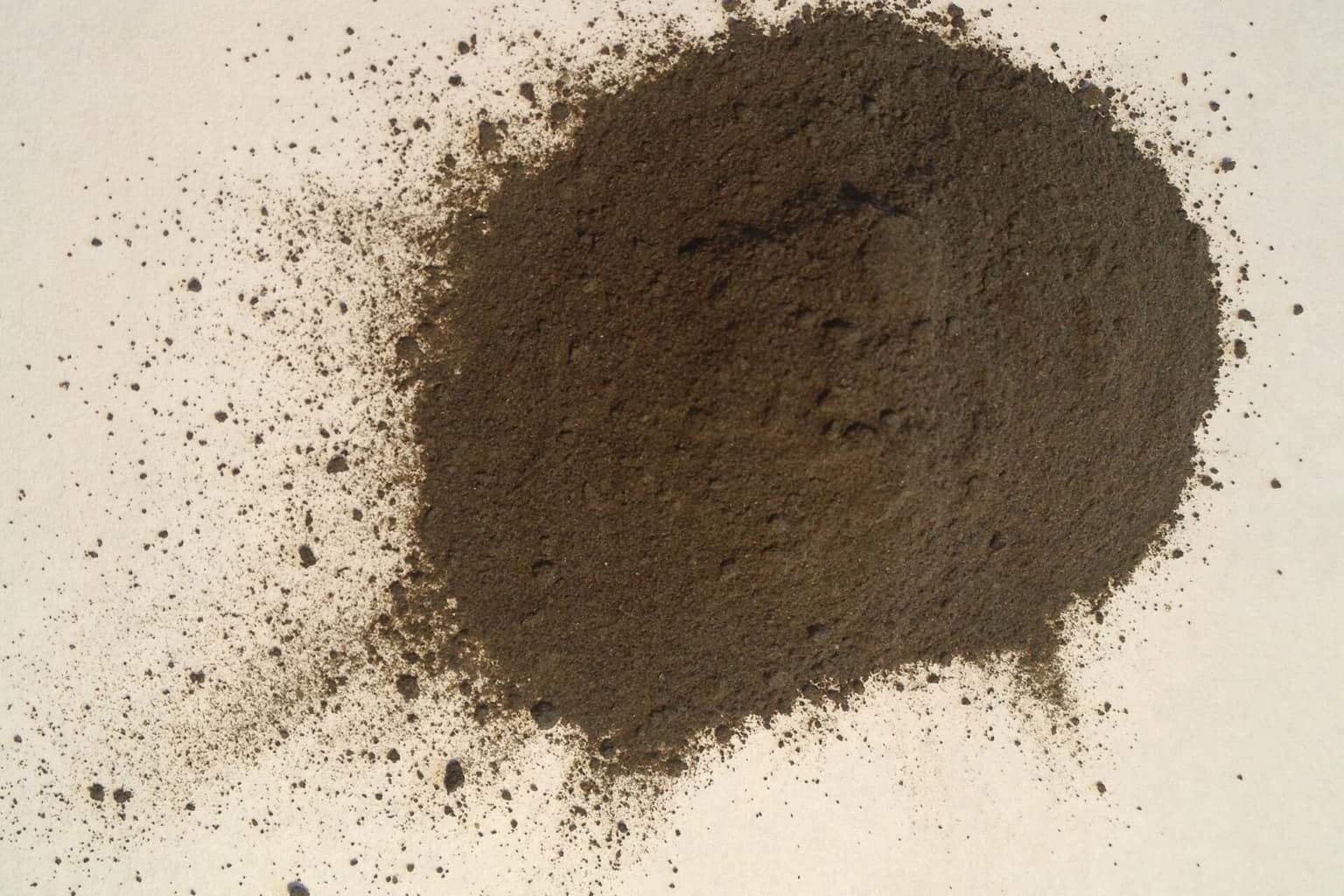
Alexander Wei and Jacob Staker, researchers in Purdue's College of Science, start from two materials that a lunar settlement could produce. The first is cellulose, the fiber found in paper and cardboard, which crews would generate as packaging waste. The second is lunar regolith simulant, a material chemically and mineralogically similar to the moon's crust. Using local resources in this way is called in situ resource utilization. The two are ground together in a planetary ball mill with heavy ceramic balls. The minerals help break the cellulose into strands with diameters well below 1 micron, and these fibers hold the final aerogel together without crumbling.
The usual way to dry an aerogel is supercritical drying, which keeps its structure intact but needs a lot of energy and carbon dioxide. Neither is easy to produce on the moon. The team worked with the high-temperature inorganic aerogel group at NASA's Glenn Research Center to make its samples, and it is now studying freeze-drying for future production. The method turns ice directly into vapor under vacuum, a process called sublimation. The lunar surface offers both the vacuum and the subfreezing nights, and the water removed can be recovered and reused. 'Freeze-drying is ultimately more practical and sustainable for production on the moon,' Wei said.
The chemistry is not settled, though. The team prepared aerogels with different ratios of regolith and cellulose to find a balance between thermal insulation and mechanical strength. Its NASA-hosted manuscript describes the regolith effect as 'more nuanced' than a simple gain. A separate study of freeze-dried composites made with the same simulant reports that heat-transfer values rise as regolith content grows, because the pores get smaller. A third work, a 3D-printing study of regolith aerogels, reports thermal tests that 'demonstrated the promise' of the material as an efficient insulator. These are tests on simulant, not on real lunar soil, and none of the sources reports a result from a habitat-scale sample.
For a future base, the gain would be practical: less dependence on supplies from Earth, and a use for the waste that crews otherwise have to store or send back. Wei put it simply: 'astronauts on the moon will never run out of moon dust.' No source gives a date for a test in real lunar conditions. The next step the researchers name is the move from supercritical to freeze-drying, which would make production simpler, and the sources do not say when that will happen.
Sources — read the originals(Paris time)
Pages consulted while writing
Read next
Comments
Loading the thread…
Sign in to leave a comment. Sign in