Deep under South Dakota, DUNE's giant neutrino detector takes shape
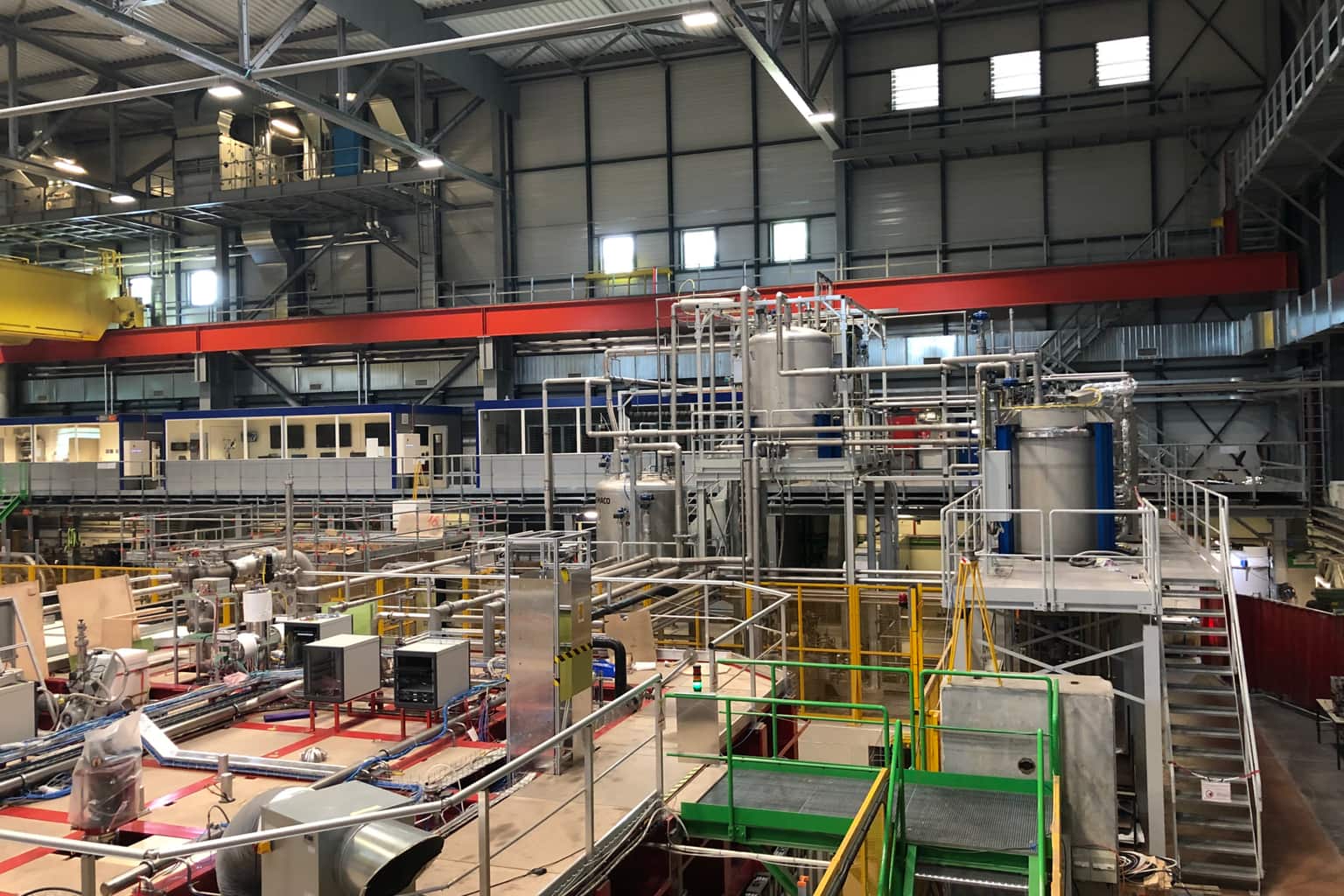
In Lead, South Dakota, a steel beam was signed by the people building the experiment before it went down into the cavern. It is one of 2,600 steel beams for the two cryostats of the Deep Underground Neutrino Experiment, DUNE, now being assembled at the Sanford Underground Research Facility (SURF), 1,478 m below ground. The cryostats are the giant vessels that will hold liquid argon at −184 °C. Work has begun on the first one, and steel beam construction for the second has started too.
The steel is there because of a particle that barely interacts with anything. Neutrinos carry no electric charge and almost no mass, and they stream through us every day without leaving a trace. They are made in stellar cores and can cross vast distances, so studying them means building detectors large enough to catch the rare moment one interacts. According to the project’s description, relayed by Interesting Engineering, observing those interactions, and how slight mass differences change a neutrino’s flavor, could help explain why the universe contains more matter than antimatter. It could also refine the Standard Model, the theory that describes the known particles.
The setup spans two sites. The accelerator at Fermilab will fire neutrinos 1,300 km to the far detector at SURF, while a near detector at Fermilab measures the beam before it leaves. CERN is leading the design, construction, logistics planning and installation of the cryostats. It is the first time CERN has made significant contributions to a project outside Europe, and it brings its own expertise from building ProtoDUNE. Lluís Miralles, principal project engineer of CERN’s Neutrino Platform, said the organization contributed both its technical know-how and its project management. The sources do not agree on CERN’s steel contribution: Newswise gives it as 10 million pounds, while Interesting Engineering gives 6,200 tons of material for casting the beams.
For physicists, the calendar matters most. DUNE is the largest U.S. Department of Energy science experiment on American soil, and more than 1,500 researchers are expected to work on it at Fermilab, according to Interesting Engineering. A Yale physics page puts the number at more than 1,400 scientists and engineers. Fermilab has also awarded a multi-year contract for a large cryogenic plant to cool tens of thousands of tons of liquid argon. The detectors are expected to be ready by 2030, and the first neutrino beam is expected to reach SURF in 2031. Yale says science data-taking begins in 2029, a date that sits uneasily with the 2030 readiness target and that the sources do not explain.
The experiment is not running yet, and the sources give no cost figure for the project. Even the liquid argon volume is disputed. Interesting Engineering says the cryostats will hold about 17,000 tons together, while the milestone announcement, reposted by Brookhaven National Laboratory, says each of the two will house 17,000 tons. The next step is clear, though: assembly work on the second cryostat is expected to begin next year, and the beam from Fermilab is due at the underground detectors in 2031.
Sources — read the originals(Paris time)
Pages consulted while writing
Read next
Comments
Loading the thread…
Sign in to leave a comment. Sign in