Drug use detected in five minutes from one drop of urine
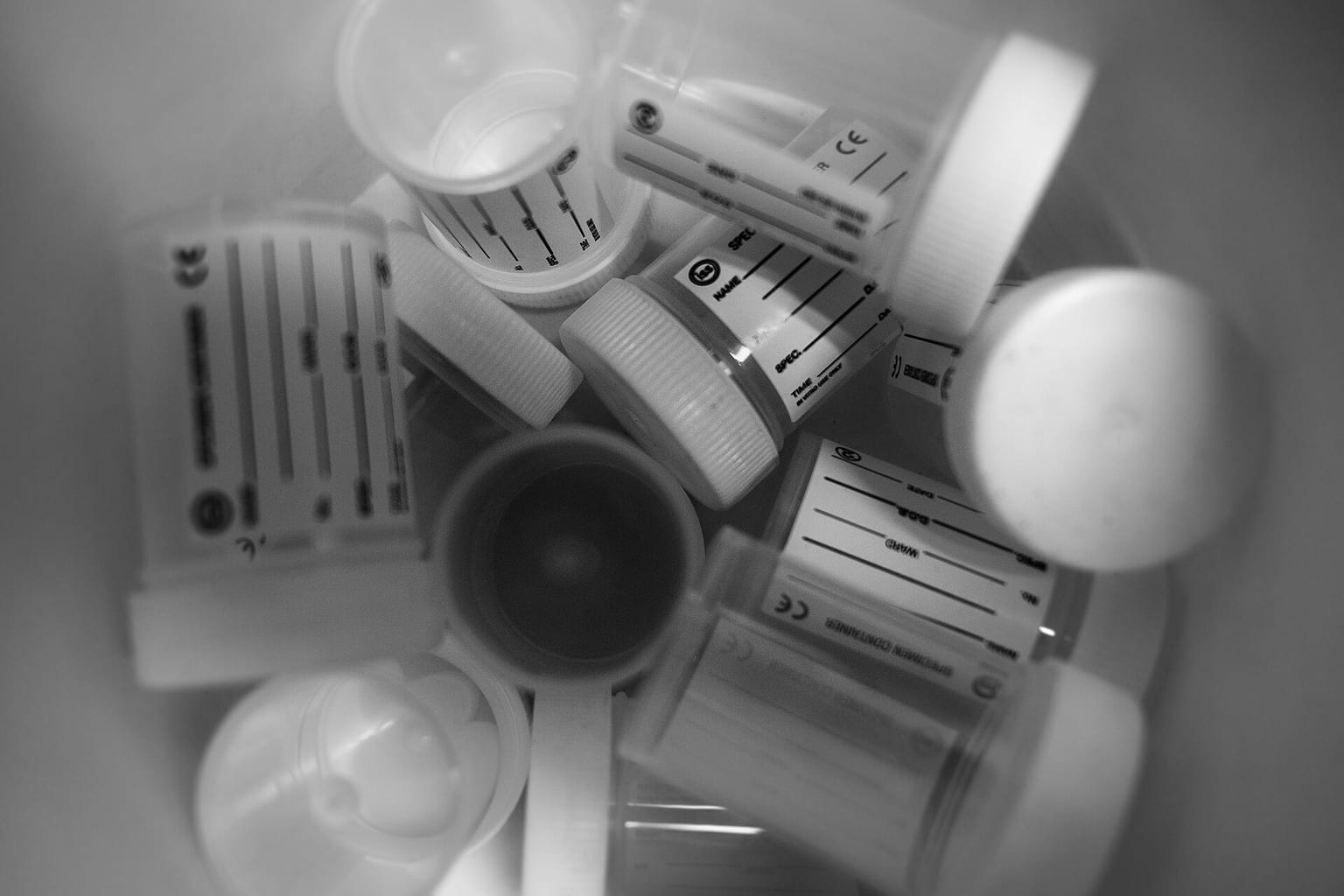
In an emergency department, a clinician may need to know within minutes whether a patient has taken an illicit drug. Today that answer comes from one of two places, and neither is ideal. Laboratory tests are accurate, but they need several preparation steps and specialized equipment. Rapid kits are fast, but their accuracy suffers when the sample is small or when a test reacts to drugs that look chemically alike. A team led by Eun-Kyung Lim at the Korea Research Institute of Bioscience and Biotechnology (KRIBB) has built a platform that screens a single drop of urine for illicit drugs in five minutes, with no chemical pretreatment.
The target is onsite testing. The platform is meant to become a compact, portable device for onsite drug screening by law enforcement agencies, and for rapid assessment of drug intoxication in hospital emergency departments. The study frames the need against a rise in drug-related crime worldwide.
The method rests on a physical effect called surface-enhanced Raman spectroscopy, or SERS. Shine light on a molecule and a tiny share of it bounces back changed, in a pattern specific to that molecule, a kind of fingerprint. The trouble is that the signal is extremely faint. SERS places molecules on a rough metal surface, where the same fingerprint comes back far stronger, so even trace amounts can be picked out.
The team's contribution lies in that surface. On a thin gold layer, they grew densely packed, grasslike tiny pillars, then roughened them through a controlled chemical attack. Drug molecules that settle on this support produce light signals amplified millions of times or more, according to the researchers.
Urine is the hard part. It is full of metabolic waste and traces of the patient's own medication, any of which can mask a drug's fingerprint. To separate the two, the team used an AI model called LightGBM, which picks out drug-specific signals from that background. That is what allows the sample to skip the cleaning step that laboratories normally require.
In tests on real urine specimens, the platform identified drug-positive samples with about 80% accuracy, including samples from patients taking nonnarcotic analgesics or several medications at once. That figure leaves room for error, and the announcement does not give the number of urine samples tested. In rats, the team also detected drug components in urine collected within six hours of administration. These are the team's own results, published in ACS Measurement Science Au in 2026.
SERS had already been applied to drugs in urine before this work; a 2021 study on the subject is among the earlier papers. What this team adds is the combination of a raw, untreated sample with an AI layer that sorts the signals. For a clinician, that would mean a result that is closer to laboratory precision than a kit, without the laboratory's wait. The researchers say the approach brings together the advantages of large laboratory instruments and rapid test kits.
The next step is the portable device. Lim said the team hopes to turn the platform into “a portable diagnostic device for onsite use” to transform drug screening and emergency diagnostics. The announcement gives no date for that version, and for now the platform remains a laboratory method.
Sources — read the originals(Paris time)
Pages consulted while writing
Read next
Comments
Loading the thread…
Sign in to leave a comment. Sign in