Early heat and drought leave corn smaller for weeks, lab study shows
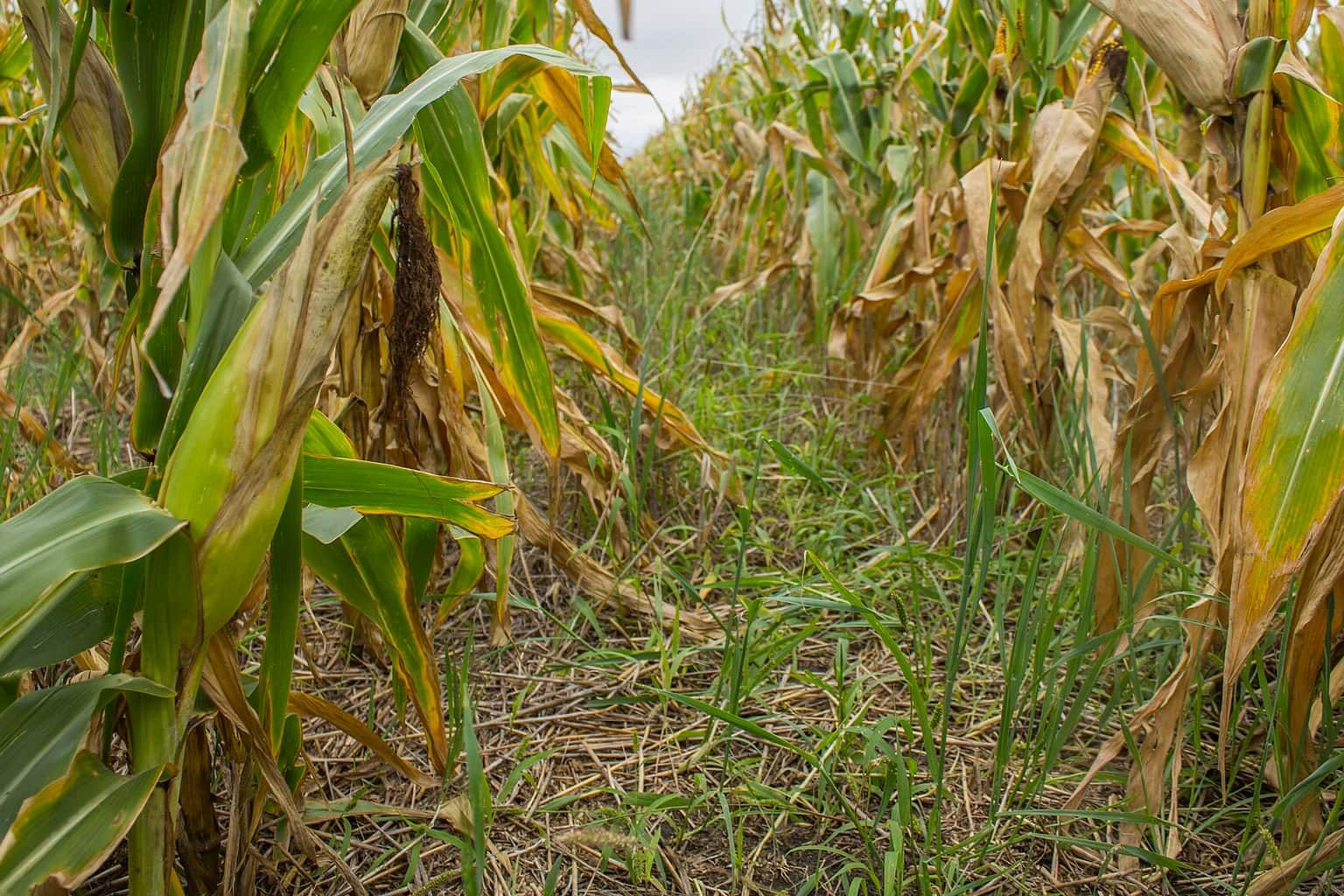
Every day for 13 days, a camera photographed each young corn plant in the Bellwether Phenotyping Facility of the Donald Danforth Plant Science Center. The team was measuring what breeders call phenotyping, the way a plant looks and behaves under stress. The stress was the kind corn meets in early summer in the Midwest: a brief period of heat and drought shortly after seedlings emerged. The result, published in The Plant Journal, is that the damage does not stop when the stress does.
The study followed 47 genetically diverse corn varieties under four conditions: normal, drought, heat, and both together. Heat and drought each reduced plant size, but drought also slowed development and cut leaf number and greenness. For most varieties, the combination cut size beyond what either stress caused alone. Some plants that showed drought stress early were not the ones hit hardest by the end of treatment, and drought response alone did not predict response to the combined stresses. Breeders usually screen for drought, then heat, and seldom both at once, so the authors argue that a plant chosen for drought tolerance may be the wrong pick.
To test whether the damage lasted, the researchers took two of the most interesting varieties, stressed them for about two weeks, then returned them to normal conditions. Early drought delayed flowering, while heat advanced it. Plants exposed to both were still significantly smaller than unstressed plants at 61 days after planting, weeks after the stress had ended. Crop breeders usually focus on heat and drought around flowering, when plants are most vulnerable, and this work shows why the early weeks deserve the same attention.
For plant breeders, the practical gain is a method: photographing plants daily with PlantCV, an open-source image analysis platform developed at the Danforth Center, catches changes in size, height, water use and color that a single measurement would miss. For farmers, the benefit is still some years away. Giles Oldroyd, president of the Danforth Center, said that "farmers need crops that can withstand difficult conditions from the start of the growing season." The team is now running a small follow-up with selected varieties at the Danforth Center's Field Research Site, and the publicly available varieties in the study could supply genetic variation for future resilient crops. The published results measure plant size, height, water use, color and flowering; they do not report harvest yield, and no timeline for commercial seed is given.
Sources — read the originals(Paris time)
Read next
Comments
Loading the thread…
Sign in to leave a comment. Sign in