Empa prototype fiber carries heat-sensitive insecticide for nets
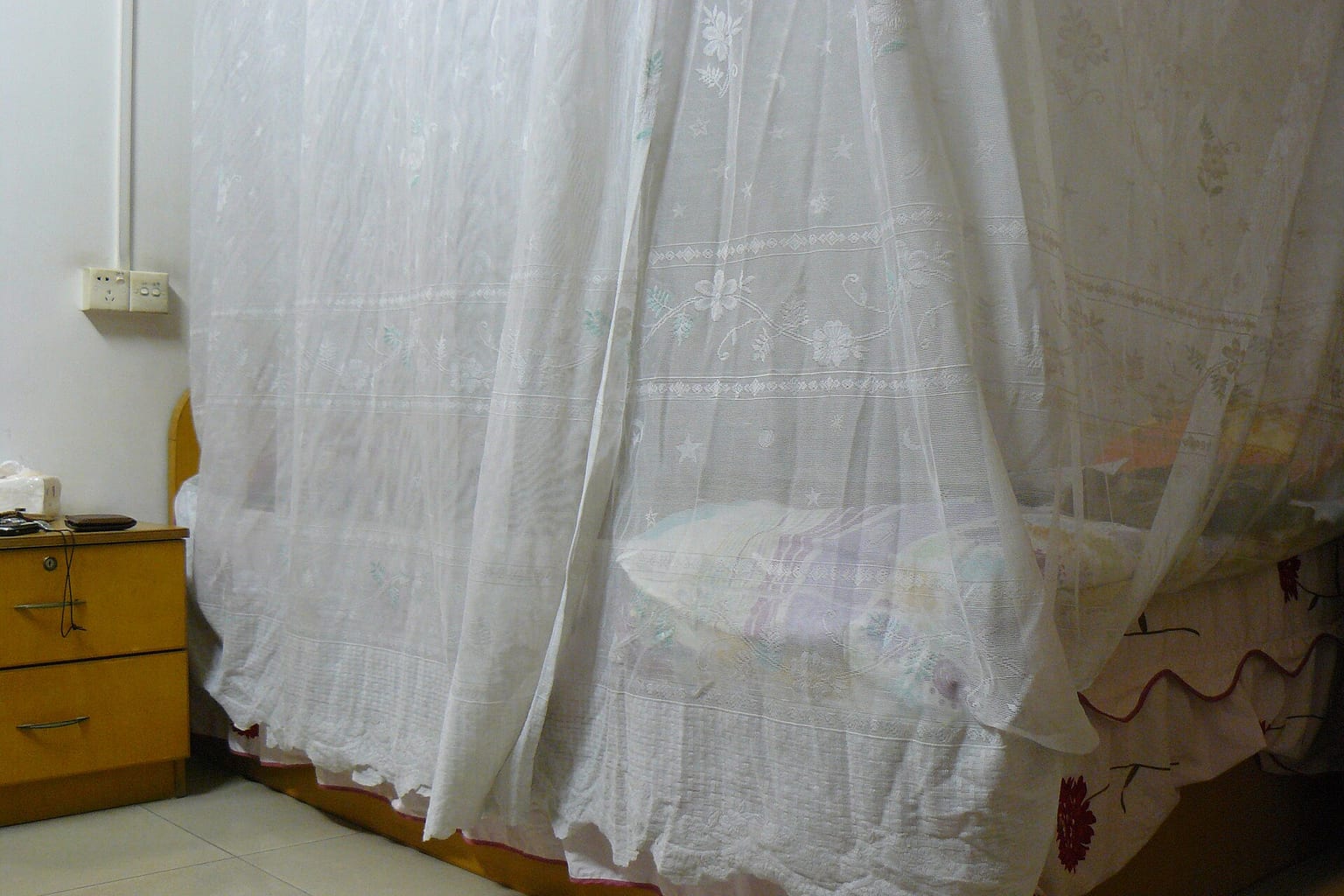
A mosquito net works only as long as the insecticide in its fibers still kills. Malaria-carrying mosquitoes are becoming increasingly resistant to the pyrethroid-based insecticides commonly used on nets. At Empa, the Swiss Federal Laboratories for Materials Science and Technology, Edith Perret's team in St. Gallen has now built a prototype fiber that can carry insecticides the previous method could not use.
Until now, nets were either impregnated with pyrethroids or woven from synthetic yarn, a mix of polymers and insecticide made by melt spinning: the polymer is heated until molten and forced through fine nozzles. That heat is the obstacle. Many non-pyrethroid insecticides evaporate as soon as they are heated, so they never reached the finished net. An abstract of a study on long-life netting notes that alternatives approved by the World Health Organization, such as malathion, are highly volatile, which means they lose their residual efficacy early.
The new fiber separates the insecticide from the melt. It has a polymer sheath around a liquid core, and the core holds a carrier fluid containing the insecticide. The insecticide diffuses through the sheath to the surface, where it takes effect, while the carrier fluid stays inside. The fiber can be loaded with larger amounts of insecticide, and Perret estimates the release lasts about three years, long enough for the net to stay effective for years and, she says, to withstand several washes. That estimate still needs to be confirmed by large-scale testing. Empa says the mechanical properties hold: the yarn can be woven, keeps high tensile strength and does not become brittle. Getting there meant balancing parameters, a coating that is permeable but not overly so, and a carrier fluid that can take different insecticides.
The fiber was built with industry. Vestergaard has tested the yarn during knitting and its killing effect on mosquitoes, including resistant species. Monosuisse, which makes high-performance filaments, worked with Empa on a new spinning nozzle designed to scale up. The mosquito-killing results come from Empa and its partner, and no independent test has been reported. Swiss outlets relaying Empa's announcement repeat the same caveat: whether the fibers can be produced on a large scale, and whether nets made from them can be marketed, remains to be seen.
For people in affected countries, the stakes are concrete. Malaria kills more than 600,000 people a year, according to Empa, and mosquito-borne diseases more than 700,000, according to Phys.org. Preventive medicines and a malaria vaccine exist, but their effectiveness is waning and most people there cannot afford them, so nets remain the primary protection. A net that still kills resistant mosquitoes would matter most in regions where the common insecticides no longer work. Empa's team frames the potential as a contribution to the World Health Organization's 2030 malaria control and elimination targets, if the technology scales up. No date for that has been given.
What comes next is large-scale testing to confirm the three-year estimate and wash durability, then the move from a scalable nozzle to industrial production. Neither has a date yet.
Sources — read the originals(Paris time)
Pages consulted while writing
Read next
Comments
Loading the thread…
Sign in to leave a comment. Sign in