Epilepsy drugs slow glioblastoma growth
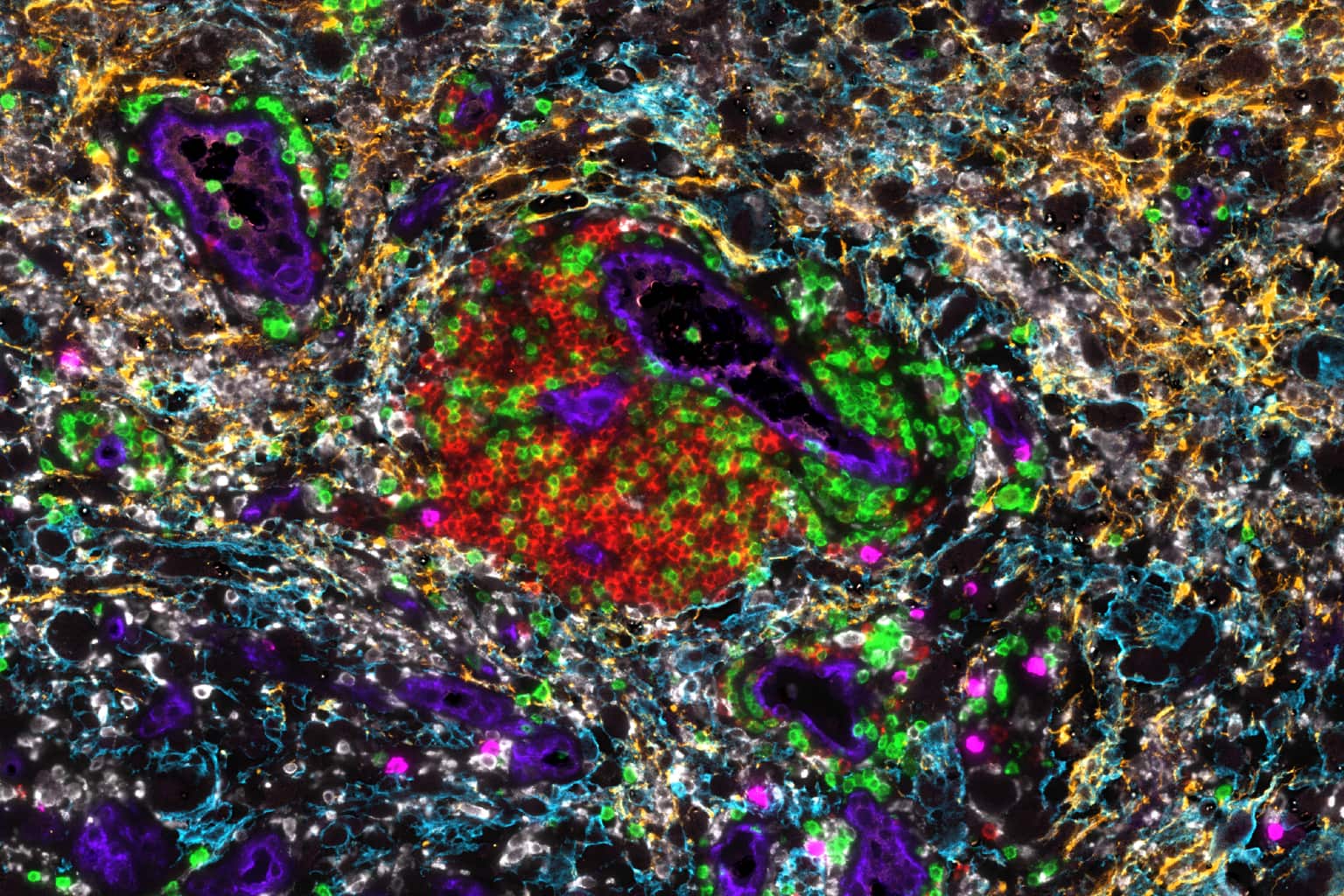
In mice, glioblastoma turns the brain's own brakes against the brain. Researchers at Baylor College of Medicine report in the journal Neuron that the tumor takes over neighboring brain cells and flips them from a role that limits its growth to one that feeds it.
Glioblastoma is the most common and aggressive form of adult brain cancer, and it has seen only minimal gains in patient survival over the past half century. Earlier work by the Baylor team and others had shown that the tumor and surrounding neurons communicate, and that this exchange makes brain circuits hyperactive. Excitatory neurons send signals that rev circuits up, while inhibitory neurons send signals that calm them down, and the new study asks which of these the tumor manipulates.
The researchers screened a panel of epilepsy genes mutated in glioblastoma, removing them one at a time to see which changed tumor growth. One stood out. Its protein, GAT-1, normally acts like a vacuum, pulling GABA, the main chemical messenger that calms brain activity, out of the space between brain cells. <b>Removing GAT-1 from tumors accelerated their growth</b>, which pointed the team toward the inhibitory neurons that keep the brain quiet, a side of this biology that had not been examined closely before.
In the mice, the push-pull was measurable. Activating inhibitory neurons near the tumor reduced tumor growth, while blocking them from calming the surrounding circuits made tumors grow even more. The tumor also produces large amounts of a protein called DBI, short for diazepam binding inhibitor, which ramps up hyperactivity, and activating inhibitory neurons counteracted those signals. The team then tested two FDA-approved antiepileptic drugs that boost GABA signaling, lorazepam and valproic acid. Both significantly decreased tumor proliferation compared with mice that did not receive them.
For patients, the work opens a second front: the signals passing between the tumor and the brain, not only the tumor cells themselves. Seizures are the first symptom in nearly half of glioblastoma patients, and the same drugs already used to reduce seizures could be tested against tumor growth. Neither the study nor the team gives a timeline for trials in people, and the mouse results come from animal models that still need to be confirmed in patients.
Sources — read the originals(Paris time)
Read next
Comments
Loading the thread…
Sign in to leave a comment. Sign in