For the first time, a Starship upper stage is caught by its launch tower
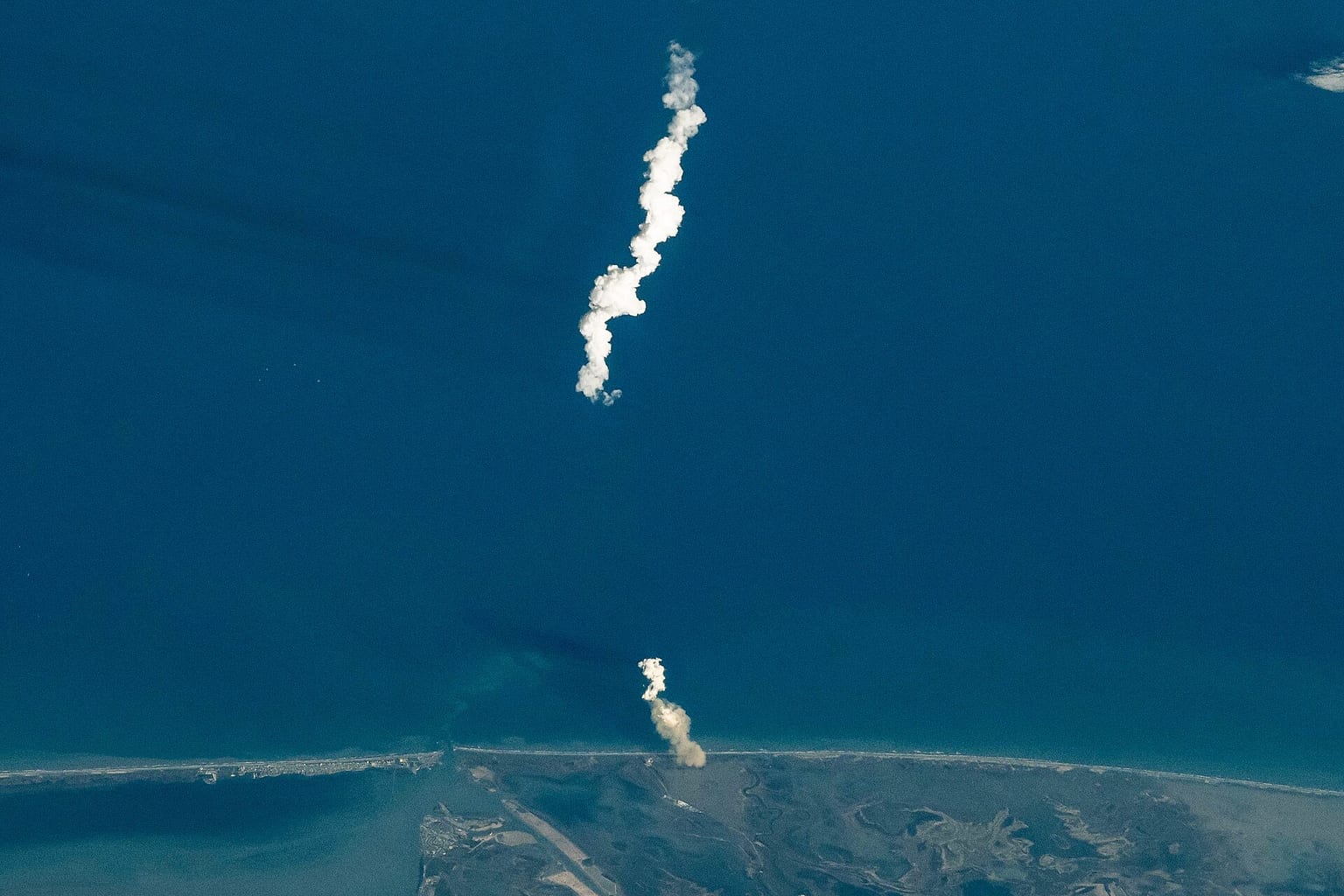
On 14 November 2026, a 50-metre rocket ship came back to its launch site in Starbase, Texas, and did not touch the ground. Two mechanical arms on the launch tower, nicknamed “chopsticks”, closed around it as it descended. According to Ars Technica, it was the first time a Starship had been caught at the launch tower. The ship had spent more than 22 hours in orbit, completing 14 orbits, before it came home.
The flight had started the day before, on 13 November, with the Super Heavy booster, the huge first stage that lifts the ship. The ship reached low Earth orbit and released 26 Starlink V3 satellites, the newest generation of SpaceX's internet constellation. Ship and booster were meant to be recovered together. The booster was supposed to be caught about six and a half minutes after launch, but it exploded before it could be recovered, so the double catch did not happen.
For SpaceX, the point is reuse. The company says a caught ship can be prepared for flight again quickly, and that rapid reuse is crucial for low-cost recycling. Ars Technica reports that the catch should help engineers learn to turn ships around quickly, which should in turn speed up the launch of the Starlink satellites. Elon Musk, quoted by Phys.org, sees the same logic leading to the kind of fast, steady launch rate needed to build Moon bases and send people to Mars.
For NASA, the stakes are in the Moon programme. The agency is paying billions of dollars for Starship to land astronauts on the Moon later this decade, according to Al Jazeera. In the Artemis plan, the lander is the part that carries astronauts from lunar orbit down to the surface. NASA describes the Starship version as about 50 metres tall, roughly the height of a 15-storey building. Under the architecture NASA has outlined, tanker ships bring fuel to a second ship, and the fuel must be moved between vehicles in orbit.
That transfer has never been done between two vehicles in Earth orbit, according to CNN, and it involves propellants kept at very low temperatures. In an earlier test flight, SpaceX moved 10 metric tons of liquid oxygen from one tank to another inside the same ship while in space. NASA gave SpaceX a $53.2 million award for a large-scale flight demonstration of moving 10 metric tons of cryogenic propellant between vehicles. The refuelling test has been late for a long time: Ars Technica says it slipped two years after late 2024, while Wikipedia lists a March 2026 date, and CNN now expects the first demonstration in early 2027.
The Artemis III mission is where the plan takes shape. NASA changed it earlier this year, turning a lunar flight into a test in low Earth orbit. Four astronauts will launch on a Space Launch System rocket in an Orion capsule, a mission NASA plans to last 14 days, in summer 2027 according to KeepTrack. Orion will first dock with Blue Origin's Blue Moon lander for about two days of checks on life support. Then it will undock and link up with a Starship at a lower orbit, for about two hours. The astronauts will not enter the Starship. Creech, NASA's programme manager for the lander contracts, says the choice is meant to keep SpaceX focused on refuelling: Blue Origin's lander no longer needs in-space refuelling for lunar landings, and SpaceX has more experience with life support through its Dragon crew capsule.
The Starship on this mission will carry full Raptor engines and a docking port on its nose, while the Blue Moon test lander will have only small thrusters. NASA has added a milestone to SpaceX's contract to test a prototype crew cabin called Cabin One on the ground at Starbase. Creech puts the hard part of the programme elsewhere: “The bigger challenges for [SpaceX] were the prop transfer and getting to the uncrewed landing demo.”
What comes next is clearer in dates than in destinations. SpaceX plans a second Starship launch site at Kennedy Space Center in Florida early next year, with a second factory under construction there. The first uncrewed Starship landing on the Moon is planned after Artemis III. The first crewed lunar landing is targeted for Artemis IV, before the end of 2028. NASA has not yet assigned either lander to a specific lunar landing mission.
Sources — read the originals(Paris time)
Pages consulted while writing
Read next
Comments
Loading the thread…
Sign in to leave a comment. Sign in