Starship Spacecraft Caught Mid-Air by Launch Pad's Robotic Arm
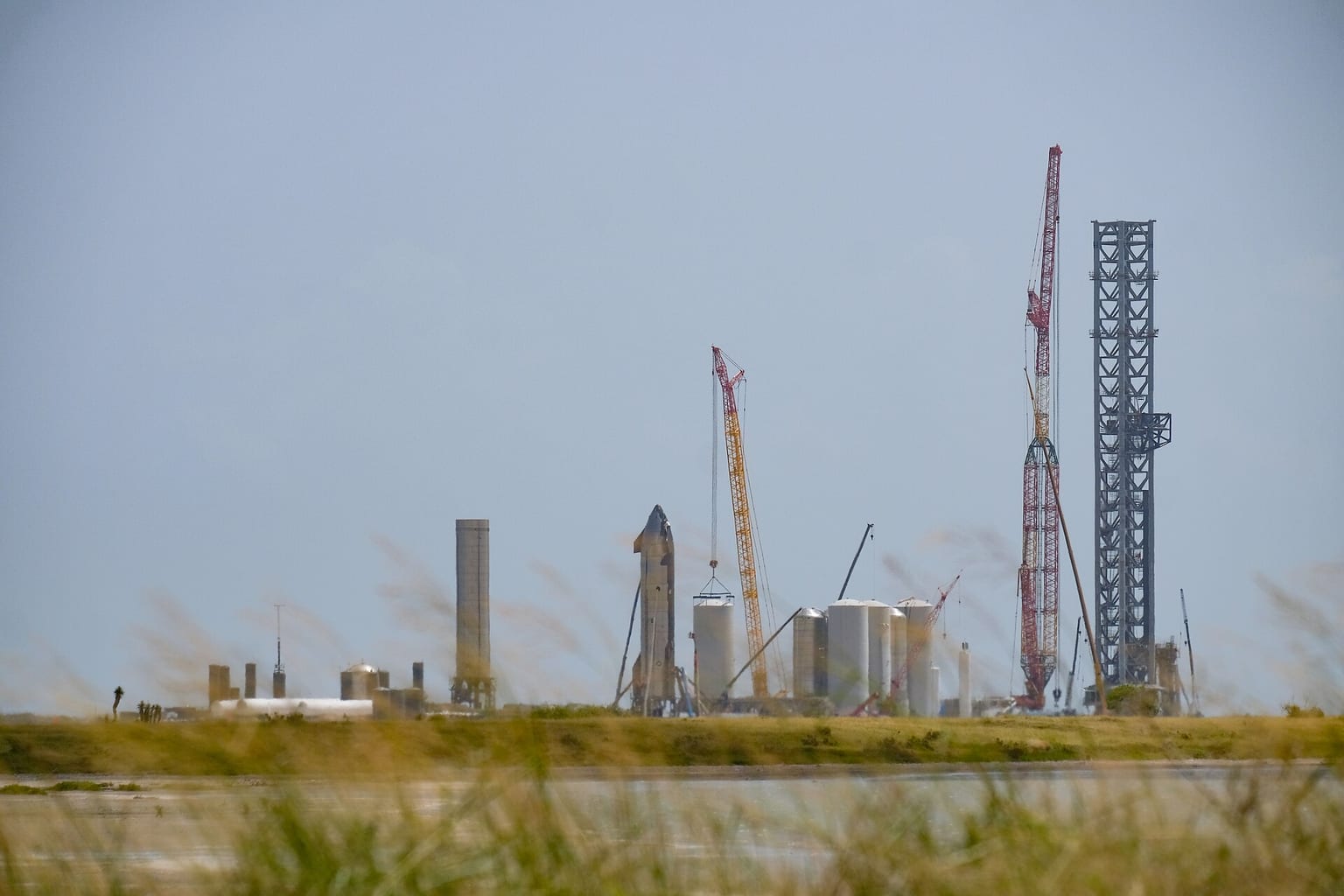
On the 14th, the large Starship spacecraft returned to the launch pad at Starbase in Texas. The spacecraft, which had completed its Earth-orbit mission, was caught mid-air by the pad's giant robotic arm, about 22 hours after launch. Starship consists of an upper-stage spacecraft and a lower first-stage booster, Super Heavy. It is the first time a second-stage spacecraft returning from orbit has been recovered directly at the launch pad.
While orbiting Earth 14 times, the spacecraft deployed 26 Starlink satellites into orbit before returning safely. Starlink is the satellite internet network operated by SpaceX. The booster, however, failed to be recovered. SpaceX plans to reuse both the spacecraft and the booster to lower launch costs and increase the number of launches.
The same week brought opposite news for Amazon. A Vulcan rocket operated by United Launch Alliance (ULA), a joint venture of Boeing and Lockheed Martin, lifted off from Cape Canaveral Space Force Station in Florida on the 15th, but about 10 minutes after launch, the flight developed an anomaly. The rocket was carrying satellites to build out Amazon's satellite internet network, “Amazon Leo,” and all 40 failed to reach orbit. It was Vulcan's first mission failure and the fifth launch since its maiden flight in 2024. Vulcan had earlier been grounded for about nine months due to problems with its solid rocket boosters and first-stage engine. Its previous two flights also experienced booster anomalies, but still delivered their payloads to orbit.
The latest anomaly appears to have occurred after the first stage, powered by the BE-4 engine made by Blue Origin, founded by Jeff Bezos, separated from the second stage carrying the satellites. However, it remains unclear whether the BE-4 engine contributed to the failure, and Blue Origin is reportedly investigating the cause together with ULA. Since 2025, Amazon has deployed 398 Leo satellites over 14 launches, roughly 12% of the 3,236 satellites it needs for global internet service. By contrast, Starlink operates more than 11,000 satellites and has millions of customers.
For SpaceX, the recovery marks a major milestone in its reuse plans, clearing the biggest hurdle on the spacecraft side. The remaining challenge is recovering the booster. For Amazon, the key issue is when Vulcan can fly again. Vulcan could be grounded for months, delaying Amazon's satellite deployment schedule in the meantime. Amazon regards ULA as a trusted partner and said it will use lessons from this experience to carry out Vulcan's long-term launch plan.
Sources — read the originals(Paris time)
Pages consulted while writing
Read next
Comments
Loading the thread…
Sign in to leave a comment. Sign in