German coating heals solar glass cracks in lab, up to 7x stronger
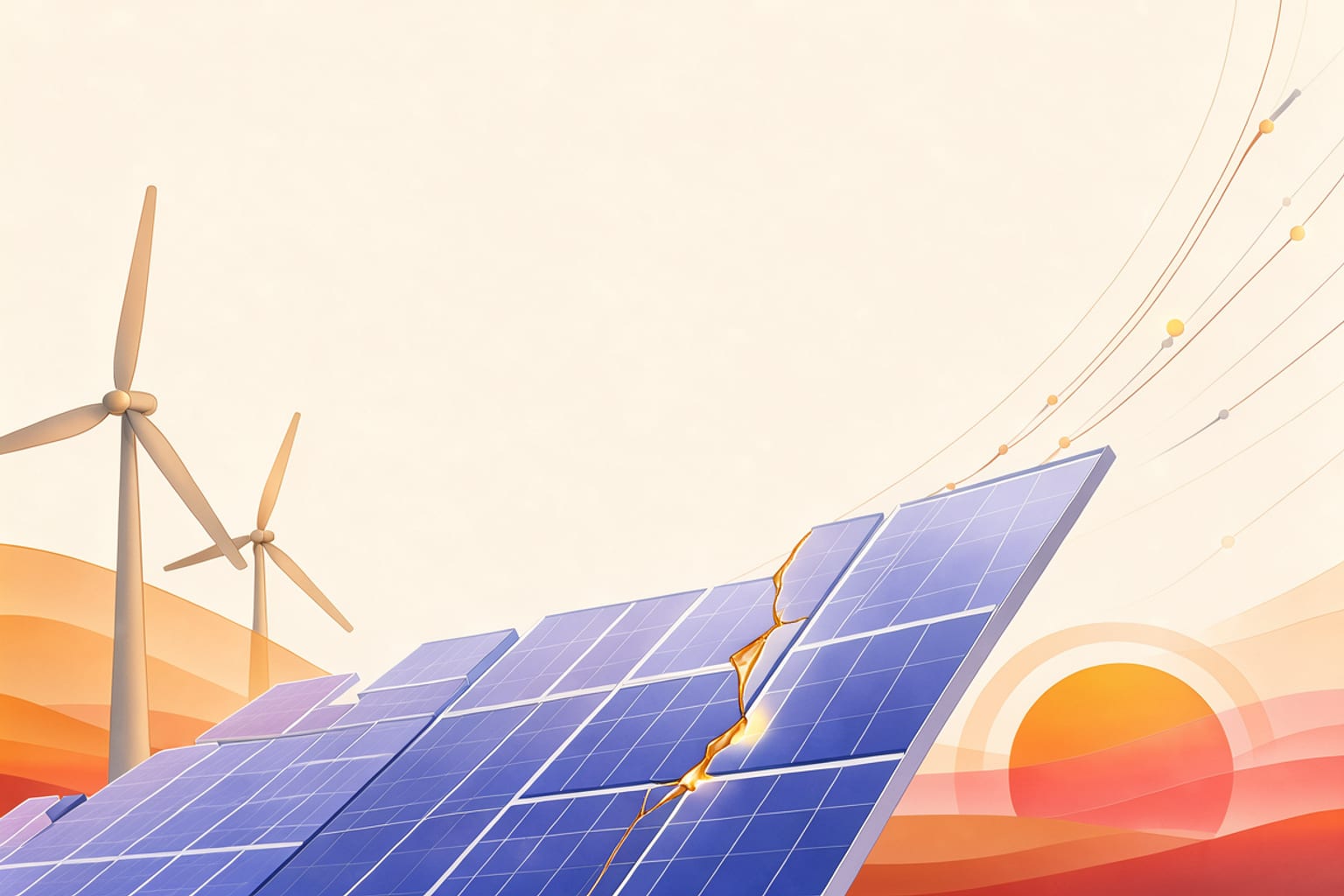
On a solar panel, the glass is the heaviest part of the module: up to 80 percent of its total weight. For years, the obvious fix has been to make it thinner, and for years the same problem has stopped the idea: thin glass breaks more easily, and the usual heat treatment, called thermal tempering, becomes difficult once glass drops to two millimeters or less. A team from the German company EXXERGY and its subsidiary EXXOSQEL, working with the Fraunhofer Institute for Silicate Research ISC in Würzburg, has developed a coating that goes after the cracks themselves.
The mechanism is simple to describe. The coating fills microscopic cracks with a three-dimensional composite that forms covalent bridges, which are chemical bonds between molecules, and these bridges make the glass harder to break. In lab tests, glass samples of two millimeters became up to four times stronger, and samples of one millimeter became up to seven times stronger, compared with untreated, non-tempered glass. EXXOSQEL estimates that cutting the glass mass by 40 percent could lower the overall weight of certain solar panels by 30 percent. These are the companies' own laboratory figures, and no independent test has been published yet.
The work now is about scale. Fraunhofer ISC is producing the coating in batches of up to 100 liters and automating its application so manufacturers can add it to existing production lines. EXXERGY is testing it on larger glass sheets and solar modules with the Fraunhofer Center for Silicon Photovoltaics CSP. The development is nearing Technology Readiness Level 6 (TRL 6), the stage at which a prototype has been demonstrated in a relevant environment. Thomas Sauer, managing director of EXXOSQEL, said the team has already produced initial prototypes in standard dimensions under conditions close to real use, and that stress tests are under way. He warned that moving from a laboratory sample to a large module requires considerable expertise in scaling up material synthesis, application technology and module manufacturing.
For panel makers, the gain is weight, and it comes with a second benefit: if the coating succeeds, it could reduce the raw materials and energy used to manufacture panels. Conventional panels typically weigh 11 and 13 kilograms per square meter, and heavier designs reach 16. A lighter module is easier to transport and to mount, which matters most on roofs that were never built for heavy glass. No production date has been announced. The next goal is TRL 7, which means demonstrating the technology in an actual operating environment. The companies will show a demonstration at Glasstec 2026 in Düsseldorf, described as the world's leading international trade fair for the glass industry, from 20 to 23 October.
Comments
Loading the thread…
Sign in to leave a comment. Sign in