Google's first orbital data center prototype is online
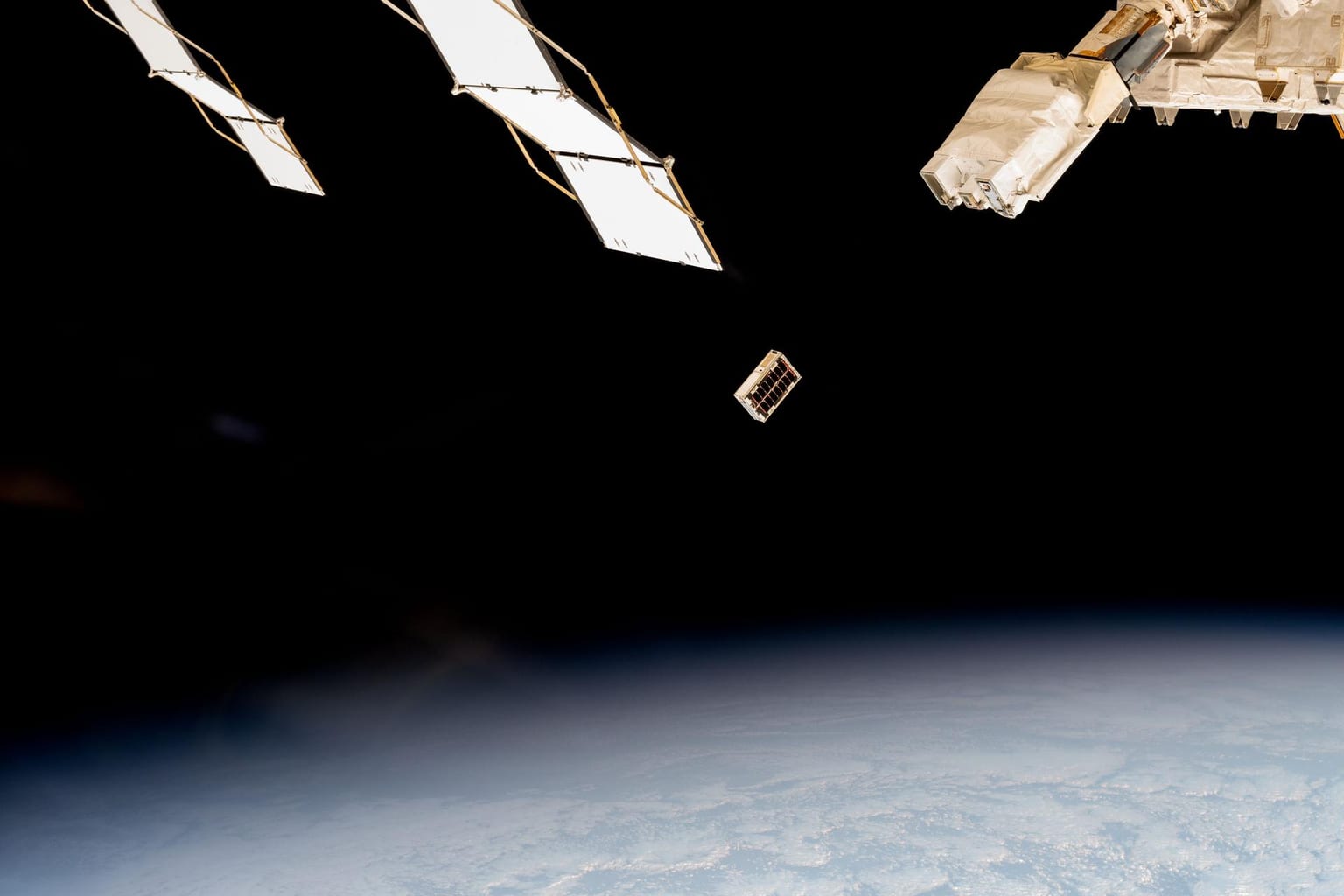
On the ground, engineers type a first prompt and wait. The answer comes back from orbit: a haiku about being in space, written by Gemma 4, Google DeepMind's model, preloaded on a satellite that launched earlier this month with more than 100 other spacecraft on a SpaceX Falcon 9 rocket. The first lines run "Blue marble below / Data streams in silent grace."
The satellite is Google's Suncatcher prototype. It carries a single Google Tensor Processing Unit, or TPU, the company's AI chip, and generates up to 1 kW of electricity. That power budget is the constraint: the chip's demands mean it can only turn on for about twenty minutes at a time, which complicates communication with the ground. Before the first prompt, engineers spent about three weeks testing each subsystem during commissioning.
The next phase is about what space does to hardware. Radiation can cause "bit flips," which change a stored value in memory and can corrupt data without setting off typical monitoring tools. Google has tested its TPUs extensively in particle accelerators on Earth, but the real effects of orbital radiation and thermal stress are measured only in orbit. Ground tests suggested the impact would be minimal for inference, the task of answering queries, and larger for training, the task of building a model. The team now has the chance to check that in practice.
Google is not alone in the idea. Starcloud is largely alone in planning high-speed links between satellites to support coherent distributed workloads. SpaceX's data centers are also expected to use laser links, but to orbit too far apart to share processing effectively, while Starcloud and Cowboy Space expect to run inference on individual satellites. Both Google and SpaceX depend on Starship, the heavy-lift rocket still in development, being fully and rapidly reusable. A peer-reviewed analysis by the Suncatcher researchers estimates that SpaceX would need to fly Starship 1,800 times to achieve the same learning-driven cost reductions it obtained with its earlier vehicles.
For Google, the next step is clear if the first chip holds up: two more satellites in 2027, with higher power generation and optical links between satellites. The project is a moonshot aimed at infrastructure that will be economical in the 2030s, and its timeline depends on Starship. Until then, the only in-orbit report so far is that the satellite is operating nominally, according to a spokesperson, while the test campaign continues.
Sources — read the originals(Paris time)
Read next
Comments
Loading the thread…
Sign in to leave a comment. Sign in