Hotel laundry robot improves after each failure, company says
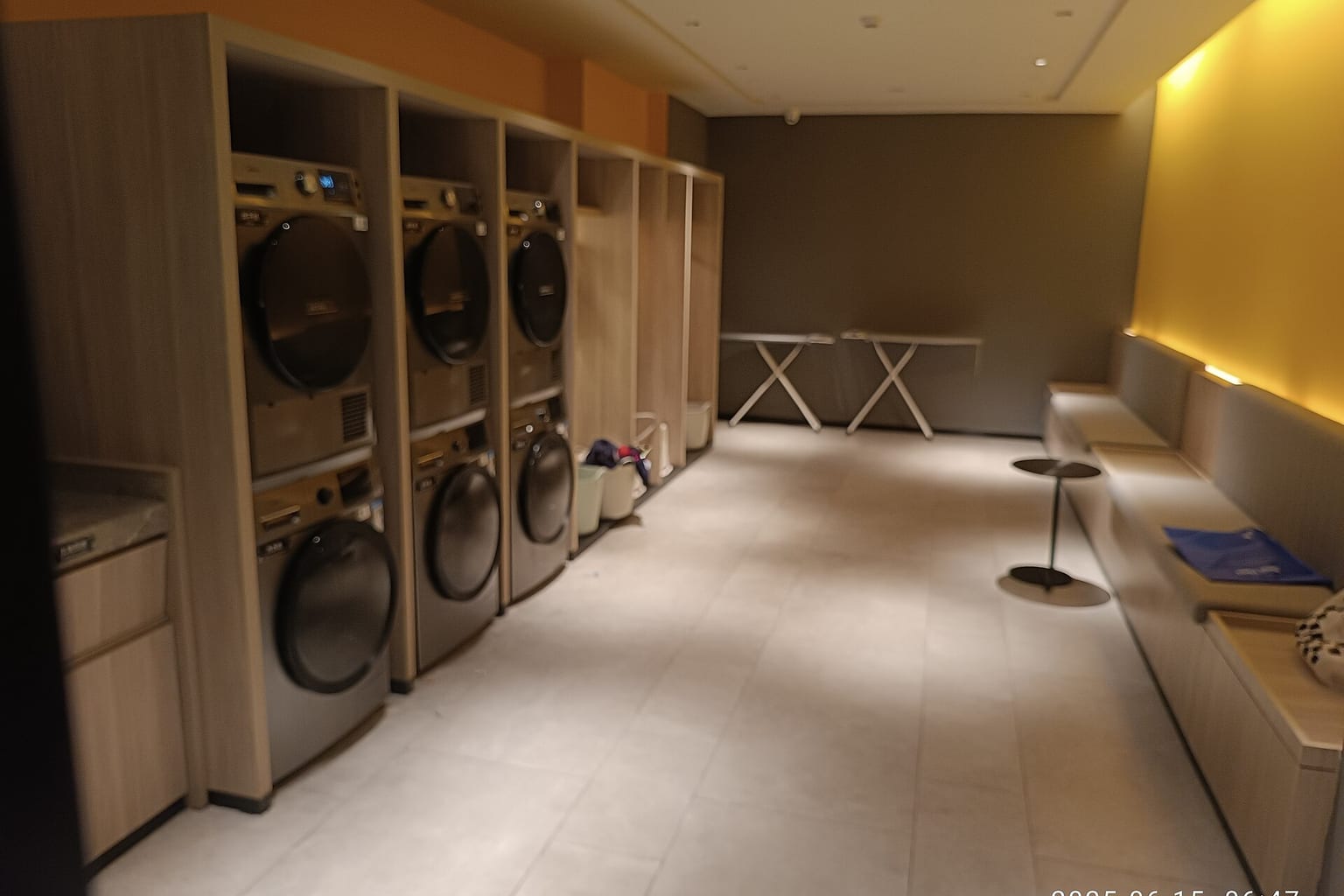
In a hotel's laundry service, a robot collects baskets from guest rooms, carries them down to the laundry room, runs the washers and dryers and brings the clean clothes back. ACE Robotics says one robot system now handles that whole run, and that the robot improves after each failure. According to QbitAI, which reported the work, it is the first long-chain commercial use of Mundo, the world model that ACE Robotics and NTU's S-Lab introduced last month.
Mundo starts from photos. From one to twelve photos of a real space, it builds an editable 3D scene with physics, including object mass and friction, and a vision-language agent corrects where objects sit. The problem it addresses is the cost of learning on site: every attempt in the real world takes time, floor space and a supervisor. In the simulated copy, each attempt instead produces trajectories, contact states and visual feedback that refine the robot's policies before it starts work.
The robot runs on two models. A general-purpose cloud model decomposes tasks and explores strategies inside the digital copy. Once a method converges, it is saved as a reusable skill, and a local model on the robot calls those skills to carry out precise actions. ACE Robotics says that sending every real-time decision to the cloud took more than 30 minutes for a full run, while the local model completed the same round in 18.648 seconds. A scheduler called BotAgent splits the laundry into 53 atomic actions and 14 semantic steps, and picks among more than 200 action sequences depending on room location, elevator status and washer queues.
When a skill fails, the cloud model reviews multi-camera video and sensor logs to find the cause. In one case it switched to an overhead camera when the wrist camera was blocked; in another, it changed the gripper's lift path and fingertip angles after jeans snagged in a dryer drum. A separate copy of the model scores each round, so a worse version can be rolled back.
On dryer unloading alone, ACE Robotics reports 165 real-robot rounds over 57 hours, producing 37 improvement proposals and about 80 skill versions. Cycle time settled at 170 to 210 seconds, and the share of jeans left in the drum fell from 48% to 32% on average, with a best run at 19%. These are the company's own figures, and they have not been independently verified.
The next scenario is one the company already has in view. Chairman Wang Xiaogang told QbitAI that instant retail is a likely next application. No date was given, and the work so far covers hotel laundry only.
Sources — read the originals(Paris time)
Pages consulted while writing
Read next
Comments
Loading the thread…
Sign in to leave a comment. Sign in