In simulations, a blood-boosting drug works better given before chemo
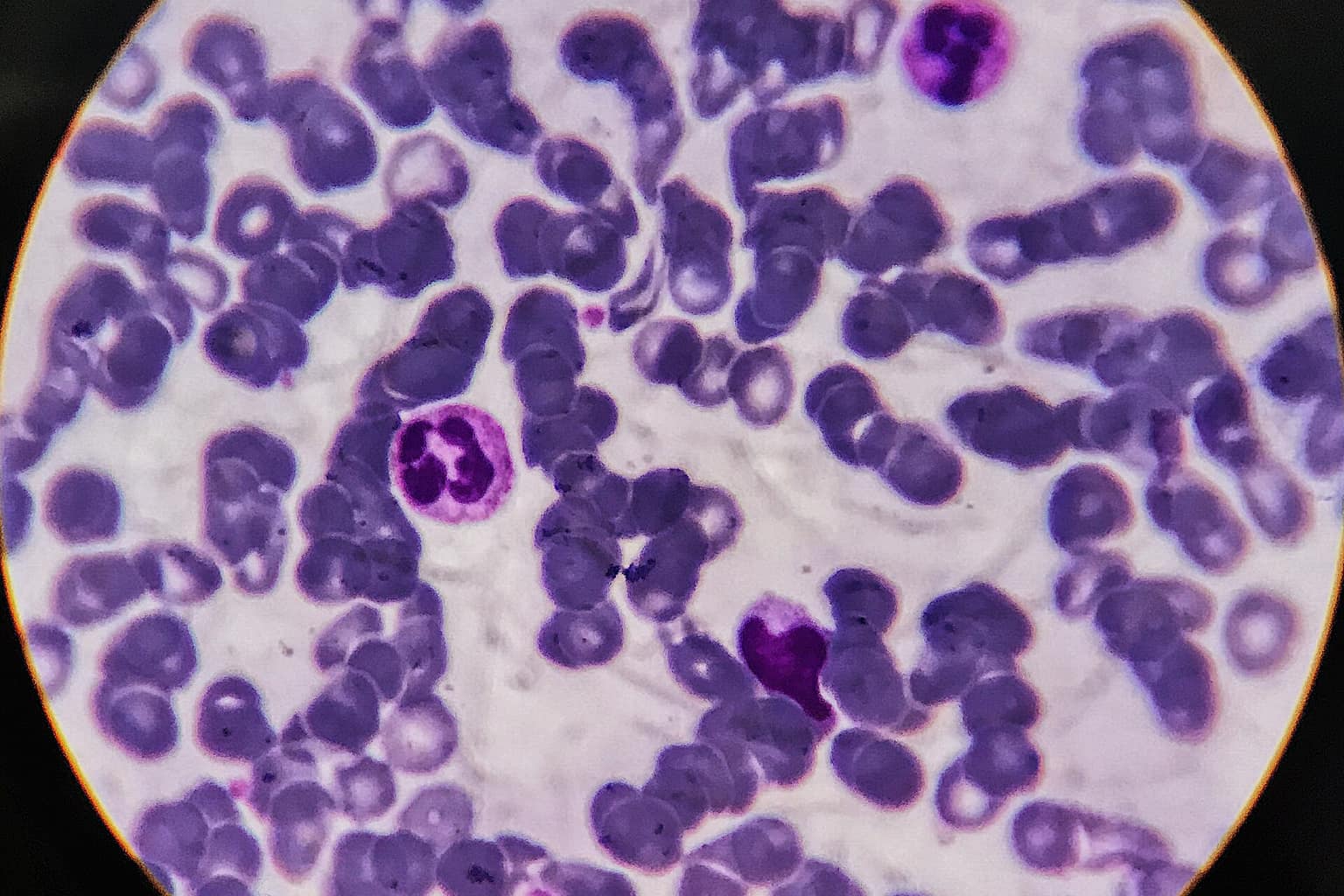
Chemotherapy kills cancer cells, but it also hits healthy ones. The bone marrow, where new blood cells are made, pays a heavy price. When production slows, the body runs short of vital immune cells, and an infection can become life-threatening. Sebastian Sager, a mathematician at Otto von Guericke University Magdeburg, puts it plainly: the treatment has to fight the leukemia while doing as little harm as possible to healthy blood production. His team, with Adrian Reimann and Anna Gebhard from the Institute of Mathematical Optimization, now reports that a blood-boosting drug may work better when it is given before chemotherapy rather than after.
The drug is G-CSF, a growth factor that stimulates the formation of certain white blood cells. Until now, it has usually been given after chemotherapy, to help blood production recover. The team looked at one phase of treatment for acute myeloid leukemia (AML), a consolidation phase meant to follow a treatment that had already worked, in which the cancer drug cytarabine is used. The researchers worked from existing treatment data from 65 patients in Magdeburg and Ulm, processed so that no one could be identified, and compared 323 different treatment procedures, varying when and for how long G-CSF was used.
The result surprised the researchers. In the model, outcomes were more favorable when the G-CSF treatment had been completed before chemotherapy started, and it mattered most that it ended before the chemotherapy cycle. Sager says the team was surprised too. The comparison relies on digital twins: a patient's blood values and drug schedule are entered into mathematical models that calculate how certain blood cells may develop over a treatment. Because the computer can run hundreds of variants under identical starting conditions, the team can test schedules that could not be tried on people for safety reasons, and it can do so much faster than in a clinical study.
For children with leukemia, the change would be a gentler schedule, but that step is still far off. No patient in the study group had received the pre-treatment, so the advantage remains a model prediction that must be tested in clinical studies. Sager stresses that the digital twin 'represents selected processes, not a whole person': a favorable result on the screen can justify a trial, but it cannot replace one. No date has been announced for those trials.
A second study, published in Quantitative Medicine, looks at children with acute lymphoblastic leukemia (ALL) during their longer maintenance treatment. Here the focus is on neutrophils, the white blood cells that are key to defending against infection, whose number can swing sharply during therapy. The model shows that such swings can arise from the body's own feedback mechanisms, and that some treatment strategies can make them stronger. Sager compares the delay to a shower whose temperature changes a moment after the tap is turned: reacting to each change means overcorrecting. The new STEADY approach, short for 'Stabilizing Treatment prEdicting Anc DYnamics' and playing on the term 'steady state', goes beyond the latest blood test values, which dosing decisions rely on mainly today. Sager notes that the analogy simplifies biology considerably. The next step is clinical verification, the stage that will show whether a schedule that looks gentler on screen is gentler for children.
Sources — read the originals(Paris time)
Read next
Comments
Loading the thread…
Sign in to leave a comment. Sign in