Six genes predict leukemia survival, mice and patient data agree
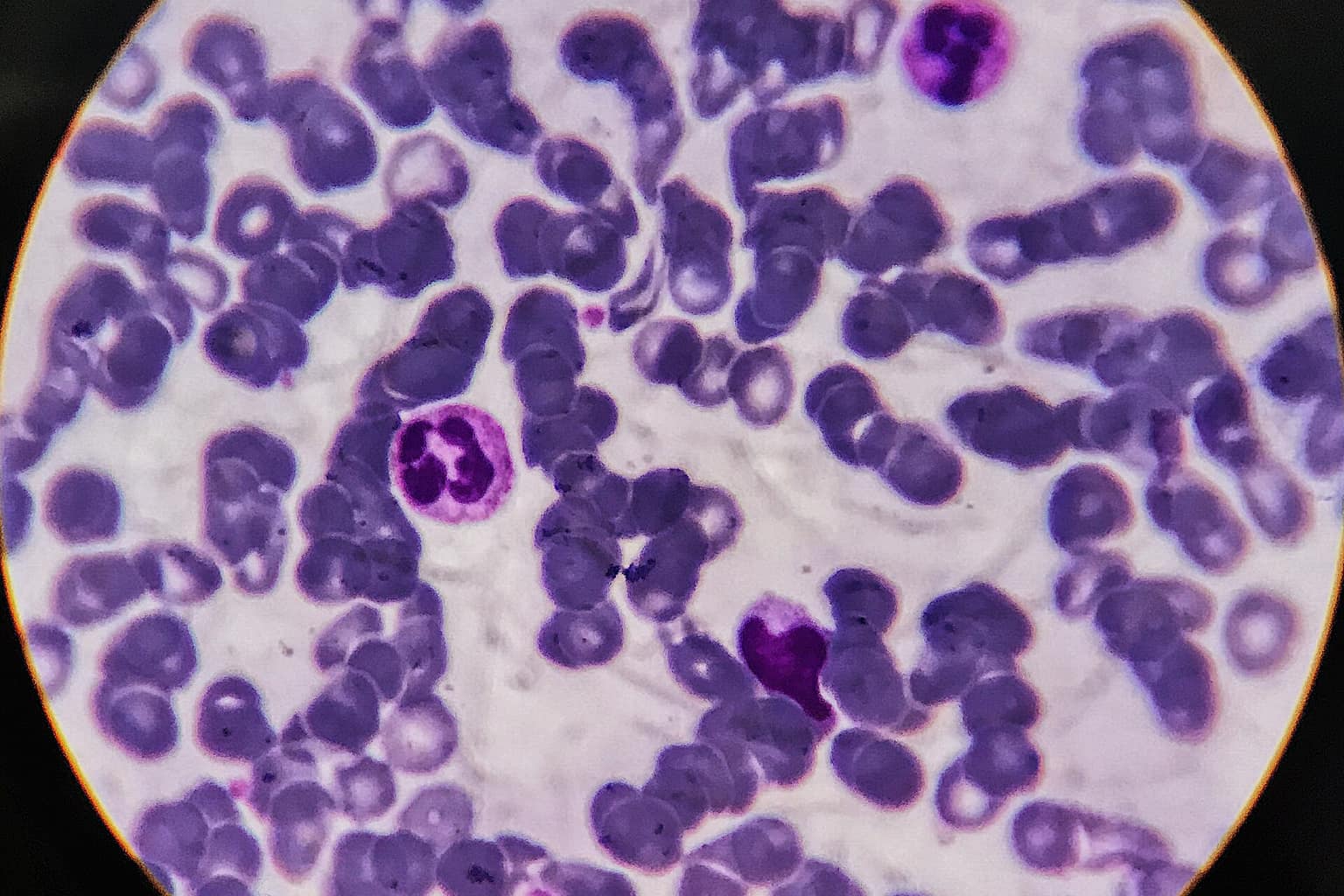
Patients suspected of having acute myeloid leukemia, or AML, already give a bone marrow sample to the lab. The disease, a blood cancer, has outcomes that vary widely from one patient to the next. A team at the Center for Genomic Regulation (CRG) in Barcelona has now found a way to read more from that same sample: a score built on six genes that sorts patients into groups with sharply different survival prospects. The researchers call it PHFScore.
The method was a loop. The team moved repeatedly between experiments in mice and patient records, looking for genes that behaved the same way in both. Three genes, CARMIL1, HOPX and ALDH1A1, were more active in patients with poor outcomes. Three others, CALR, STAR and PHF19, were less active. Senior author Luciano Di Croce, ICREA research professor at the CRG, says that "PHF19 on its own already tells us something about how patients will fare, but combining it with five other genes is a dramatic improvement which gives us more accurate information for AML prognosis."
PHF19 is the starting point of the story. It belongs to a family of genes that keep other genes switched off, a system cells rely on as they mature from immature to specialised cells. Di Croce's lab, which has studied the gene for more than a decade, had already shown that mice lacking it develop a condition resembling myelodysplastic syndrome, in which blood cells fail to mature and build up without yet turning cancerous. In the new work, the researchers introduced a leukemia-causing gene into mouse blood cells with and without PHF19. Cells lacking the gene formed more colonies in the lab and took hold more easily when transplanted into mice. They also stayed locked in an immature, stem-cell-like state, and they largely ignored chemotherapy drugs that are used to push leukemia cells toward maturity. The same pattern appeared in human data: among younger adults treated for AML, those with the lowest PHF19 levels survived for less time, and fewer than half reached remission after standard chemotherapy, against up to 85% of patients with the highest levels.
The limits are clear. The mouse experiments model cells at an early stage, while the patient data describe advanced disease, and the score has not yet been tested as a clinical tool. Some of the six genes, the authors note, have never been described in leukemia or in how blood forms, and their role there is still unknown. "We don't yet know what they are doing there, which is exactly what makes them worth exploring," says first author Gianni Gamarra.
What changes, and for whom? Patients with AML could, in the longer run, benefit from a prognostic test that reads six genes, a measure the researchers describe as simpler and cheaper than a broader genetic profile. Clinicians would get a finer read on how a patient is likely to fare. Drug developers could also look at the newly identified genes as possible targets. The team says the score could contribute to future prognostic tests, but no clinical test, calendar or price has been announced.
Sources — read the originals(Paris time)
Read next
Comments
Loading the thread…
Sign in to leave a comment. Sign in